
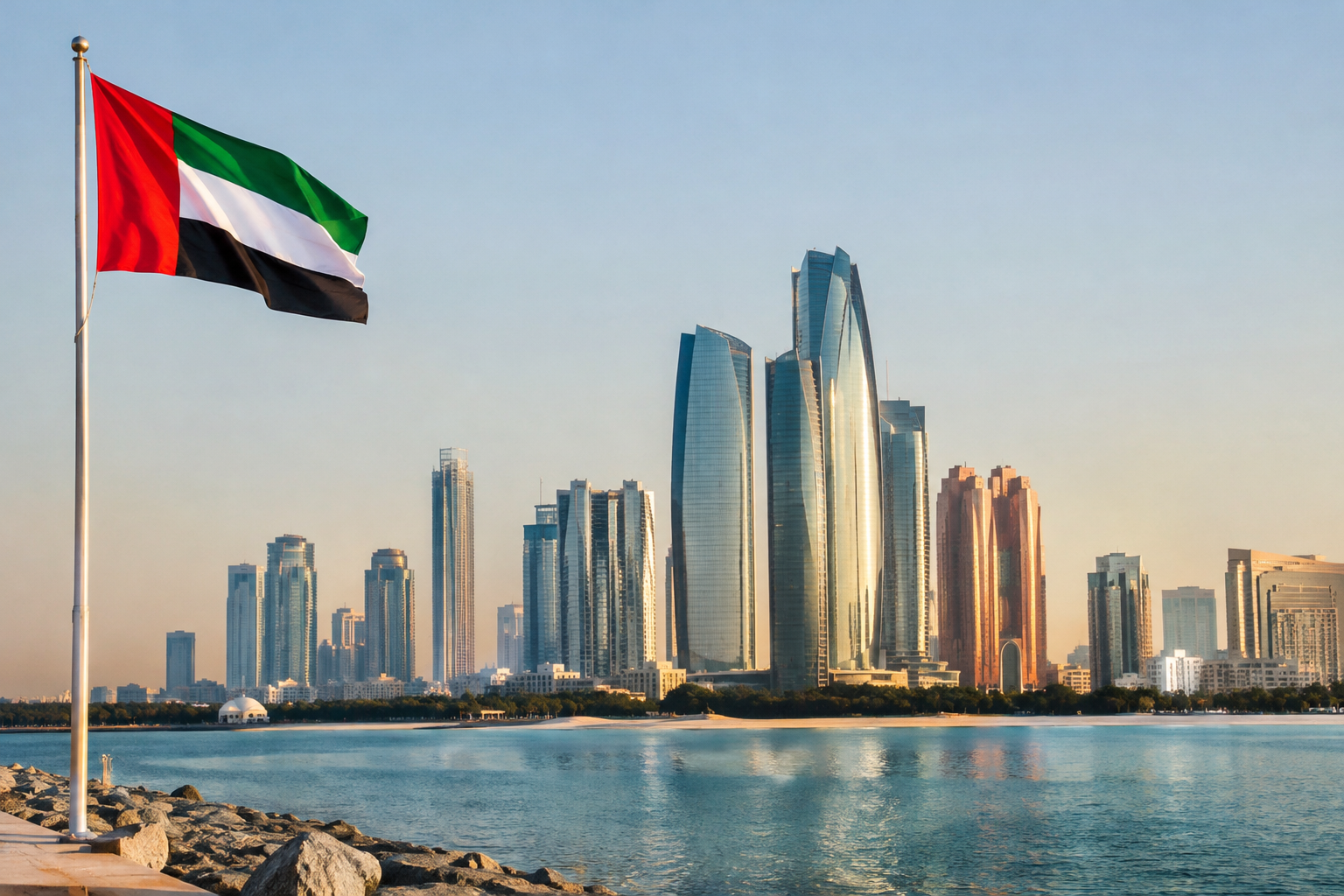
Envoys from the US, Russia and Ukraine are due to hold talks in Abu Dhabi on Tuesday and Wednesday, November 10 and 11. The United States intends to act as a mediator between the Russian and Ukrainian delegations. Although European representatives are expected to be in the same city, available information does not yet give them a place in the main trilateral format. Nor is this a summit of presidents, but a two-day meeting of negotiating teams.
Representatives of the US, Russia and Ukraine are expected to negotiate directly. European envoys are due to meet separately with Ukrainians in Abu Dhabi and coordinate positions with the Americans, but they will not be a confirmed fourth party to the main talks. No agreement has been reached under which Ukraine would cede additional territory.
Who will sit at the main negotiating table
The US delegation is expected to be led by Steve Witkoff and Jared Kushner. The United States is expected to serve as a mediator between the two countries at war. The Russian team is to be led by Vladimir Medinsky. The Associated Press also lists Russian Deputy Foreign Ministers Sergei Ryabkov and Mikhail Galuzin, as well as Igor Kostyukov, head of Russia's military intelligence, among its members.
Ukraine is represented by chief negotiator Rustem Umerov. He said that the Ukrainian delegation would also meet European envoys in Abu Dhabi. Details of the full Ukrainian delegation and the complete agenda for the two-day meeting have not been released.
The Kremlin describes the main talks as a trilateral US-Russia-Ukraine format and denies that Europeans will participate directly. However, on November 8, French Foreign Minister Jean-Noël Barrot said that both France and Europe would be represented in Abu Dhabi. He did not name a specific French representative or define that person's exact role.
These statements do not necessarily contradict each other. European representatives may be in Abu Dhabi, hold their own meetings and coordinate positions without becoming a fourth party to the main format. A detailed protocol showing who will attend each part of the talks has not yet been published.
What is expected to be discussed in Abu Dhabi
The agenda is expected to cover security guarantees for both Ukraine and Russia, as well as the broader European security architecture. Topics mentioned include crisis-communication mechanisms, military transparency and measures intended to reduce the risk of further escalation.
Security guarantees are among the most difficult elements of any potential agreement. Ukraine needs to know what assistance it would receive in the event of another attack and who would commit to providing it. Russia, meanwhile, is pursuing its own demands regarding future military and security arrangements. These issues directly affect European states and NATO, even though they are not confirmed participants in the main format.
The two-day meeting does not in itself mean that a peace agreement will emerge. These are talks between envoys, who may seek common ground, prepare next steps or identify points on which positions still differ. No summit of presidents is planned, and no complete version of a document for the delegations to decide on has been published.
The loss of Ukrainian territory is not an agreed outcome
Territory remains one of the main disputes. Russia demands that Ukrainian forces withdraw even from those parts of the Donetsk region that Moscow does not militarily control. Kyiv rejects this demand.
However, the Russian demand is not an agreement among the three parties or an accepted outcome of the meeting. No proposal approved by Ukraine has been published, and it has not been confirmed that a territorial agreement is to be signed in Abu Dhabi. The claim that Ukraine will certainly lose additional territory at this meeting therefore goes beyond the known facts.
The European Council's position is that borders cannot be changed by force and that Ukraine's future arrangements cannot be decided without Ukraine. The Union also insists that it decides for itself on matters within its competences or affecting its security.
Even potential political agreement between Washington, Moscow and Kyiv would therefore not automatically resolve every European issue. The EU independently decides, for example, on its sanctions, financial assistance and measures related to Ukraine's progress toward the Union. In addition, some future security commitments would have to be undertaken by individual European states or NATO.
Why European representation matters to Slovakia
The outcome of the talks concerns a war in a country that directly borders Slovakia. Ukraine's future security arrangements could affect the protection of NATO's and the EU's eastern border, the movement of people, trade routes and energy. Slovakia would also feel the consequences of any renewed escalation or an unstable agreement without sufficient security guarantees.
The EU will also have a role in decisions that the trilateral format cannot make on its behalf. These include whether to continue or amend European sanctions, financial and humanitarian aid, participation in Ukraine's reconstruction and its path toward membership of the Union. Slovakia contributes to these decisions as a member state.
As early as September 2026, Slovakia's Ministry of Foreign and European Affairs called for greater EU involvement in the peace process. It said that the Union should be at the negotiating table. Slovak diplomacy thereby acknowledged that an agreement on European security would also have consequences for states that are not direct parties to the war.
The difference between direct participation and consultations is therefore politically important. A representative at the main table can respond to proposals during the negotiations and help shape their wording. Separate consultations make it possible to convey positions to Ukraine and the United States, but the EU is not directly present when a compromise is reached among the three delegations.
European representatives will nevertheless not be without influence. US negotiators are expected to consult them before the talks, and the Ukrainian delegation will meet them directly in Abu Dhabi. The key question will be whether European positions are reflected in proposals on security guarantees, sanctions and post-war arrangements. More specific answers may emerge only from the talks themselves on November 10 and 11.
Sources
- Associated Press – Peace talks involving the US, Russia and Ukraine start Tuesday. Here's what to know: https://apnews.com/article/russia-ukraine-war-putin-zelenskyy-uae-81537cce8daf84b24bf73a91addb6e9b
- RTL – “France will participate in these discussions”: Jean-Noël Barrot announces that Paris and Europe will be represented: https://www.rtl.fr/actu/international/la-france-participera-a-ces-discussions-jean-noel-barrot-annonce-que-paris-et-l-europe-seront-representees-lors-des-negociations-sur-l-ukraine-7900693803
- European Council – European Council conclusions on Ukraine and on European defence and security: https://www.consilium.europa.eu/en/press/press-releases/2026/06/18/european-council-conclusions-on-ukraine-and-on-european-defence-and-security/pdf
- Ministry of Foreign and European Affairs of the Slovak Republic – Informal meeting of European foreign ministers in Ireland: https://www.mzv.sk/sk/pressreleasedetail?articleId=59712289&groupId=10182&p_p_id=sk_mzv_portal_pressrelease_detail_portlet_PressReleaseDetailPortlet&p_p_lifecycle=0
- Axios – U.S., Russia and Ukraine to resume peace talks next week, Witkoff says: https://www.axios.com/2026/11/03/us-russia-ukraine-peace-talks-uae-trump-witkoff-kushner

Marcel Macko
I’m most interested in technology, the internet, bizarre news, and stories that make you stop and think, “There’s no way this can actually be true.” I follow what’s happening both at home and around the world and pick the topics I think are worth paying attention to. On Pitchoviny, I try to present them simply, factually, and without unnecessarily sensational headlines.


