

From a utopian vision to the largest mass suicide in U.S. history
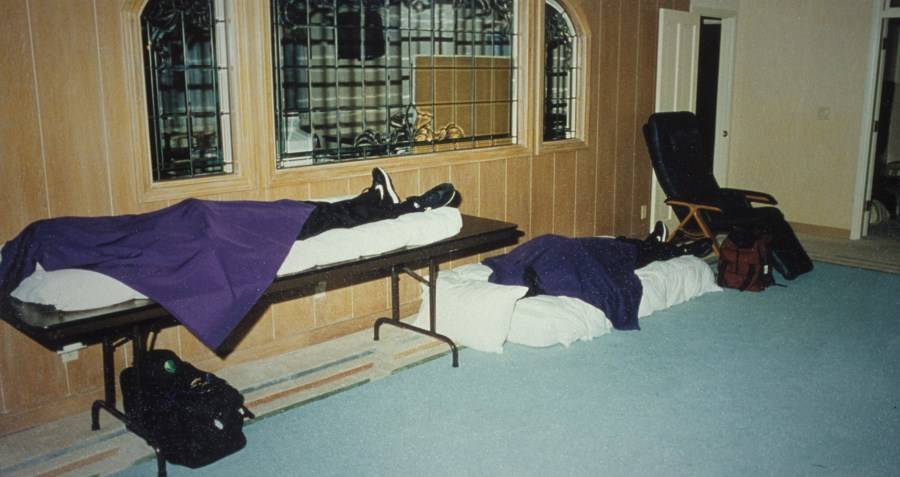
When California police crossed the threshold of a luxury estate in Rancho Santa Fe on March 26, 1997, they were met with a disturbing sight: 39 bodies arranged in neat rows under purple blankets, all wearing identical black tracksuits and new Nike sneakers. The belief that an alien craft was hidden behind the Hale-Bopp comet—one that would carry them to a “higher level of existence”—led members of the religious-UFO movement Heaven’s Gate to a meticulously planned mass suicide, the largest on U.S. soil. (history.com)
Roots in the charismatic duo “Ti and Do”
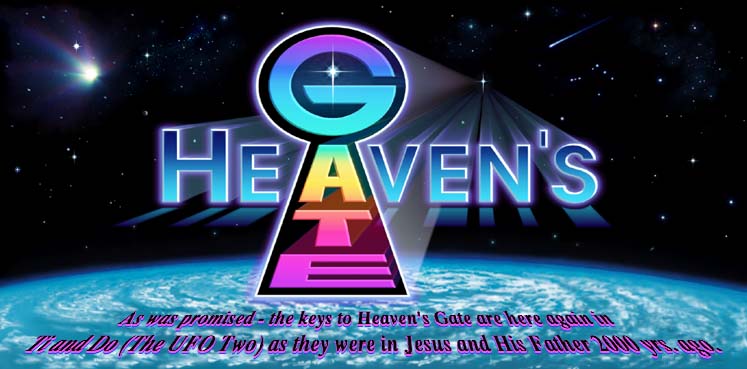
The movement’s beginnings go back to 1974, when former music educator Marshall Herff Applewhite met Texas nurse Bonnie Lu Nettles. The pair—who later adopted the biblical-cosmic nicknames “Do” (Applewhite) and “Ti” (Nettles)—combined Christian eschatology with alien mythology. Their central thesis was this: the human body is merely a “container,” and a person’s true essence is an extraterrestrial soul that can be freed through strict discipline and “abstinence from earthly desires.”
The movement operated under names such as Human Individual Metamorphosis and Total Overcomers Anonymous, and as early as 1975 it caused a stir by persuading dozens of people to leave behind their families and possessions. At camp meetings in Utah, Oregon, and Colorado, followers were told that an “evacuation craft” would soon arrive and take them to the “Kingdom of Heaven”—this time, literally.
A cult as a microcosm: strict uniformity and self-denial
After shifting into mobile communal living, the leaders imposed an almost military regimen: standardized haircuts, identical clothing, new gender-neutral names, and the surrender of all property to the group. Applewhite emphasized the need to suppress sexuality; several male followers—including Applewhite himself—underwent voluntary castration to facilitate their transformation into “pure beings of light.”
The death of Bonnie Lu Nettles: a doctrinal turning point
When “Ti” died of cancer in 1985, Applewhite faced doubts: if the pair were meant to depart physically on a spaceship, why did Nettles die in an ordinary way? The explanation became that she had “left the inflated earthly body behind as an empty shell,” and that her consciousness now resided on a higher plane. Although some members drifted away, the core remained—and over the next decade Applewhite carefully revived the promise of evacuation.
The internet and the Hale-Bopp comet: an apocalyptic catalyst
With the rise of the web in the early 1990s, Heaven’s Gate also moved online—their site Heaven’s-Gate.com still exists today as a morbid relic of the era. When astronomers announced in 1995 that Comet Hale-Bopp would be visible to the naked eye two years later, Applewhite declared that the “companion object” flying behind its tail was the long-promised craft.
Ironically, before the tragedy, astronomer Olivier Hainaut of the European Southern Observatory (ESO) debunked a viral claim that comet images had captured a gigantic UFO. The analysis revealed that the “mysterious Saturn-like object” was in fact a star and a CCD artifact. (eso.org)
The final countdown in Rancho Santa Fe
In late 1996, the group rented a sprawling home in the San Diego area, where members recorded a series of “departure” videos. In these recordings, they smile as they claim they are “leaving their bodies to move on to the next evolutionary level.”
Between March 24 and 26, 1997, they ingested—three to five at a time—the same mixture of phenobarbital, vodka, and fruit purée, then placed plastic bags over their heads to hasten respiratory arrest. Toxicology reports confirmed high concentrations of barbiturate and, in most cases, the presence of alcohol. (deseret.com) Each victim had $5.75 in a pocket—said to be an “intergalactic fare” or an ironic nod to sci-fi culture.
How the tragedy entered pop culture
Heaven’s Gate’s mass death has become a lasting part of America’s collective memory. Documentaries, podcasts, and feature films (for example, The Lodge from 2019) repeatedly explore why educated people succumbed to such an extreme vision. In 2020, the four-part miniseries “Heaven’s Gate: The Cult of Cults” premiered, making extensive archival materials and testimony from former members available for the first time.
Heaven’s Gate in the broader context of religious catastrophes
Only three years earlier, in 1994, a similar mass suicide occurred within the Order of the Solar Temple in Switzerland and Quebec; in both cases, a combination of charismatic authority, conspiratorial motifs, and eschatological fear resulted in hundreds of victims. The events of Heaven’s Gate thus follow the same trajectory: isolation, demonization of “outsiders,” and a deepening of collective paranoia.
Psychologists also point to the phenomenon of cognitive dissonance: the more personal sacrifices an individual invests in a movement (property, identity, physical suffering), the harder it becomes to admit they were deceived. Mass suicide can therefore paradoxically serve as “proof” of truth for those who remain—albeit only on an ideological level.
Video to watch
“Heaven’s Gate: The Cult of Cults – official trailer (HBO Max, 2020)”
A short preview conveys the movement’s atmosphere and the lives of its former members.
Sources
- HISTORY.com – “Heaven’s Gate cult members found dead”: https://www.history.com/this-day-in-history/march-26/heavens-gate-cult-members-found-dead
- European Southern Observatory – “Comet Hale-Bopp and its ‘mysterious unidentified companions’”: https://www.eso.org/~ohainaut/Hale_Bopp/hb_ufo.html
- Deseret News – “Tests show wide range of drugs in cultists’ bodies” (April 5, 1997): https://www.deseret.com/1997/4/5/19304825/tests-show-wide-range-of-drugs-in-cultists-bodies/

Robert
I’m interested in technology and history, especially true crime stories. For three years I ran a fact-based portal about modern history, and for a year I co-built a blogging platform where I published dozens of analytical articles. I founded offpitch so that quality content wouldn’t be hidden behind a paywall.


