
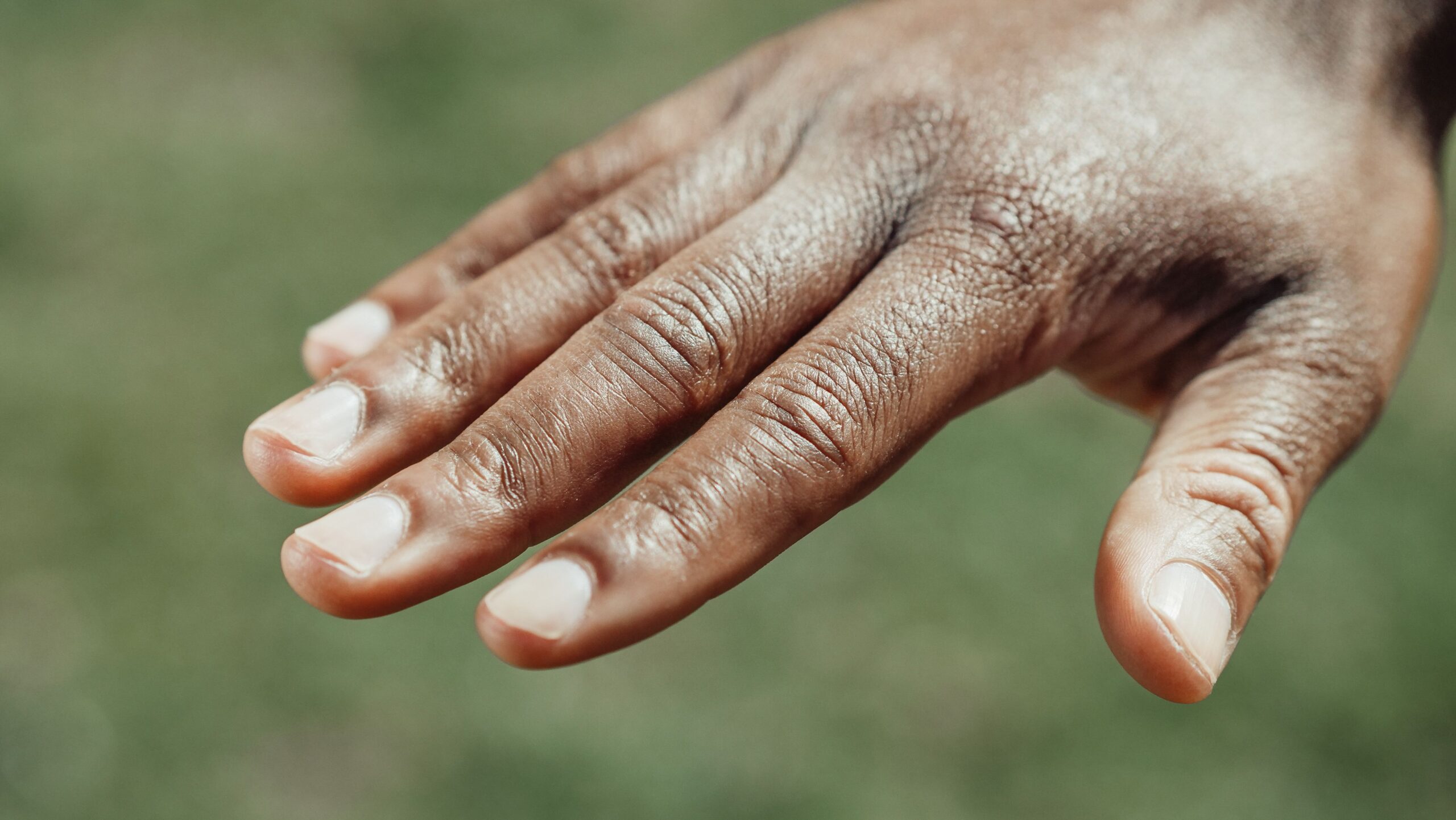
All it takes is stretching after sitting for a long time, doing a squat, or cracking your knuckles to hear a sound like a snapping twig. Some people find it reassuring; others find it alarming. Yet the same sound does not always have the same cause: fingers, knees, and shoulders can make noises through different mechanisms. It is also important to pay attention to how the joint feels when it cracks.
A painless joint crack on its own is generally not a cause for concern. In the fingers, it may be linked to the sudden formation of a cavity in the joint fluid; in the knee or shoulder, it may also result from tendons and ligaments moving over surrounding structures. Cracking deserves particular attention when it is accompanied by pain, swelling, locking, instability, or an injury. In that case, it is not sensible to explain everything away as “air in the joint.”
What actually cracks inside a joint?
Many joints are surrounded by a capsule, and their surfaces move in synovial fluid. This fluid helps reduce friction and allows smooth movement. When a person pulls on a finger, the joint surfaces may suddenly move apart. The pressure in the fluid changes, creating a gas-containing cavity. This moment is associated with the characteristic sound.
Direct MRI images published in 2015 showed that when a finger joint cracks, a cavity forms and remains visible for a short time after the sound. This finding is also interesting because older explanations often attributed the sound solely to the bursting of an already existing bubble. More accurately, it is a rapid change in conditions within the joint fluid—not bones breaking.
The authors examined ten finger joints in one volunteer. Their images therefore illustrate the mechanism involved in this type of movement, but they do not prove that every sound from every joint in the body arises in the same way. A crack in the hip or knee cannot automatically be assumed to have an identical cause.
Why do knees crack during squats and shoulders during rotations?
A joint is not merely a pair of bones. Movement is produced by muscles and tendons, stability is supported by ligaments, and depending on the location, cartilage structures are involved as well. When position changes, a tendon may slide over a bony prominence or another structure, creating a snapping sensation. Mild grinding or crunching also cannot always be attributed to one universal cause.
If your knee cracks slightly each time you stand up but does not hurt, swell, or have trouble bearing weight, the sound alone does not determine a diagnosis. The situation is different if the sound appears after a fall and is accompanied by pain, limited range of motion, or a feeling that the knee is giving way. In that case, possible tissue damage should also be assessed.
There is an important difference between a one-time “pop” when changing position and persistent, painful grinding. Neither sound alone is enough to diagnose osteoarthritis, a meniscus injury, or inflammation. A healthcare professional will ask about the circumstances, examine movement, and decide whether further tests are needed.
Does cracking your knuckles cause arthritis?
Available research does not support the claim that regularly cracking your knuckles automatically leads to arthritis. Harvard Health summarizes studies that found no convincing link between this habit and a higher incidence of arthritis in the hands. That does not mean you should use any amount of force on your fingers.
Reports of injuries caused by overly forceful manipulation of joints do exist, although these are unusual situations. If you need to bend a finger forcefully to produce the sound, or if it hurts, stop. A feeling of short-term relief is not evidence that you are “realigning” or treating the joint this way.
Older small studies suggested possible differences in swelling or grip strength among people who crack their knuckles, but the results are not consistent enough to draw the simple conclusion that this common habit damages the hands. Monitoring function and symptoms matters far more than counting every crack.
When is an examination needed?
You should consult a doctor if the sounds are accompanied by recurring pain, visible swelling, warmth or redness, morning stiffness, loss of mobility, or a feeling that the joint is unstable. The same applies if the knee locks, gives way while walking, or the shoulder cannot be raised normally after an injury.
Seek help without delay if you have severe pain after an injury, a deformity, an inability to put weight on a limb, or a fever along with a hot, swollen joint. This combination of symptoms cannot be safely assessed based on the sound or an internet video. It will help your doctor if you can say when the problem began, which movement triggers it, and whether an injury came before it.
Not every painful crack means a serious condition, but it is also not right to ignore it simply because the joint used to crack without problems. A change in a joint’s usual behavior is useful information during an examination.
Is it worth trying to stop the cracking?
If the sound is painless and movement is normal, you do not need to “cure” it at all costs. After prolonged sitting, regular movement and appropriate muscle activity may help—not aggressive twisting of the joints. If the unpleasant sensation keeps returning, try to notice whether it is related to a particular work habit, sport, or position.
Deliberate, forceful neck manipulation is a separate issue. It is not advisable to try forceful movements just to produce a sound, especially if they cause pain, dizziness, or another unusual symptom. If you repeatedly feel that you “need” to crack your neck, it is better to address the source of the tension and the way you move than to increase the force.
Key takeaways
A cracking joint is not automatically a damaged joint. In the fingers, the sound may accompany the formation of a cavity in the fluid; elsewhere, it may result from tendon movement or other mechanical processes. Painless sounds alone may not require treatment. But if pain, swelling, locking, instability, or injury occurs, these accompanying symptoms—not an entertaining theory about “bones cracking”—are what matter.
Sources
- PLOS ONE – Real-Time Visualization of Joint Cavitation (MRI research on the mechanism of knuckle cracking) – https://journals.plos.org/plosone/article?id=10.1371%2Fjournal.pone.0119470
- Harvard Health Publishing – Is it normal for my joints to click? (painless sounds and warning signs) – https://www.health.harvard.edu/healthy-aging-and-longevity/is-it-normal-for-my-joints-to-click
- Harvard Health Publishing – Knuckle cracking: Annoying and harmful, or just annoying? (research on arthritis and injuries) – https://www.health.harvard.edu/blog/knuckle-cracking-annoying-and-harmful-or-just-annoying-2018051413797

Gabriel Čatár
I'm interested in everyday things we encounter but don't always understand. From technology and personal finance to practical guides and fascinating facts about the world. At Offpitch, I focus on topics worth exploring in greater depth, checking the facts and explaining them in a clear, accessible way. My goal is to make sure readers take away something useful from every article.


