
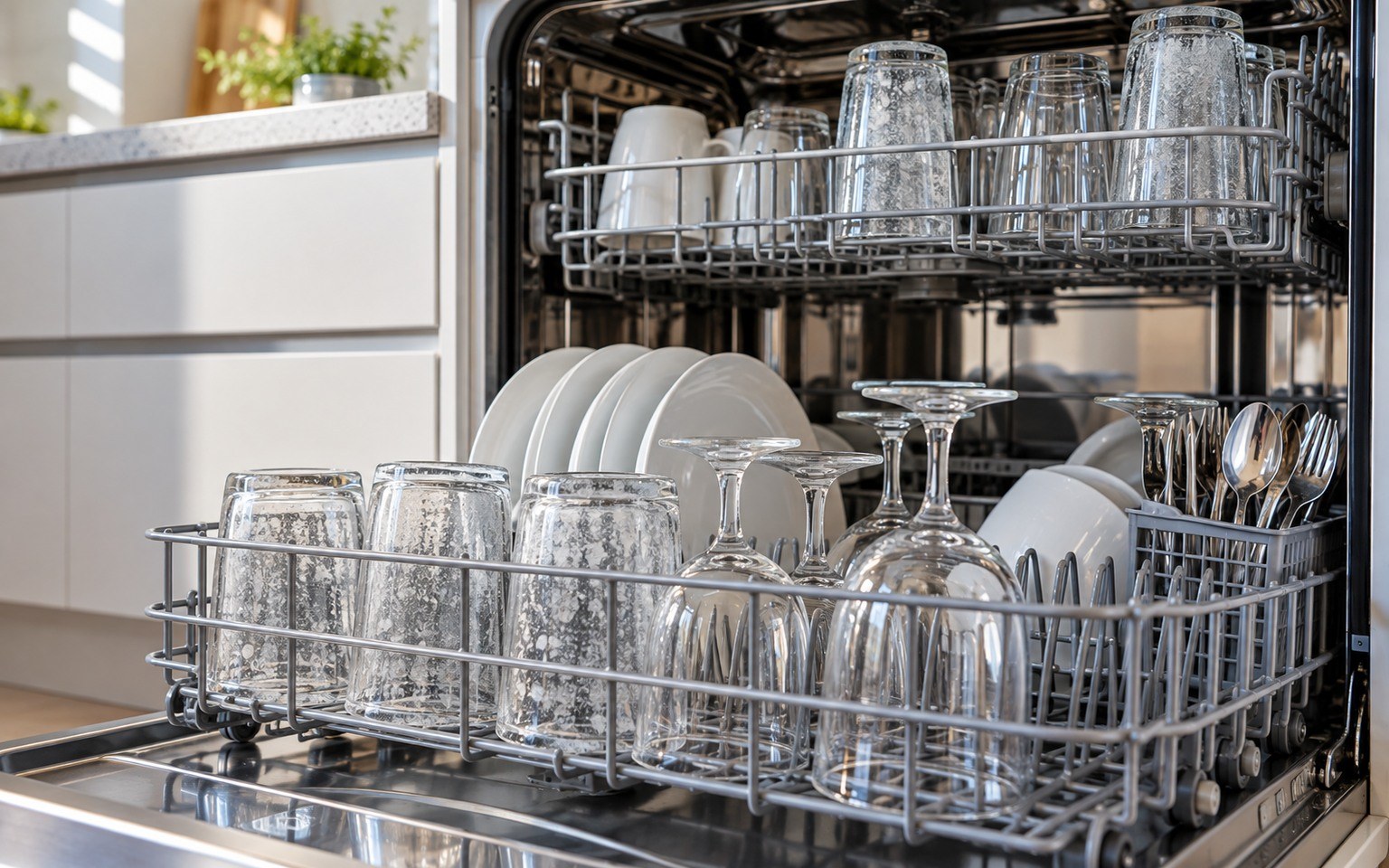
You take out the glasses and, instead of sparkling glass, you see a cloudy film. Spots remain on the cutlery, and white streaks form on the door. The first instinct is often to add more detergent or buy a stronger product. But that can make the problem even worse. The key is to determine whether you are seeing removable mineral deposits, product residue, or permanent damage to the surface of the glass.
White spots from the dishwasher are most often linked to hard water, an incorrect water-softener setting, a lack of regenerating salt, rinse aid, or dishwasher detergent dosage. If the film can be wiped off or removed with appropriate cleaning, it may be a deposit. If the glass remains permanently cloudy and the surface does not change, it may be chemically damaged. First, check the water hardness and the instructions for your particular dishwasher.
Minerals in Water Versus Damaged Glass
Hard water contains higher levels of calcium and magnesium. During washing and drying, mineral traces can remain on glass and metal parts. In its service materials, Bosch notes that white deposits may appear more easily with hard water and certain phosphate-free products. Incorrect water-softening settings or too little special salt may also be the cause.
However, not every dull surface is limescale. Over time, glasses can be damaged by a combination of temperature, the chemical composition of the water, and aggressive washing. If the surface of the glass has changed irreversibly, additional polishing or vinegar will not restore it to its original condition. Do not experiment with acids on decorated glass, metal details, or delicate surfaces.
As a practical first step, try washing the affected item by hand according to the dishware manufacturer’s recommendations. If the film disappears, it is probably a removable deposit; if not, damage is also a possibility. However, a single test cannot determine the exact chemical composition of the stains.
Check Water Hardness and the Water-Softener Setting
Many dishwashers have a built-in water softener that uses regenerating salt. It should be set according to the water hardness, as described in the manual. You can obtain the value from your water supplier or estimate it using a suitable test strip. Do not choose the setting simply because you live in a city or use well water: the differences can be significant.
If the water softener is set incorrectly, the appliance may not treat the water as intended by the manufacturer. Use only salt designed for dishwashers and close the reservoir cap. Table salt, pouring salt directly into the basket, or substituting other chemicals are not safe alternatives. If you spill salt while refilling it, follow the instructions for removing the residue and running an appropriate program.
With all-in-one tablets, some appliances offer a special setting. However, this does not mean that every tablet automatically replaces salt at every level of water hardness. Follow the recommendations of both the tablet manufacturer and the dishwasher manufacturer.
Rinse Aid Affects How Water Drains
Rinse aid lowers the surface tension of water so that it runs off dishes more effectively and does not leave small marks behind. Bosch recommends separate rinse aid as one option for reducing marks on glasses. If the dosage is too low, droplets and spots may remain. If it is too high, streaks or another type of film may appear.
Adjust the dosage gradually and observe the result over several cycles. Changing three settings at once makes it harder to identify the cause. Before refilling, check that you are not pouring rinse aid into the detergent dispenser, and vice versa.
If you use capsules with built-in rinse aid, the options for changing the dosage may vary by appliance. In this case, the manual is more precise than generic online advice to “always set it to maximum.”
What the Detergent Itself Can Cause
Using too much detergent is no guarantee of cleaner dishes. Residue may be harder to rinse away, especially when using an unsuitable program, overloading the dishwasher, or disrupting water circulation. Bosch also mentions unsuitable or insufficiently dosed detergent and an overly gentle program as possible causes of white marks. The right solution, therefore, is not always to add more chemicals.
Check that the spray arms can rotate freely and are not obstructed by tall items. Clean the filter according to the manual and remove trapped food particles. Arrange items so water can reach dirty surfaces and drain away; do not place glasses tightly together. Also check whether the tablet dispenser is blocked by a large baking tray or pot.
With a short program and heavily soiled dishes, the detergent may not perform in the same way as it does during a standard program. First, try the program recommended by the manufacturer and observe the difference.
Is It a Good Idea to Pour Vinegar Into the Dishwasher?
Home remedies involving vinegar are easy to find, but they may be unsuitable for seals, delicate surfaces, or a particular appliance. Without guidance from the manual, do not put acid or pour vinegar into the salt and rinse-aid dispensers. For descaling, use a procedure and product approved by the manufacturer. Likewise, do not mix acidic products with chlorine-based or other cleaning products.
If the white spots are only on glasses, try a different set of glasses, a different temperature, and the exact water-softener setting. If they also remain on the dishwasher walls, check the salt, water hardness, and service maintenance. If the problem appeared suddenly after changing tablets, compare the results with the previous product.
When It May Be a Technical Fault
If you keep refilling the salt, set the values correctly, and keep the filter clean, but the film continues to build up, there may be a problem with the water softener, dosing, heating, or rinsing. Tell the service technician the brand, model, water hardness, program used, and type of product. A photo of the dishes after washing and information about when the problem first appeared will also help.
Do not replace parts at random or dismantle an appliance while it is connected to power. First, rule out settings that are easy to correct. If you suspect irreversibly damaged glass, further aggressive cleaning may make it worse.
Sources

Gabriel Čatár
I'm interested in everyday things we encounter but don't always understand. From technology and personal finance to practical guides and fascinating facts about the world. At Offpitch, I focus on topics worth exploring in greater depth, checking the facts and explaining them in a clear, accessible way. My goal is to make sure readers take away something useful from every article.


