
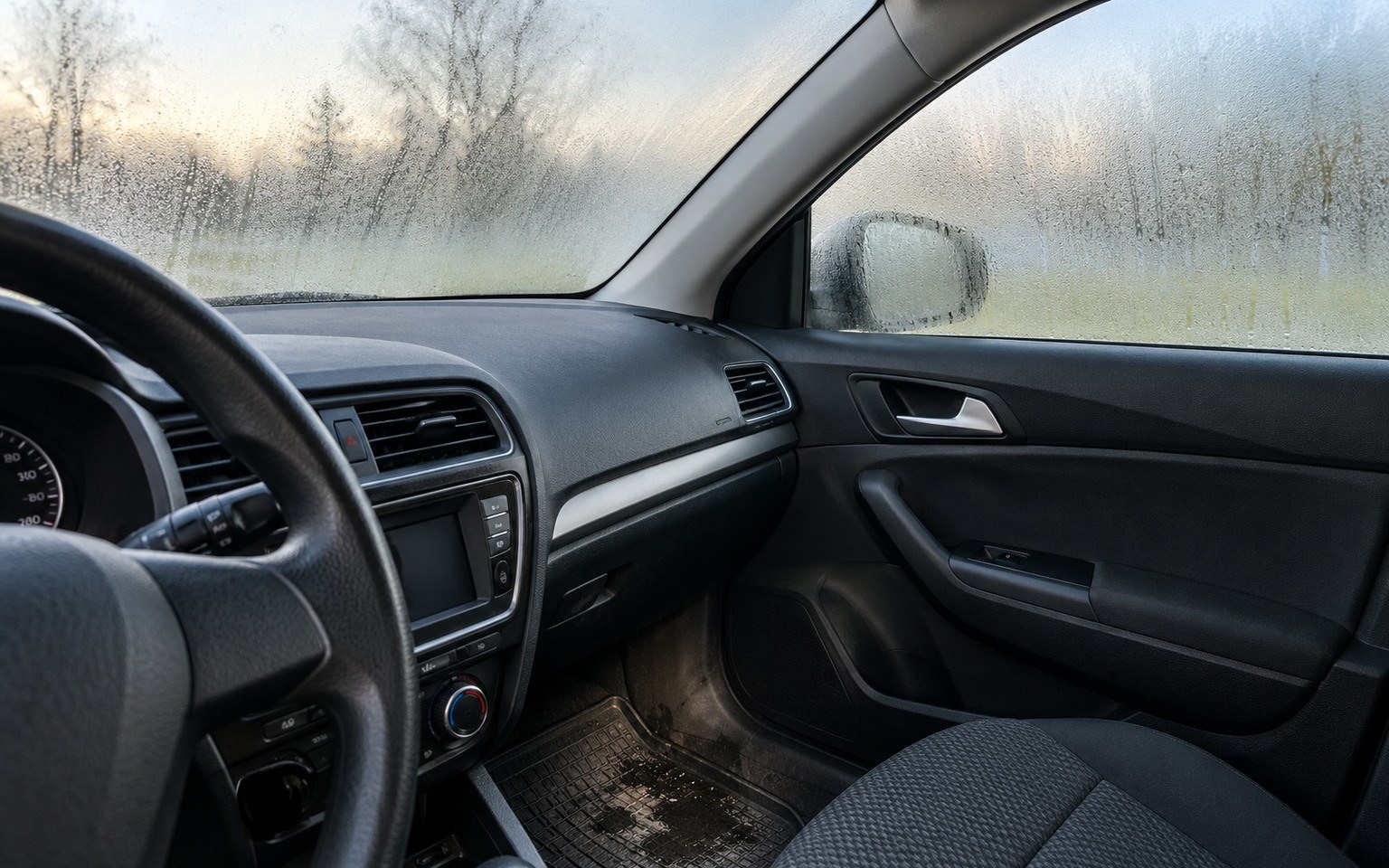
You get into your car in the morning and the windows are fogged up on the inside, even though it did not rain overnight. Elsewhere, the carpet in front of the passenger seat is wet, or there is a musty smell. Moisture can remain in a car for days, and its source may not be obvious at first glance. It is important to distinguish normal condensation from water that is actually leaking into the cabin.
Dampness in a car without recent rain may be caused by water from shoes and wet mats, condensation on cold glass, a clogged air-conditioning drain, blocked drainage channels, or leaking doors and windows. If the floor is persistently wet, first determine where the water is appearing and whether it is clean water or coolant. A moisture absorber alone will not eliminate the cause.
Fogged-up windows do not necessarily mean the car is leaking
The air inside the cabin contains water vapour. We bring it in through breathing, wet clothing, snow on our shoes or an umbrella. When warm, humid air touches cold glass, the vapour condenses into droplets. This is why the windscreen can fog up even after several dry days. What matters is not only the conditions outside, but also how much moisture has remained trapped inside.
Normal morning condensation should clear after effective demisting. However, if the windows repeatedly fog up while driving, water runs down the glass, or damp patches appear on the upholstery, it makes sense to look for another source. Fogging is a symptom; by itself, it does not show how water entered the car.
Feel the carpets first, not just the mats
Remove the rubber or textile floor mats and feel the carpet underneath. Check the driver's and passenger's footwells, the rear floor area and the boot floor, including the space beneath the spare wheel. The surface of a mat may look dry while the insulating layer beneath the carpet retains water for days. A musty smell is a reason to inspect beneath the upholstery, not simply spray air freshener.
If you find a wet area, take a photo and note what happened before it appeared. Did it occur after rain, washing the car, driving with the air conditioning on, or after the car had been parked in dry conditions for a longer period? This information often helps a service technician more than a general statement that the car is damp.
The air-conditioning drain can send water into the cabin
When cooling, the air conditioning removes moisture from the air. This is normally drained beneath the car. A small puddle of clean water under the vehicle after using the air conditioning can therefore be normal. The problem arises when the drain becomes blocked or detached, causing water to end up at the occupants' feet instead of outside.
A wet floor in front of the passenger seat is particularly suspicious if it appears after driving with the air conditioning on, even in dry weather. This does not automatically mean the air conditioning has failed or that refrigerant needs topping up. It may be condensate drainage. Drain access varies by model; do not dismantle the dashboard blindly or interfere with the air-conditioning system without using the correct procedure.
Blocked drains and seals may only show their effects later
Water from previous rain may remain trapped inside a door cavity, near the lower edge of the windscreen, or in the sunroof drainage system. Leaves and dirt can prevent it from draining away. Later, while driving or when parked on a slope, it may spill into the interior through an unsuitable opening. Therefore, saying that it did not rain today does not rule out an earlier leak.
Inspect the rubber seals around the doors, boot and windows. Pay particular attention to places where a seal is lifting, compressed or damaged. For the sunroof and the area beneath the windscreen wipers, follow the instructions for the specific vehicle. If you want to identify the direction of a water leak, use a gentle stream of water and an assistant, not a pressure washer aimed at the seals.
Watch out for coolant from the heater core
Not every wet floor contains ordinary water. If the liquid is slightly sticky, has a distinctive sweet smell, the heating performs worse, or the coolant level drops, one possible cause is a leak from the heater core or its connections. However, a reliable diagnosis cannot be made based on smell alone.
Coolant is not intended for skin contact or tasting. If you suspect a leak, do not cover up the problem with interior cleaner; have the cooling system checked. If the engine indicates overheating or the fluid level is dropping significantly, do not keep driving simply because the car is still producing heat.
How to remove moisture from a car without damaging the interior
First, stop the source of the water. Then remove wet mats, dry accessible surfaces and allow safe ventilation when the car is parked in a suitable place. In the case of a major leak, the underlying layers of the carpet must also be dried. Otherwise, the smell and fogging will quickly return, even if the top material appears clean.
When demisting, set the ventilation to fresh-air intake and direct airflow at the windows. A functioning air-conditioning system can help dry the air outside summer as well, provided the vehicle allows it to be switched on at the current outdoor temperature. Continuous internal recirculation keeps humid, exhaled air in the cabin. A moisture absorber is a useful extra while parked, not a substitute for repairing a drain or seal.
When to visit a workshop
A workshop visit is worthwhile if water returns after drying, a puddle forms on the floor, it appears while driving with the air conditioning on, there is a coolant smell, or electrical components begin to have problems. Long-term moisture in the insulation can lead to odours and damage to materials. It also reduces visibility when the windows repeatedly fog up.
A brief record can help: which area is wet, what the liquid looks like, when the problem recurs, and whether the coolant level changes. The aim is not to guess the fault from a single photograph, but to systematically distinguish condensation, rainwater ingress and a possible operating-fluid leak.
Sources
- The AA – Why do I have water in my driver side foot well? – https://www.theaa.com/car-care/advice/repairs/water-in-car-foot-well
- The AA – Why is my car leaking water? – https://www.theaa.com/breakdown-cover/advice/why-is-my-car-leaking-water

Gabriel Čatár
I'm interested in everyday things we encounter but don't always understand. From technology and personal finance to practical guides and fascinating facts about the world. At Offpitch, I focus on topics worth exploring in greater depth, checking the facts and explaining them in a clear, accessible way. My goal is to make sure readers take away something useful from every article.


