
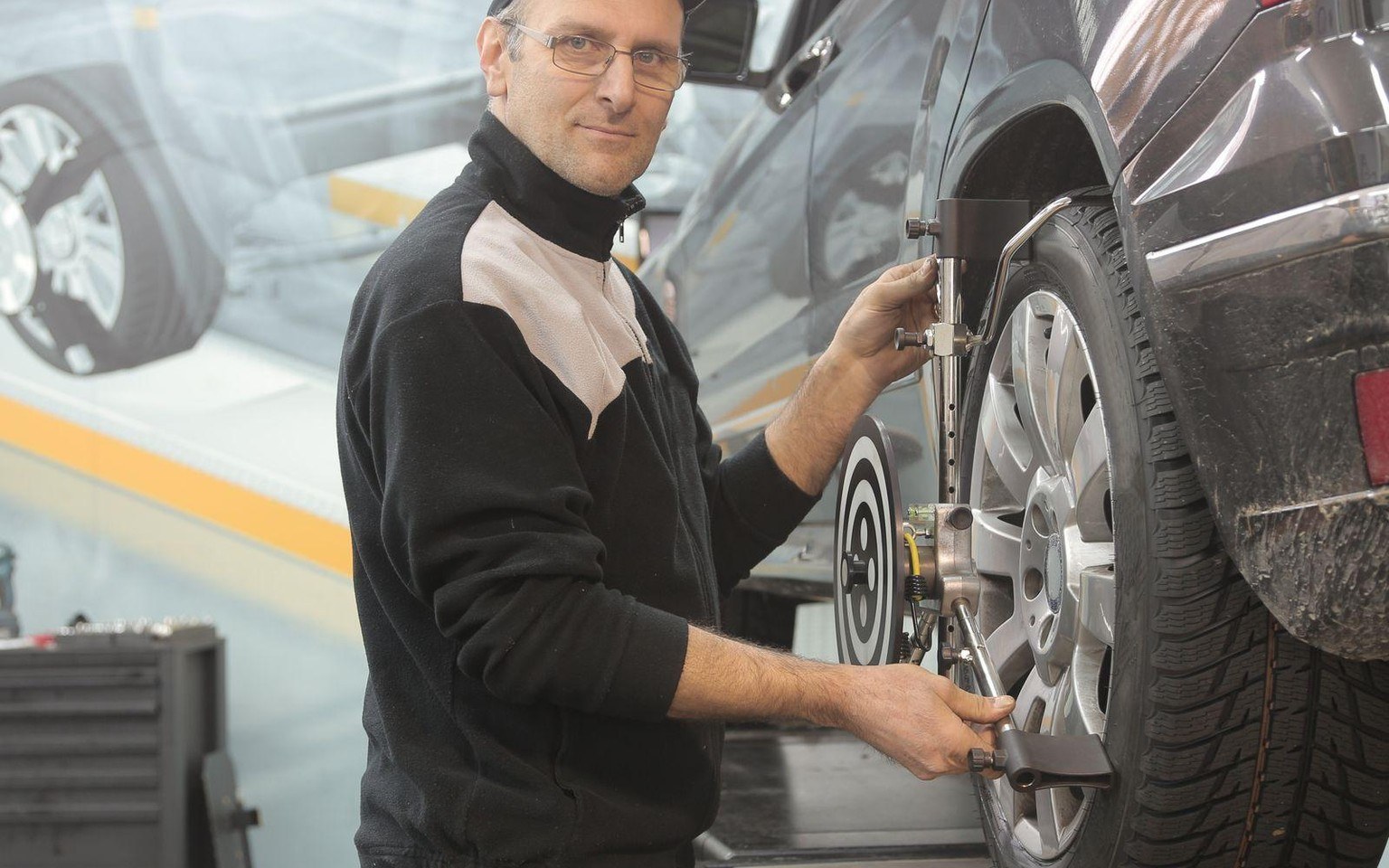
You are holding the steering wheel straight, yet the car keeps drifting towards the edge of the road. Or it suddenly veers left when you brake. The cause may be something as simple as a difference in tyre pressure, but it could also be a problem with the brakes or suspension. The key is to identify the circumstances in which the vehicle changes direction, rather than creating a dangerous “test” by letting go of the steering wheel while driving.
A car may pull to one side because of different tyre pressures or tyre damage, incorrect wheel alignment, worn suspension components or a dragging wheel. A slight tendency to veer on a sloping road does not necessarily indicate a fault. However, if the pulling started suddenly, is becoming noticeably worse or occurs when braking, stop the vehicle safely and have the cause checked.
First, identify when the car changes direction
Simply saying “it pulls to the left” is not enough for a service technician. Veering during steady driving has different causes from veering under acceleration or while braking. It also matters whether the problem began after the tyres were changed, after hitting a pothole or following suspension work.
Note whether the steering wheel has to be held off-centre to drive straight, whether the vehicle wanders in ruts, whether you hear unusual noises and whether the tyre-pressure warning light has come on. If the car’s behaviour changed immediately after an impact, do not dismiss it as an ordinary consequence of an uneven road.
Do not try to diagnose the problem on a motorway or by braking sharply. It is enough to safely observe the symptoms during normal driving and then describe them to the service centre.
Different tyre pressures are a simple first check
When wheels on the same axle have significantly different pressures, the vehicle may behave asymmetrically. Check the pressure with a gauge against the values specified by the car manufacturer, usually found on a label in the door opening or in the owner’s manual. Ideally, measure it when the tyres are cold, and remember that the front and rear axles may have different specified pressures.
Do not look for a universal pressure based on the number printed on the tyre sidewall: that is not the normal recommendation for a particular vehicle. If the pressure in one wheel repeatedly drops, check for a puncture as well as the valve and rim. Inflating the tyre will only temporarily remove the symptom if air is still escaping.
Also look for visible sidewall damage, bulges or unusually worn tread. If you suspect tyre damage, do not keep driving simply because the pressure still appears acceptable.
Wheel alignment: when to suspect it
Wheel alignment determines the position of the wheels relative to one another and their angles in relation to the vehicle. Incorrect alignment can contribute to pulling to one side, an off-centre steering wheel and uneven tyre wear. It can be disrupted, for example, by a hard impact with a pothole or kerb, or by repairs to suspension components.
However, wheel alignment is not the automatic answer in every case. If a control arm is loose, a ball joint is worn or a rim is damaged, adjusting the angles alone will not fix the fault. The service centre should first check the technical condition of the suspension and only then set the alignment according to the manufacturer’s specifications.
Also pay attention to the wear pattern: a tyre that is worn smooth on one side may point to an alignment problem, but the exact cause cannot be reliably determined from a photograph. After suspension work, ask whether the specified procedures require a verification measurement.
Why a car can pull even with new tyres
A new tyre does not automatically guarantee that both wheels will behave the same way. Tyre manufacturer Michelin also describes so-called tyre conicity: a slight asymmetry in its construction can create a lateral force. The correct size, type, matching wear and fitting also matter.
If the pulling began immediately after new tyres were fitted, return to the tyre shop. Have it check the pressure, tyre markings and orientation, the condition of the rims and any possible tyre defect. A suitable diagnostic wheel swap should be carried out by a technician for the specific vehicle; not every wheel can be exchanged freely.
Wheel balancing itself primarily addresses vibrations caused by an unbalanced rotating assembly. It is not the same as wheel alignment and may not eliminate a persistent pull to one side.
Pulling only when braking is a different problem
If the car holds its line during steady driving but veers sharply when you press the brake pedal, the braking system should be checked as a priority. Possible causes include uneven braking force, a seized caliper, unevenly worn brake pads, or a related tyre or suspension issue. Without measurements, it is not possible to determine which component is responsible.
The smell of overheating, smoke, a noticeably hot wheel or reduced braking effectiveness are also warning signs. Do not touch the rim or brake components with your hand. If these symptoms occur, pull over safely and arrange servicing or recovery, depending on the seriousness of the situation.
The road may be slightly sloped
Roads often have a crossfall to allow water to drain away. On such a road, a car may have a slight tendency to move towards the edge. This differs from persistent, pronounced pulling even on a suitable level surface.
It is not sensible to prove the difference by letting go of the steering wheel. If it seems that the car systematically requires steering corrections, having the tyres and suspension checked is safer than repeatedly experimenting in traffic.
What to tell the service centre to help find the problem faster
Make a note of when the problem appeared, which side the vehicle pulls towards, whether it is related to braking or acceleration, and when the tyres were last changed or the suspension was repaired. Also tell the technician about any impact with a pothole or kerb, even if there is no visible damage to the bodywork.
There is no point in starting with expensive component replacements without a diagnosis. The correct procedure distinguishes between tyre pressure and condition, mechanical play, brakes, and only then wheel alignment adjustment. If the car changes direction significantly or brakes unevenly, safety matters more than whether it can still “be driven normally”.
Sources
- Michelin – Handling Problems: Symptom Pulling to One Side – https://www.michelin.ca/en/auto/learn/tire-damage/handling-problems/symptom-pulling-to-one-side
- The AA – Why Is My Steering Wheel Shaking? (wheel alignment, tyre pressure and brakes) – https://www.theaa.com/breakdown-cover/advice/steering-wheel-shaking

Gabriel Čatár
I'm interested in everyday things we encounter but don't always understand. From technology and personal finance to practical guides and fascinating facts about the world. At Offpitch, I focus on topics worth exploring in greater depth, checking the facts and explaining them in a clear, accessible way. My goal is to make sure readers take away something useful from every article.


