
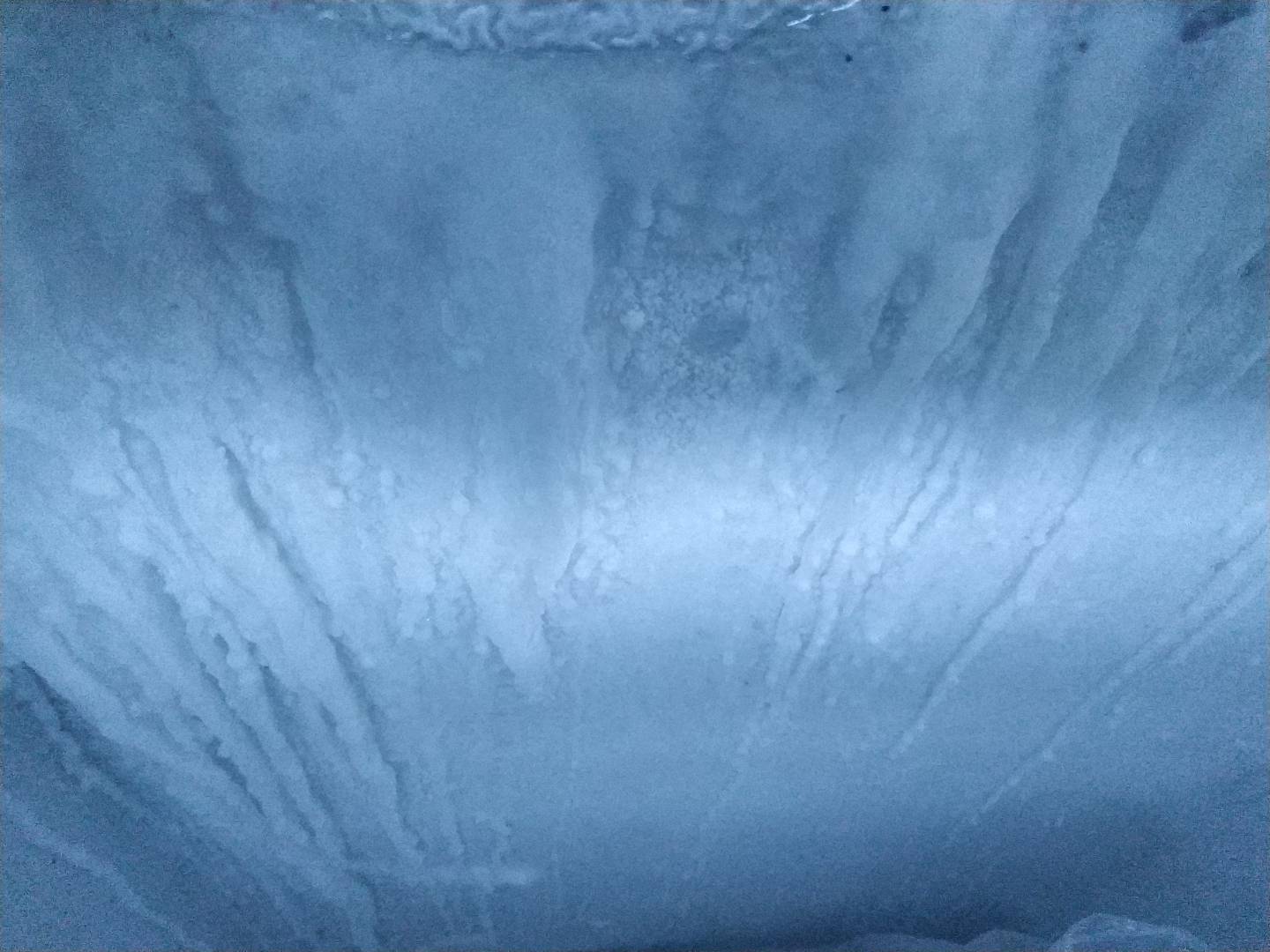
You open the fridge and find ice on the back wall, even though you certainly did not order any frost. Sometimes it disappears on its own during the defrost cycle; other times it builds up every day and food against the wall even freezes. It is not worth guessing the cause from a single photo: an older fridge with drip defrost works differently from a modern No Frost model.
A thin, temporary layer of frost on the back wall of some fridges can be a normal sign of cooling. However, if the ice keeps getting thicker, appears around the door, or freezes food, check the temperature setting, door seal, frequent door opening and airflow. In a No Frost model, recurring heavy frost may also indicate a defrosting or ventilation problem. The exact procedure depends on the type of appliance.
When Is Ice Normal and When Is It a Problem?
In some fridges, droplets or a thin layer of frost form on the inner back wall during cooling. When the compressor stops cooling, the wall warms up, the frost melts, and the water drains away through a designated channel. Beko therefore notes that a thin layer of frost on the back wall may be entirely normal.
The greater concern is a continuous, thick layer of ice that does not disappear during normal cycles, or ice appearing where it did not form before. If this is accompanied by uneven temperatures, frozen lettuce, the compressor running constantly or wet drawers, the cause should be investigated. No Frost models are also designed not to produce visible layers of ice in the main storage compartment when operating correctly.
Ice in the freezer and frost in the refrigerator compartment are not the same diagnostic situation. If the issue affects only the freezer, follow its manual and defrosting system; do not apply a general procedure intended only for the refrigerator compartment.
Cause No. 1: The Fridge Is Set Too Cold
A common cause is an incorrectly set thermostat or cooling set to an unnecessarily low temperature. Beko gives approximate target temperatures of 4 to 5°C for the fridge and around −18°C for the freezer compartment. However, not every number on a rotary control represents degrees Celsius: on some appliances, a higher number means more intensive cooling, while on others the display shows the temperature directly.
Place a suitable thermometer in the middle of the fridge and check the actual temperature after operation has stabilized. Do not assess it immediately after opening the door or loading a large grocery shop. If you have a mechanical control, consult the manual for your specific model to see how it should be set.
Food pushed directly against a very cold back wall can freeze even if the average temperature elsewhere still seems appropriate. Leave the recommended clearance from the wall and do not block air vents, according to the appliance's design.
Cause No. 2: Too Much Humid Air Is Getting Inside
Each time the door is opened, warmer room air enters the fridge. Its moisture can condense and freeze on cold surfaces. The more often you open the door, or the longer it remains open, the harder the cooling system has to work. Electrolux also lists warm food and too much newly added food among the possible causes of frost.
There is no need to turn everyday use into a laboratory exercise. However, try to take out everything you need at once, avoid leaving the door open while cooking, and store food in suitable containers. Do not leave food out of the cold for unnecessarily long periods; before placing a hot pot in the fridge, follow food-safety principles for cooling food and the appliance manual.
If frost appeared after moving home or changing household habits, it does not necessarily mean that a component has failed. Leaving the door open for longer or storing food improperly can change how the refrigerator compartment behaves without any technical fault.
Cause No. 3: The Door Seal Is Not Seating Properly or Something Is Blocking the Door
A closed door should create a continuous seal. If the gasket is dirty, torn or partially detached, warm air can enter continuously. This often results in increased humidity, frost around the edges and longer compressor run times. Sometimes a drawer, bottle or improperly positioned shelf prevents the door from closing.
Inspect the seal all the way around and check for food residue, uneven areas and cracks. Clean it gently using the method recommended by the manufacturer. If the door hangs unevenly or the fridge is not standing properly, consult the instructions for levelling the feet; the door must close without being forced.
Do not pull the gasket with force or try to fix the problem by heating it without specific instructions. If the seal is damaged, the manufacturer recommends replacing it or arranging service. If ice continues to form around the door after cleaning and arranging the food properly, the air leak needs to be addressed systematically.
Cause No. 4: A Blocked Drain or a Defrosting Problem
In appliances with automatic drip defrosting, melted water should drain through a designated channel. If the drain does not work, water can accumulate and freeze again, depending on where it collects. Typical accompanying signs may include water beneath the drawers or unusual moisture at the bottom of the fridge.
Clean the drain only as instructed in the manual. Do not use metal wire, a screwdriver or a sharp object that could damage the plastic or refrigeration circuit. If the drain is inaccessible, it is safer to contact a service provider or the manufacturer than to dismantle internal covers without knowing what you are doing.
In No Frost fridges, recurring heavy frost may also be related to a defrosting failure or a fan that cannot circulate air properly. However, without diagnostics, a particular thermostat, sensor or heating element cannot automatically be blamed. Electrical and refrigeration components should be repaired by a professional.
How to Defrost a Fridge Safely
First consult the manual for your specific model, as No Frost and conventional systems differ. If the manufacturer recommends manual defrosting, disconnect the appliance from the power supply, move food so that it remains at a safe temperature, and prepare towels or a container for water. Let the ice melt naturally, following the manufacturer's instructions.
Do not pry it off with a knife or sharp tool. Damage to the evaporator or refrigeration circuit can mean an expensive repair and, with some refrigerants, a safety risk. Also, do not use an open flame or place an electric heater near water in an open appliance.
After cleaning, dry everything, switch the appliance back on according to the manual, and wait until it reaches the correct temperature. Only then return food that has remained at a safe storage temperature. If thick ice returns soon after defrosting, simply melting it has not solved the issue: its cause needs to be addressed.
When Should You Call a Technician?
Service is appropriate if the door seal is leaking and needs replacing, if ice accumulates in a No Frost model, or if the appliance cannot maintain its temperature after basic checks. Do not delay an inspection if the fan is constantly noisy, leaks keep recurring, or you suspect damage to the refrigeration circuit.
Useful information for a service technician includes a photo of where the ice forms, the model designation, the actual measured temperature, and how soon frost returns after defrosting. These details help distinguish improper use from a fault. Ice alone is not a reason to try randomly replacing parts.
Conclusion
When looking for the cause, first distinguish a thin, temporary layer of frost from a thick, persistent layer. Check the temperature, door, seal, amount of warm air entering, and internal airflow. A conventional model may briefly frost up on the back wall as part of normal operation; a No Frost appliance with persistent ice deserves a more thorough check. If basic maintenance does not help, have the cause addressed through service, not with a sharp knife.
Sources
- Beko Slovakia – How to fix a fridge that is building up frost? (temperature, door and seal) – https://www.beko.com/sk-sk/podpora/chladni%C4%8Dka-s-mrazni%C4%8Dkou–rie%C5%A1enie-probl%C3%A9mov–v%C3%BDrobok/ako-opravi%C5%A5-chladni%C4%8Dku-v-ktorej-sa-tvor%C3%AD-n%C3%A1mraza
- Electrolux Slovakia – Why is there frost in my fridge? (humidity, food and closing the door) – https://support.electrolux.sk/support-articles/article/preco-mam-v-chladnicke-namrazu
- Beko Slovakia – Help Centre for fridge freezers (No Frost and recommended temperatures) – https://www.beko.com/sk-sk/podpora/centrum-pomoci/chladni%C4%8Dka-s-mrazni%C4%8Dkou
Article photo: Gerald Waldo Luis, licence CC BY-SA 4.0. When the photograph is used, WordPress may automatically resize or crop it. Modified versions of the photograph are distributed under CC BY-SA 4.0.

Gabriel Čatár
I'm interested in everyday things we encounter but don't always understand. From technology and personal finance to practical guides and fascinating facts about the world. At Offpitch, I focus on topics worth exploring in greater depth, checking the facts and explaining them in a clear, accessible way. My goal is to make sure readers take away something useful from every article.


