
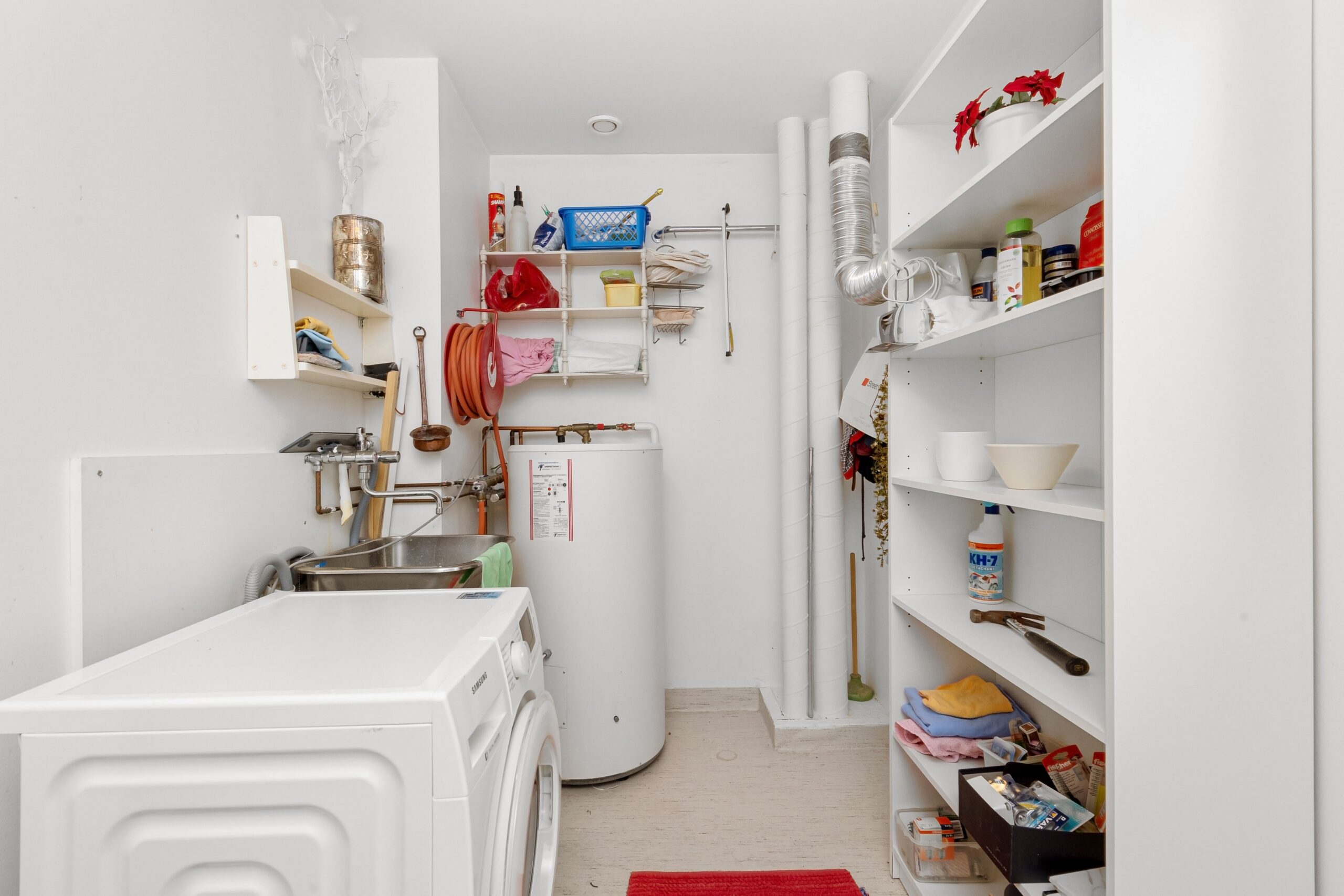
The washing machine starts spinning, there is loud banging, and the appliance moves several centimetres. Some vibration is normal at high spin speeds, but a washing machine “walking” across the bathroom is not something you should simply accept. Before calling a repair technician, you can check several relatively simple things, especially the drum load, the levelling feet and the installation.
A washing machine most often jumps during the spin cycle because wet laundry has become unevenly distributed, the appliance is not standing firmly and level, or transit bolts have been left in a new machine. An overloaded drum or unsuitable flooring can make the problem worse. If the banging continues after the load has been distributed correctly and the installation has been checked, the appliance’s mechanical condition should be inspected by a service technician.
First, find out whether it happens every time or only with certain loads
You can make the first distinction without any tools. If the washing machine vibrates excessively only when washing a single thick blanket or bathroom mat, an unbalanced load is likely. If it moves even with an ordinary mixed load, incorrect positioning or a technical problem is more likely. If a brand-new appliance behaves this way from the very first wash, immediately check whether all transit restraints have been removed according to the instructions for that specific model.
Washing machines try to distribute the load before high-speed spinning. They may rotate the drum slowly several times before increasing the speed. With a significant imbalance, some models reduce or stop the spin cycle and display an error code. This may be a protective function rather than a motor fault in itself.
Unevenly distributed laundry: even too little can be too much
A large wet towel, bathrobe or mat can create a heavy clump on one side of the drum. When spinning quickly, the washing machine then tries to compensate for the imbalance, which you hear as repeated impacts and feel as shaking. The issue is not limited to overloading. A single heavy item in an almost empty drum can be worse for load distribution than a sensible mixed load.
If the wash behaves unusually, safely pause the programme according to the instructions and wait until the door unlocks. Do not try to force it open or open it while the drum is rotating. Redistribute the laundry, or add a few suitable items of similar colour and material to help create a more even load. Then try spinning again.
If the drum is overfilled, remove some items. The capacity shown on the label does not mean that every type of textile can be packed into the washing machine to the brim. Different programmes may allow different maximum weights, so follow the instructions and do not force laundry into the drum.
Check the feet and the floor
The washing machine must stand securely on a firm surface. If one foot is not touching the floor or the locknuts are not secured, it can rock during the spin cycle. The problem may also occur after moving the appliance, replacing the flooring or as the adjustment gradually loosens.
With the empty washing machine switched off, gently push each corner. If it rocks, it needs to be levelled. Use a spirit level to check that it is level, and adjust the feet according to the manufacturer’s instructions. Once level, secure them if the design requires it. Do not place improvised wedges or layers of cardboard under the machine, as they can shift or absorb water.
A soft, springy or uneven floor can amplify vibrations even when the washing machine is relatively well adjusted. Both Bosch and Samsung stress the need for a firm, level surface. An anti-slip mat will not correct improperly adjusted feet or prevent drum movement when transit restraints are still in place.
New washing machine? Transit bolts are an essential check
During transport, the washing machine’s internal assembly is secured with bolts or other restraints to prevent damage. They must be removed before first use, exactly as specified in the installation instructions. If they remain in place, the appliance may shake severely and could be damaged.
The bolts are usually located at the back, but their number, shape and removal procedure vary by manufacturer and model. Do not blindly remove every screw you see. Find the relevant section in the manual and check for any transport packaging underneath as well. If you are not sure the appliance has been installed correctly, do not start another wash and contact the installer or service centre.
Keep the original transit components after removing them. They may be needed to secure the washing machine safely during a future move, again following the instructions.
What do different sounds indicate?
Dull thumping in time with the drum’s rotation can occur with an uneven load. Metallic rattling may also be caused by items left in pockets or caught in an accessible part of the drum. Squeaking, pronounced scraping, a burning smell or unusual play are not reasons to keep trying faster programmes. In that case, switch off the appliance and arrange a professional inspection.
Do not dismantle electrical components or the drum suspension without the appropriate qualifications. Although shock absorbers and bearings are often mentioned online, their failure cannot be safely confirmed from a video of a bouncing washing machine alone. Different causes can produce similar sounds.
A simple process, starting with the easiest solution
- Stop the programme as described in the instructions and wait for the door to unlock safely.
- Redistribute clumped laundry or adjust the amount according to what the programme allows.
- With the washing machine switched off, check whether it rocks, then level and secure the feet according to the instructions.
- For a newly installed appliance, confirm that all transit restraints have been removed.
- Try a normal, suitable load. If the problem persists, arrange service and describe the exact symptoms.
A washing machine does not have to remain completely motionless during the spin cycle. However, it should not repeatedly hit furniture, pull out hoses or move around dangerously. Such behaviour is a signal to stop using it, not a test of the appliance’s durability.
Sources
- Samsung – What to do if your washing machine is noisy or vibrating (load, feet and transit bolts) – https://www.samsung.com/uk/support/home-appliances/my-washing-machine-is-noisy-vibrating-how-can-i-make-it-quieter/
- Bosch – Washing machine makes strong noise (levelling the washing machine and noise diagnosis) – https://www.bosch-home.com/qa/en/service/get-support/washing-machine-makes-noise

Gabriel Čatár
I'm interested in everyday things we encounter but don't always understand. From technology and personal finance to practical guides and fascinating facts about the world. At Offpitch, I focus on topics worth exploring in greater depth, checking the facts and explaining them in a clear, accessible way. My goal is to make sure readers take away something useful from every article.


