
Summer festivals, city celebrations, brand activations, and private corporate shows are no longer places where artists “play for the love of it.” Behind every 60–90 minute set sits a contract, a technical rider, insurance clauses, taxes/withholding, and a fee structure that can look wildly different depending on the country and the buyer. Below is a practical (and reality-checked) look at what top-tier acts can command in 2026, why two “similar” headliners can cost very different money, and what usually drives the last-minute jump from a quoted number to the final invoice.
Note on methodology
Most top-level live deals are not a simple flat price. They’re typically built around a guarantee (the minimum the artist gets paid) and sometimes a backend (a percentage of ticket revenue after agreed costs), plus separate line-items for production, travel, and crew. Exact numbers are often confidential; the examples below rely on credible reporting and industry-style deal logic, so ranges are more honest than pretending there’s a universal “price list.”
You might also like
- Why festival tickets keep getting more expensive even when lineups don’t look “bigger”
- The hidden line items in touring budgets that can blow up a promoter’s spreadsheet overnight
1) Ultra-elite festival headliners — eight figures aren’t “myth money” anymore
A small group of global megastars now sits in a bracket where a single festival booking can reach $8–10M+—especially when the deal covers two weekends (Coachella-style), includes extensive production expectations, and delivers massive media value.
You might also like
Publicly reported festival headliner examples (illustrative):
| Act (example) | Reported festival fee | What it suggests about the tier |
|---|---|---|
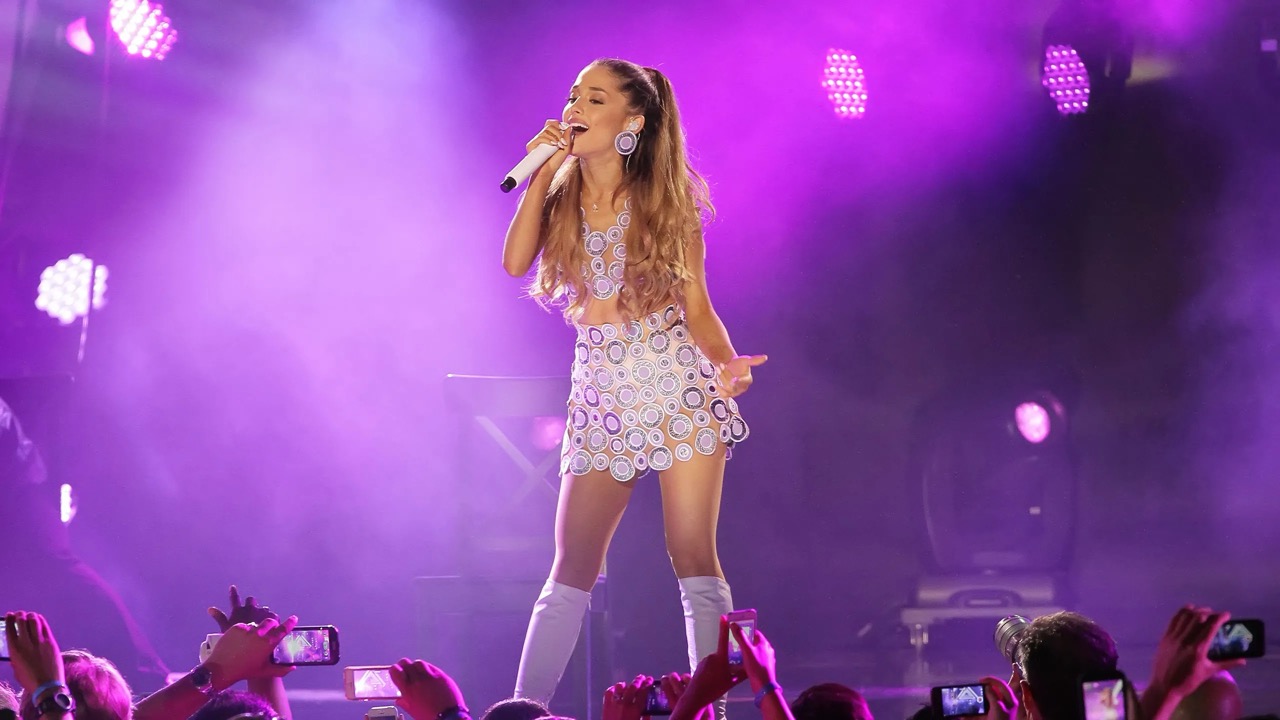
| Ariana Grande (Coachella 2019) | ~$8M total | Big headliners can sit in the high single-digit millions for a marquee festival booking |
| Justin Bieber (Coachella 2026) | “north of $10M” (reported) | The upper ceiling has plausibly moved into eight figures for the rarest A-list slots |
What’s important: these figures are festival-specific and not directly comparable to an artist’s per-night stadium touring economics (where the artist may prefer their own tour because the upside can be bigger). (variety.com)
2) Prestige festivals that pay “below market” — the Glastonbury paradox
Not every legendary festival pays like a billionaire brand event. Some of the most prestigious stages in the world have a long-running reputation for paying far less than a headliner could command elsewhere, because the cultural value (and the exposure) is part of the compensation.
A widely repeated benchmark: Glastonbury founder Michael Eavis has been quoted as paying around £200,000 to headline (in specific cited examples), which is dramatically lower than what comparable stars can earn at fully commercial festivals or private events. That gap is often explained by a mix of prestige, tradition, and the festival’s broader financial model. (telegraph.co.uk)
Takeaway: two “headline” bookings can sit on different planets financially, even for the same act, depending on the festival’s identity and deal structure.
3) Stadium and arena touring economics — why “the fee” often mirrors what a show can gross
On the touring side, a useful anchor is the scale of the business itself. Pollstar’s year-end reporting for 2024 shows the Top 100 worldwide tours collectively grossing about $9.5B, with an average ticket price around $135.92 and an average gross per show around $2.32M for those top tours. That doesn’t equal “artist fee,” but it explains why guarantees rise: the live market has more revenue to fight over. (Pollstar News)
In practice, this is why many large acts price themselves off a simple logic:
- If the show can gross X, the guarantee has to make sense relative to X
- the promoter still needs room for venue rent, staffing, marketing, insurance, local taxes, and risk
- the artist needs to cover production, crew, trucks, rehearsals, and the entire touring machine
So even when you hear a “fee,” it’s usually just the headline number sitting on top of a deeper split of money and risk.
4) Electronic headliners & DJ superstars — a different cost structure, different leverage
For top DJs and electronic live acts, the fee conversation tends to be shaped less by “band logistics” and more by:
- whether it’s a one-off festival vs. a club residency
- how much of the show is self-contained (visuals, timecode, special rigs)
- the buyer’s ability to monetize VIP, branded stages, livestream rights, and sponsorship
At the very top end, festival headliner ranges can overlap with “band headliner” money, but the middle tiers often scale faster because the touring footprint can be lighter per performance (until the visuals become the production).
5) K-pop, tightly choreographed pop, and “show-first” acts — when production is the fee multiplier
Some of the most expensive live productions aren’t rock bands at all. The big multipliers tend to be:
- choreography and staging that requires extra rehearsal days
- high crew counts and strict technical requirements
- additional travel complexity (especially for international routing)
- performance expectations that make “reduced production” deals harder to accept
This is the category where promoters often discover that the “artist fee” is only half the story—the rest lives in flights, hotels, freight, per diems, and show-critical gear.
6) Clubs and “real-world” touring — the numbers that keep smaller venues awake at night
At the bottom of the ecosystem, the math is brutally simple: if the room doesn’t sell, there’s no money to split.
Pollstar reporting on smaller venues (capacity 750 or lower) cited an average of 278 tickets sold per show in Q3 2025, with an average ticket price around $34.74 and an average gross per show around $10,075. For larger clubs (751–1,500), Pollstar cited average grosses around $33,714. This is the reality check behind why many emerging artists tour on razor-thin margins and why guarantees can be so hard to raise outside major markets. (Pollstar News)
How promoters actually build the number
Here’s what commonly moves a quote up or down—often more than “popularity” alone:
- Demand signals — streaming momentum, ticketing history, sell-through speed, social engagement that translates into sales
- Production footprint — lights, video, pyro, backline, stage size, special rigging, extra crew
- Routing costs — how far the act travels, whether trucks can efficiently hop to the next date, time between shows
- Risk and insurance — weather exposure (outdoor), cancellation terms, event insurance requirements
- Exclusivity / radius clauses — “no other show within X km for Y weeks” can raise the price fast
- Tax and withholding — cross-border performance taxes and admin burden vary widely by country and can change the net
- Media value — livestreams, broadcast rights, official recording permissions, sponsor integrations
Economic context: why fees keep rising in the first place
Even after the post-pandemic rebound stopped feeling “new,” the top of the market has remained huge. Pollstar’s reporting points to sustained high grosses and elevated average ticket prices at the top end—conditions that generally strengthen artist leverage in negotiations. (Pollstar News)
New trends that can push fees higher in 2026
- Two-weekend mega-festival bidding wars (where the rarity of the slot becomes the asset) (Rolling Stone)
- Prestige vs. profit bookings (some festivals pay less cash but deliver cultural capital) (telegraph.co.uk)
- Immersive and filmed experiences (VR/stream capture, higher production demands, new rights negotiations)
- Sustainability riders (greener logistics can be real cost, not just marketing)
Conclusion
A concert “fee” is rarely just a number—it’s a compressed summary of demand, risk, production complexity, routing, and bargaining power. In 2026, the top of the market can legitimately touch eight figures for the rarest global festival slots, while other iconic stages pay far less because prestige is part of the deal. For promoters, the winning strategy is still the same: price the show based on what the event can realistically monetize (tickets, sponsors, F&B, media), and treat the artist quote as the start of a negotiation—not the final budget.
Sources
- Pollstar — 2024 Year End Analysis: Industry Remains Strong & Steady… (Pollstar News)
- Pollstar — A Helluva Year End: Talking Top Tours & Small Venues (Pollstar News)
- Rolling Stone — report on Justin Bieber’s Coachella 2026 fee (“north of $10 million”) (Rolling Stone)
- Variety — report on Ariana Grande’s Coachella 2019 fee (variety.com)
- The Telegraph / The Independent — reporting on Glastonbury headliner pay benchmarks (incl. ~£200k reference) (telegraph.co.uk)

Robert
I’m interested in technology and history, especially true crime stories. For three years I ran a fact-based portal about modern history, and for a year I co-built a blogging platform where I published dozens of analytical articles. I founded offpitch so that quality content wouldn’t be hidden behind a paywall.


