
Freshly washed laundry should smell clean, but when you open the washing machine, you are hit by a musty odour. Sometimes the smell comes from the drum; other times, you only notice it on damp towels. The cause may be a combination of detergent residue, moisture and dirt in the door seal, detergent drawer or drainage system. A fragranced product often only masks the problem.
Clean a smelly washing machine systematically: check the rubber door seal, remove and wash the detergent drawer, safely clean the accessible pump filter according to the manual, and run an empty cleaning programme recommended by the manufacturer. Let both the drum and drawer dry after washing. If the smell returns along with standing water or a drainage error, the drainage system or the machine may need servicing.
Why Your Washing Machine Smells Even Though You Wash Regularly
A washing machine is an environment where water, detergent, grease residue from clothing and moisture all come together. Dirt can remain in hidden areas, especially when low-temperature washes are used repeatedly. Folds in the seal retain water, the drawer collects sticky fabric-softener residue, and the filter catches lint and small objects.
It is not correct to automatically assume that every smelly washing machine is mouldy. The odour may come from deposits, standing water or an incorrectly connected drain. Look for the cause based on where the smell is strongest and whether the machine is draining properly.
If you leave laundry in the drum for several hours after the programme has finished, damp clothes can begin to smell even if the washing machine itself is otherwise clean. Keeping the appliance clean and removing laundry promptly go hand in hand.
Step 1: Clean the Rubber Door Seal
On a front-loading washing machine, carefully pull back the accessible folds of the seal and inspect them. You may find hair, coins, lint, water and slimy deposits there. Remove debris with a soft cloth and clean the seal using a mild cleaning product suitable for the appliance, as specified in its manual.
Do not use sharp objects or abrasive powders. You could damage the seal and cause leaks. Once cleaned, wipe it dry and check for cracks or areas where it does not sit properly.
If the surface is visibly damaged, further scrubbing will not repair it. A replacement seal must be intended for the exact model; consider professional servicing for replacement, as incorrect installation can lead to water leaks.
Step 2: Remove the Detergent Drawer and Clean Its Compartment
The detergent drawer is often where fabric softener, detergent powder and moisture accumulate. Many drawers can be removed using a release catch, but the mechanism varies. Consult the manual, as pulling it out forcibly can damage the plastic guides.
Wash the removed drawer with warm water and a soft brush or cloth. Rinse all compartments thoroughly, especially the fabric-softener compartment, and remove buildup from the accessible recess in the washing machine as well. Do not allow water to enter areas where the manufacturer advises against using it.
Bosch recommends cleaning the drawer regularly and soaking it if buildup is present. Adjust the frequency to how often you use the washing machine. Let the drawer dry after washing it; otherwise, residual moisture will quickly return.
Step 3: Clean the Pump Filter Carefully
If the washing machine smells from the bottom, drains slowly or retains water, the pump filter may be clogged. Before handling it, switch off the appliance and disconnect it from the power supply. After a hot programme, wait for the water to cool, then place a shallow container and towels beneath the service flap.
Follow the instructions for your specific model exactly. Some washing machines have a small emergency drain hose, while others release water as the filter is gradually loosened. Never unscrew it abruptly if there is a large amount of water in the drum. After removing it, clear away trapped debris and carefully refit the filter.
If a sharp object is stuck in the filter, the impeller does not move, or water leaks even after it has been closed properly, do not attempt to dismantle the pump blindly. Bosch recommends professional servicing if the mechanism is jammed.
Step 4: Run a Drum Cleaning Programme
Many modern washing machines have a drum-cleaning programme. It is run empty, following the manufacturer's instructions and, where appropriate, using a product suitable for the specific model. It is not appropriate to automatically recommend a particular temperature or combination of chemicals for every brand.
If your washing machine does not have its own programme, look up the procedure in its manual. The manufacturer may recommend a dedicated hygiene cycle or maintenance product. Avoid mixing vinegar with chlorine bleach or other cleaners: dangerous chemical reactions can produce irritating gases.
A dishwasher tablet is not automatically a suitable washing-machine cleaner. Products for different appliances have different formulations and dosing instructions. If you are unsure what may be used, the procedure recommended by the washing machine manufacturer is safer.
Why Using Too Much Detergent Does Not Help
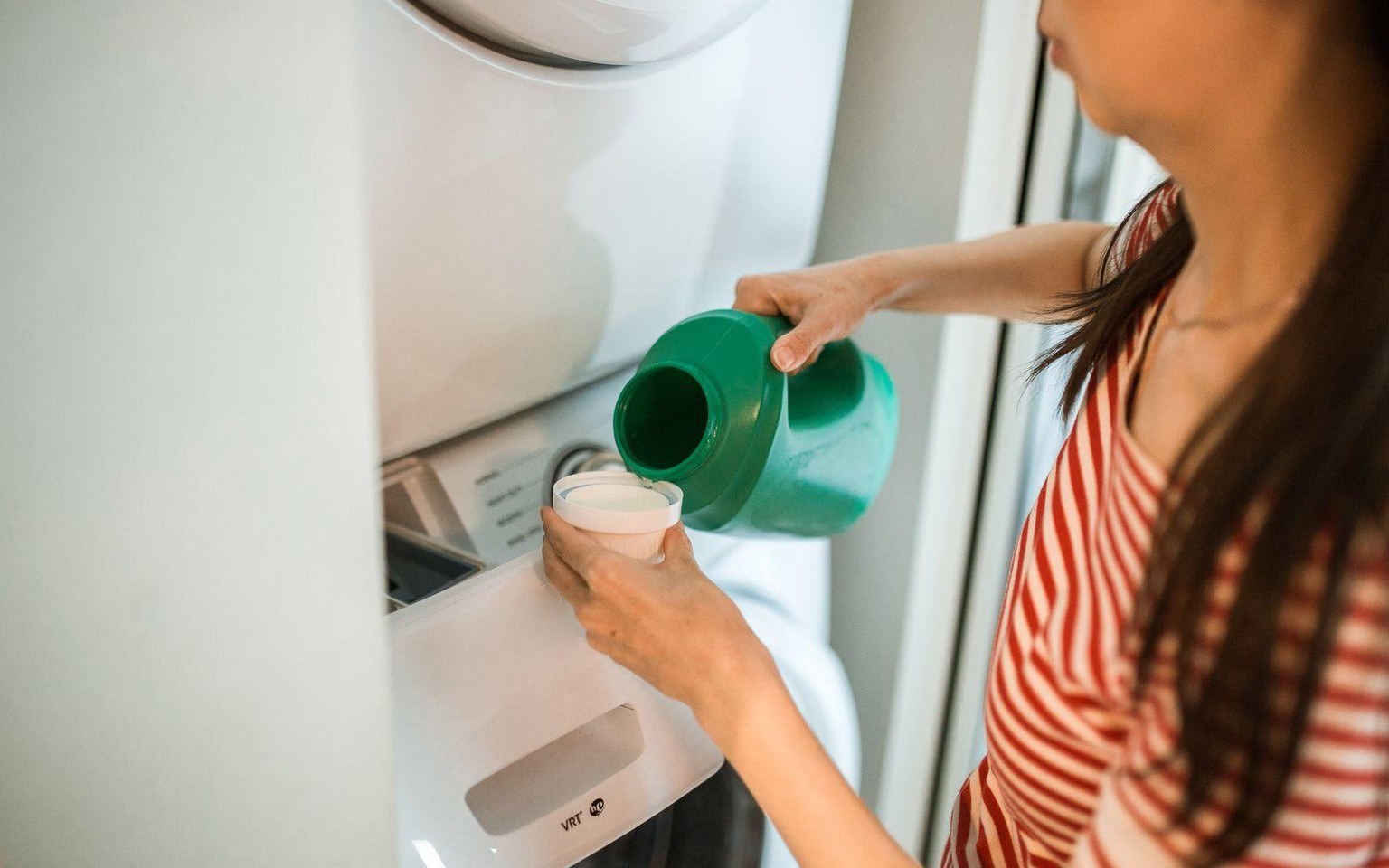
Overdosing can create excess foam and leave residue in the drawer or on fabrics. Determine the dose according to the instructions on the packaging, water hardness, the amount of laundry and how soiled it is. Estimating by eye is particularly inaccurate with concentrated liquid detergents.
Regular short or cool programmes may be suitable for particular materials, but when maintaining the appliance, follow the dedicated cleaning mode. It will not solve a blocked drain or damaged seal, but it can help remove deposits from places that a cloth cannot reach.
How to Prevent the Smell From Returning
Remove laundry as soon as possible after the wash has finished. Leave the door and detergent drawer slightly open so they can dry, if this is safe around children and pets and permitted by the manufacturer. Wipe water from the folds of the seal and check the filter from time to time as instructed in the manual.
If the smell keeps returning despite cleaning, the washing machine cannot drain completely, or you can smell sewage near the drain hose, check the trap, the hose connection and the appliance's technical condition. If you notice an electrical smell or smoke, do not use the washing machine and disconnect it if it is safe to do so.
Sources
- Bosch – Washing Machine Troubleshooting: Washing Machine Smells – https://www.bosch-home.com/us/owner-support/washing-machines/troubleshooting
- Bosch Slovakia – Cleaning the Detergent Drawer – https://www.bosch-home.com/sk/servis/podpora/cistenie-zasobnika-na-praci-prostriedok
- Bosch Slovakia – Cleaning the Washing Machine Filter – https://www.bosch-home.com/sk/servis/podpora/cistenie-filtra-pracky

Gabriel Čatár
I'm interested in everyday things we encounter but don't always understand. From technology and personal finance to practical guides and fascinating facts about the world. At Offpitch, I focus on topics worth exploring in greater depth, checking the facts and explaining them in a clear, accessible way. My goal is to make sure readers take away something useful from every article.


