
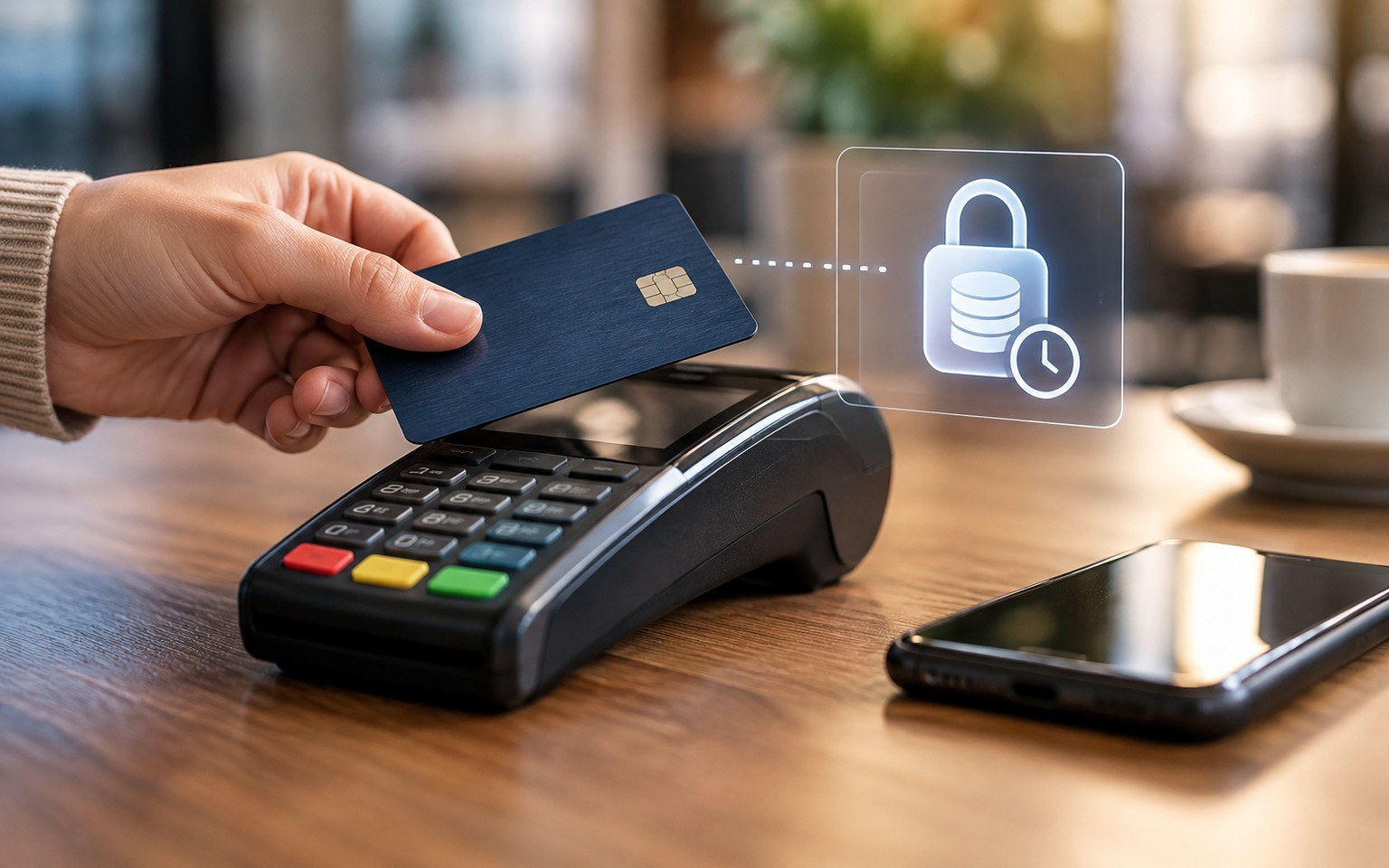
Your account shows a lower available balance, yet the payment still appears as pending in your transaction history. At a hotel, a higher amount than the room price may be held; at a petrol station, an amount may be held for fuel you ultimately did not buy. This does not always mean you have been charged twice or that the bank has made an error. Card payments involve several stages, and mobile apps may display them differently.
A card payment hold is a temporary reservation of an amount during authorisation, not necessarily the final posting of the payment. The bank may deduct the reserved amount from the funds available for further payments until the merchant submits the final transaction or the hold expires. Hotels, car rental companies and pay-at-pump petrol stations may authorise an estimated amount. If an entry remains for an unusually long time or you do not recognise the payment, contact your bank and the merchant.
Three terms that are often confused
Authorisation means that the payment system verifies the card and the availability of the relevant amount, then approves or declines the transaction. When authorisation is successful, the amount may be temporarily reserved. Posting or settlement follows when the merchant submits the final transaction details and the payment is recorded. Release of a hold is the removal of the reservation when the transaction is cancelled, changed or completed.
In a banking app, these stages may be labelled “pending”, “reserved”, “held” or “posted”. The exact labels and timing depend on the bank, card scheme and merchant. Some apps show the booked balance and the available balance separately. The booked balance may still include money that you can no longer spend on another purchase.
Example: You have €500 in your account. A hotel authorises a €120 deposit. Your available balance may fall to €380, even though the final bill for your stay has not yet been posted. Once the merchant submits the final amount, the original hold should be released or adjusted as part of the process. In some apps, both entries may briefly appear side by side, making it look like a duplicate payment.
Why holds are used at hotels or petrol stations
With a standard purchase, the merchant knows the price in advance. When renting a car, the final amount may depend on fuel, additional services or contractual terms. A hotel may reserve an amount for costs that will not be billed until check-out. When paying at a self-service pump, the quantity of fuel is often determined only after refuelling.
In its information for debit cardholders, Visa explains that such a hold is not the final charge itself and that releasing it may take several days. The held amount may be higher than the price of the final service. Before travelling, it is therefore worth knowing the hotel’s rules and keeping enough funds available for a possible deposit.
For online purchases, a payment may sometimes be authorised when the order is placed and posted only when it is shipped. A split delivery may create multiple entries. The merchant may also cancel the original authorisation and create a new one for an adjusted amount. What matters is the final status, not the number of mobile notifications alone.
When will I get the money back?
There is no single time limit after which every hold is removed. It depends on the transaction category, card type, merchant procedure, bank and card network rules. For a cancelled purchase, the merchant may submit an authorisation reversal; you then need to wait for the bank to remove the reservation. Under a different procedure, the hold simply expires.
Do not rely on a general claim that “it must be back within 24 hours”. If you need the money to pay a bill, your bank should explain whether it is a hold or an already posted payment, and what next steps may be available. Check the current time frames directly with your bank for your specific card.
A hold is not the same as a refund. If the merchant has already posted the payment and later returns the money, this is generally a separate refund transaction. By contrast, cancelling an unsettled authorisation often simply makes the originally reserved funds available again, without a new incoming “+€120” entry.
What if the app shows two payments?
First, open both entries and check their status, amount, date and merchant identification. One entry may be a hold and the other the final posted payment. Compare them with the terminal receipt or order confirmation email. If both payments have genuinely been posted and do not correspond to two purchases, you have reason to raise a dispute over an incorrect transaction.
The merchant can explain what amount was authorised and whether a reversal has already been submitted. The bank can see the holds on your account and tell you whether it can speed up the process or what confirmation it needs. Do not send anyone your full card number, security code or SMS codes. Enter details only through official contact channels.
If you do not recognise the transaction at all, do not automatically classify it as “just a hold” and wait for it to expire. Block the card immediately in the app if necessary, contact your bank and follow its procedure for an unauthorised payment. Waiting is not appropriate when fraud is suspected.
A practical check before travelling
Before staying at a hotel or renting a car, check the size of the deposit, accepted card types and whether a credit card is required. Do not confuse the available limit on a credit card with cash in your current account. If you only have a debit card, a large hold may temporarily restrict the money available for food or transport.
Customer support can explain the fees and time frames for a specific product. The examples in this article are illustrative; check the current terms with your bank. This text is for informational purposes and does not constitute financial advice.
Sources

Gabriel Čatár
I'm interested in everyday things we encounter but don't always understand. From technology and personal finance to practical guides and fascinating facts about the world. At Offpitch, I focus on topics worth exploring in greater depth, checking the facts and explaining them in a clear, accessible way. My goal is to make sure readers take away something useful from every article.


