
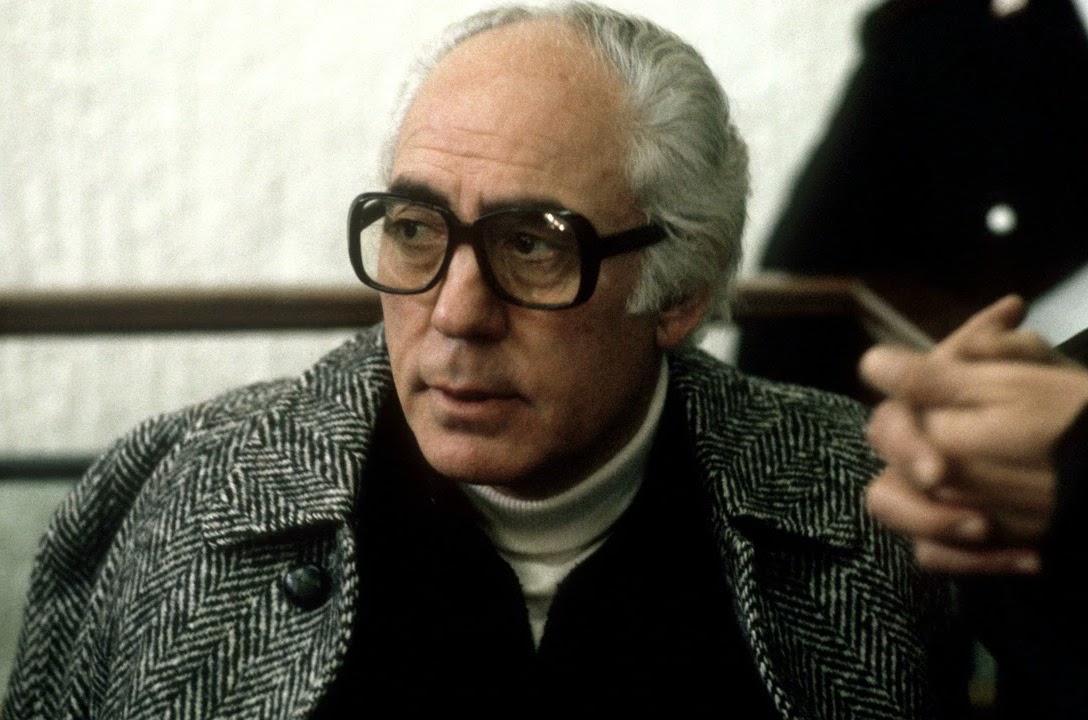
When the nickname Cassiere di Cosa Nostra first appeared in the Italian press, no one doubted it belonged to Giuseppe “Pippo” Calò. A man as interested in murder as in bookkeeping, for nearly three decades he fused two seemingly contradictory roles—the ruthless executioner and the indispensable handler of billions of lire moving between Sicily, Rome, and Swiss banks. His “career” shows how far organized crime can go when it has a scrupuple-free strategist with a financier’s gift.
Palermo, 30 September 1931: the beginning of a quiet war
Only a few fragments circulate about Calò’s childhood. We know he came from the Porta Nuova district and that, even as a young man, he watched Sicilian clans settle disputes with shotguns. At 23, he avenged his father’s murder, which opened the door for him into the Porta Nuova family. In 1962 he became its boss; together with Tommaso Buscetta—who would later speak to Judge Giovanni Falcone—he also sat on the Commission, Cosa Nostra’s highest “parliament.”
From antiques to the levers of money
In the early 1970s, Calò moved to Rome and put on the mask of an antiques dealer under the name “Maria Aglialora.” In reality, he was building a network of companies to launder cash. One of his apartment buildings on Piazza di Spagna was said to function like a bank: bags full of banknotes delivered in, clean transfers out to accounts. It was here that he connected with the armed group Banda della Magliana and with the P2 Masonic lodge of businessman Licio Gelli—an alliance that would later play a role in the collapse of Banco Ambrosiano.
The Second Mafia War: bloody support for the Corleonesi
When Salvatore “Toto” Riina unleashed the Second Mafia War in 1981, Calò bet on the Corleonesi. He repaid them with exceptional cruelty: he had two sons of his own friend Buscetta kidnapped and murdered. He then helped plan the elimination of bosses Rosario Riccobono and Salvatore Scaglione. His goal was prosaic—to keep the financial flow under the control of the single victorious faction.
A Christmas of terror: the bomb on the Rapido 904 train
The peak of Calò’s intimidation tactics was the attack on the Rapido 904 express on 23 December 1984. Explosives detonated in an Apennine tunnel between Florence and Bologna killed 16 people and injured 267 others. According to prosecutors, the “treasurer” wanted to divert police attention from mass arrests that Buscetta’s testimony was driving through the entire Cosa Nostra (Il Fatto Quotidiano, 27 Apr 2011, https://www.ilfattoquotidiano.it/2011/04/27/rapido-904-il-mandante-fu-toto-riina-fu-il-primo-avviso-a-falcone-e-borsellino/107348/). A court in Florence sentenced him to life in prison in 1989.

The Maxi Trial: the bunker where silence crumbled
A year later, in the concrete hall of Ucciardone prison, the “Maxiprocesso” began against 475 defendants. The verdict of 16 December 1987 handed down 19 life sentences and 2,665 years in prison. Calò received 23 years for mafia membership and money laundering; another life sentence was added soon after the conviction was upheld on appeal (OCCRP, “Italian Trial Looks at Mafia-State Pact”, https://www.occrp.org/en/investigation/italian-trial-looks-at-mafia-state-pact). The trial went down as the first systematic victory of the Italian state over Cosa Nostra.
“God’s banker”: the mystery surrounding Roberto Calvi’s death
Earlier, in June 1982, London police found Roberto Calvi hanging beneath Blackfriars Bridge. The businessman was nicknamed “God’s banker” for his unusual ties to the Vatican. In 2003, mafia turncoat Francesco Marino Mannoia testified that Calvi “disappeared” after losing Riina’s and Calò’s money. Roman prosecutors directly linked Calò, Flavio Carboni, and Ernesto Diotallevi to the killing—but in 2007 the court acquitted them for lack of evidence.
Influence behind bars
Although Calò has not tasted freedom since 1985, in the mid-1990s letters delivered into pre-trial detention contained his instructions for new investments. After 2000, Italy’s DIA seized real estate and bank accounts worth more than €300 million that reportedly bore his “signature.” The antimafia law 109/96, which allows confiscated assets to be used for social projects, emerged precisely from public pressure following Calò’s trials.
A bow, but no cooperation
In 2001, during hearings on the Via D’Amelio massacre (in which Judge Paolo Borsellino was killed), Calò broke omertà at least formally: he admitted that Cosa Nostra exists and acknowledged his own membership. He refused, however, to incriminate his associates: “I’m a mafioso, but massacres are not my line of work,” he declared before shocked judges. Investigators understood that he was trying to draw a moral line between the “old” and the “new” mafia.
Related figures and repercussions beyond Sicily
- Mario Francese – an investigative journalist whom Calò and Riina had silenced in 1979 over articles about heroin routes. The trial identifying those who ordered the killing concluded only in 2001.
- General Carlo Alberto dalla Chiesa – a hero of the fight against the Red Brigades and the mafia. According to declassified files, Calò allegedly provided “logistics” for the attack in which the general was killed in Palermo in 1982.

International connections
Spanish Civil Guard archives from 1987 contain evidence that Calò financed the purchase of an aircraft to transport heroin between Marseille and Madrid. The operation, which police called Operación Pitone, led to the seizure of 450 kg of the drug and to the first major joint operation by Italian and Spanish prosecutors against both Cosa Nostra and the Camorra.
A legend still alive
Today, 92-year-old Pippo Calò is spending the rest of his life under carcere duro, the strictest section of the prison in Parma. Although he claims he has nothing more to do with the “family,” police intercepted multiple attempts to secure his legacy—luxury villas in Sardinia and cash flowing through Balkan banks. For Italy, his story has become a warning: mafias are dismantled not only by arrests, but also by tracking the money—from the first bribe banknote to the last shareholding.
Video documentary: Pippo Calò – Il Cassiere della Mafia
Watch archival footage from the trial and original testimony:
Sources
- Il Fatto Quotidiano: “Rapido 904: un intreccio tra mafia, camorra e politica”, 27 Apr 2011, available online: https://www.ilfattoquotidiano.it/2011/04/27/rapido-904-il-mandante-fu-toto-riina-fu-il-primo-avviso-a-falcone-e-borsellino/107348/
- Organized Crime and Corruption Reporting Project (OCCRP): “Italian Trial Looks at Mafia-State Pact”, 30 Jan 2013, available online: https://www.occrp.org/en/investigation/italian-trial-looks-at-mafia-state-pact
- Wikipedia: “Train 904 bombing”, last updated 2025-02-14, online: https://en.wikipedia.org/wiki/Train_904_bombing (supplementary source for court dates and casualty figures)

Robert
I’m interested in technology and history, especially true crime stories. For three years I ran a fact-based portal about modern history, and for a year I co-built a blogging platform where I published dozens of analytical articles. I founded offpitch so that quality content wouldn’t be hidden behind a paywall.


