
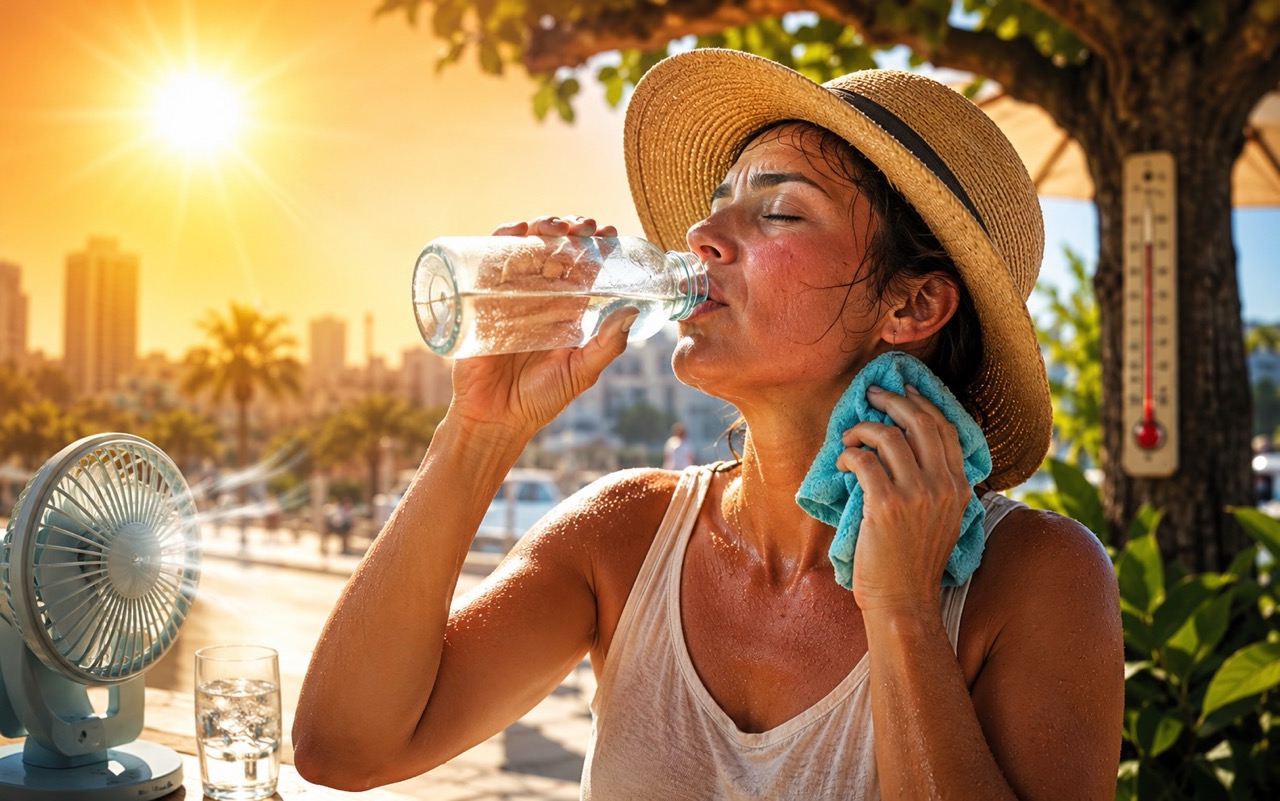
Heat is more than just an unpleasant feeling that makes us sweat more and sleep poorly. In high temperatures, the human body must work continuously to keep its core temperature within a safe range. However, if the heat lasts too long, the air is humid, a person does not drink enough fluids, or they exert themselves physically, the body's natural cooling mechanisms may no longer be sufficient. This can result in heat exhaustion and, in the worst case, life-threatening heatstroke.
The best protection from heat is a combination of adequate fluid intake, staying in the shade or a cool place, wearing lightweight clothing, and limiting physical activity during the hottest hours. Those at increased risk include older people, young children, pregnant women, people with chronic illnesses, those taking certain medications, and anyone working or exercising in the sun. Confusion, impaired consciousness, or a very high body temperature may indicate a life-threatening condition.
Why the human body overheats
The human body constantly produces heat. It is generated by metabolism, muscle activity, digestion, and even ordinary movement. Under normal circumstances, the body can release excess heat into the environment and maintain a core temperature of approximately 37°C.
When the surrounding environment becomes very hot, however, the difference between body temperature and air temperature decreases. The body must therefore rely increasingly on another mechanism: sweating.
Sweat itself does not automatically cool the body. Cooling occurs only when water evaporates from the surface of the skin. This is why the combination of high temperature and high humidity can be particularly uncomfortable. When the air is saturated with water vapor, sweat evaporates more slowly and the body loses one of its most important ways of cooling itself.
What happens to the body in hot weather
When the ambient temperature rises, the body begins doing several things at once. The goal is to transfer as much heat as possible from the internal organs to the surface of the body.
Blood vessels in the skin dilate
More blood begins to flow to the skin. This can make a person look flushed and cause the skin to feel warmer. The blood releases some of its heat into the surroundings and then returns to the circulation at a lower temperature.
However, this process places an additional burden on the heart. To maintain adequate circulation despite the dilated blood vessels, the heart may begin to beat faster.
For a healthy person, this short-term increase in workload is usually manageable. For someone with heart or vascular disease, however, a prolonged heatwave can pose a much greater problem.
We begin to sweat
The sweat glands produce fluid that reaches the surface of the skin. As it evaporates, it uses heat and cools the skin.
Sweating causes us to lose more than water. We also lose electrolytes, particularly sodium and chloride. During several hours of physical activity in the heat, a person may therefore lose substantial amounts of both fluid and minerals.
If these losses are not replaced, dehydration begins to develop.
The volume of fluid in the bloodstream decreases
The more water we lose through sweating, the less remains in the body. The volume of circulating blood decreases, and the heart must work harder to maintain the blood supply to the organs.
A person may experience weakness, a rapid pulse, headache, or dizziness. Standing up quickly can cause lightheadedness and, in some cases, fainting.
At the same time, the body tries to conserve water. The kidneys therefore produce less urine, which is usually darker.
Why high humidity is such a problem
The temperature shown on a thermometer does not tell the whole story. At the same temperature, the body may be able to cool itself much more effectively in a dry environment than in very humid air.
Imagine skin covered in sweat. If the sweat evaporates quickly, it carries heat away with it. In high humidity, the water remains on the skin and runs down the body, but its cooling effect is weaker.
This is why a muggy day with a temperature of around 30°C may be more difficult for some people than a hotter day in a dry environment.
Direct sunlight makes matters worse. The WHO warns that conditions in direct sunlight may be considerably more demanding than the temperature reported in forecasts, which is normally measured in the shade.
Do not ignore the body's early warnings
Overheating usually does not begin with a sudden collapse. The body often sends several warning signals before serious problems develop.
These may include:
- intense thirst,
- excessive sweating,
- fatigue and weakness,
- headache,
- irritability,
- dizziness,
- nausea,
- muscle cramps,
- a rapid pulse,
- reduced urination,
- dark urine.
Even these symptoms indicate that the body may be struggling to maintain a balance between producing and releasing heat.
Continuing to exercise, do physical work, or remain in the sun despite these symptoms is not a good idea.
Heat cramps are often one of the first problems
During intense sweating, a person may lose water and electrolytes faster than they can replace them. This can result in painful muscle cramps, often in the legs, arms, or abdomen.
They are particularly common during physical work or exercise in hot weather.
Stop the activity, move to a cooler environment, and replenish fluids. During prolonged exertion and heavy sweating, drinks or food containing electrolytes may also be useful.
If the cramps are very severe, keep recurring, do not subside, or the person has other health problems, medical assistance should be sought.
Heat exhaustion is a serious warning
Heat exhaustion develops mainly as a result of prolonged exposure to heat and substantial losses of water and salt through sweating. The person may not yet be in immediate danger of death, but without cooling, the condition can continue to worsen.
What heat exhaustion looks like
Common symptoms include:
- heavy sweating,
- weakness and pronounced fatigue,
- headaches,
- dizziness,
- nausea or vomiting,
- thirst,
- irritability,
- muscle cramps,
- a rapid, often weak pulse,
- elevated body temperature,
- reduced urination.
The skin is often damp with sweat.
What to do
Move the person out of the sun and heat. An air-conditioned or at least cooler space is ideal. Loosen or remove unnecessary clothing, cool the skin with water, cold wet towels, or a shower, and allow air to circulate.
If the person is fully conscious and can swallow normally, they can gradually sip cool water.
Medical assistance is needed if the person is vomiting, their condition is worsening, symptoms persist, or there is any uncertainty. Heat exhaustion can progress to a much more dangerous condition.
Heatstroke is a life-threatening condition
The most serious form of overheating is heatstroke, also known as heat stroke. At this point, the body's thermoregulatory system can no longer cope, and core temperature may rise very rapidly.
According to the CDC, during heatstroke, body temperature can rise to around 41°C or higher within approximately 10 to 15 minutes.
A temperature this high is more than uncomfortable. It can damage the brain and other vital organs.
Changes in behavior are the most dangerous warning sign
One of the most important differences between heat exhaustion and heatstroke is the involvement of the central nervous system.
The person may be:
- confused,
- disoriented,
- unusually irritable,
- speaking unclearly,
- having problems with coordination,
- having seizures,
- unconscious.
The skin may be hot and dry, but it is not true that a person with heatstroke always stops sweating. Particularly when heatstroke is caused by exercise or intense physical exertion, the skin may still be very sweaty.
You therefore cannot rely on the rule that “if they are still sweating, it is not heatstroke.”
What happens to the brain during severe overheating
The brain is highly sensitive to an extreme rise in body temperature. When thermoregulation begins to fail, the high temperature and changes in blood circulation can disrupt the nervous system.
This manifests as confusion, impaired coordination, changes in behavior, seizures, or loss of consciousness.
The longer body temperature remains dangerously high, the greater the risk of serious complications. If heatstroke is suspected, do not wait to see whether the condition “improves on its own.”
The kidneys are put under considerable strain in hot weather
The kidneys regulate the amount of water and minerals in the body. During dehydration, they try to retain as much fluid as possible, so the urine becomes more concentrated and its volume decreases.
The risk of kidney damage increases with extreme overheating, dehydration, and physical exertion.
Heavy exertion in hot weather may also be associated with rhabdomyolysis, the breakdown of muscle cells. Their contents enter the bloodstream and may subsequently damage the kidneys.
Warning signs may include unusually severe muscle pain, pronounced weakness, or very dark urine resembling tea or cola. This condition requires medical examination.
Heat also puts a strain on the heart
In hot weather, the body needs to send more blood to the skin. At the same time, sweating reduces the amount of fluid in the bloodstream.
As a result, the heart must work faster and harder.
This is why people with cardiovascular disease are among those requiring special attention during hot weather. Extreme heat can also worsen other existing illnesses, and health problems may take forms other than classic heatstroke.
Who is most at risk during hot weather
Heat can harm anyone's health. Even a young, healthy person can develop heatstroke, for example while exercising intensely in the sun.
However, some groups face a substantially higher risk.
Older people
The body's ability to respond to heat may decline with age. Older people may have a weaker sense of thirst, poorer thermoregulation, and are more likely to take medication or have chronic illnesses.
Someone who lives alone and has no one to notice that their condition is deteriorating may be particularly vulnerable.
Infants and young children
Young children's thermoregulatory mechanisms are not yet as developed as those of a healthy adult. In addition, they cannot always say that they are thirsty or too hot.
A child must therefore never be left alone in a parked car, even for a short time.
A parked vehicle can heat up extremely quickly in the sun, and an open window does not provide reliable protection.
Pregnant women
Pregnancy itself places an increased physiological burden on the body. The WHO therefore includes pregnant women among the groups that may experience greater problems due to extreme heat.
During hot weather, it is particularly important to limit excessive physical exertion, avoid prolonged exposure to direct sunlight, and replenish fluids regularly.
People with chronic illnesses
Those at higher risk may include people with:
- heart and vascular disease,
- kidney disease,
- respiratory disease,
- diabetes,
- certain neurological conditions,
- certain mental health conditions.
Heat does not only cause exhaustion or heatstroke. It can also worsen an existing illness.
People taking certain medications
Certain medications can affect the body's water balance, blood pressure, sweating, kidney function, or ability to regulate temperature.
However, this does not mean that people should stop taking prescribed medication on their own during hot weather. Anyone who takes medication regularly and has concerns about its effects in hot weather should consult a doctor or pharmacist.
People who work outdoors
Construction workers, agricultural workers, road workers, couriers, maintenance workers, and people in other outdoor occupations may be exposed to heat for hours at a time.
Physical work further increases the risk because active muscles produce additional heat.
Protective clothing and work equipment may also restrict sweat evaporation and heat loss.
Athletes
Running, cycling, football, and other intense sports generate large amounts of heat in the muscles. When high outdoor temperatures, sunlight, and humidity are added, the body may not be able to release the heat quickly enough.
Heatstroke caused by intense physical activity can occur even in a young, healthy, and well-trained person.
How to protect yourself effectively from heat
The best protection is not to wait for the first signs of overheating. Preventive measures are most effective before the body begins struggling with dehydration and high body temperature.
Drink regularly rather than waiting until you are very thirsty
Fluids should be replenished regularly throughout hot days. Thirst is already a signal that the body needs water.
Water is the simplest choice. During intense physical activity involving prolonged, heavy sweating, lost electrolytes may also need to be replaced.
However, a universal rule such as “everyone must drink exactly three liters” is not suitable for everyone. Fluid needs depend on body weight, activity, environment, diet, and health.
People whose doctor has instructed them to restrict fluids, for example because of certain heart or kidney conditions, should not make major changes to their intake on their own.
Alcohol is not a form of hydration in hot weather
A cold beer may feel refreshing, but alcohol is not a suitable substitute for water. It can impair a person's ability to assess their condition and, in larger amounts, contribute to hydration problems.
During hot weather, the WHO recommends limiting alcohol and choosing water instead.
Move strenuous activities to a cooler part of the day
If you do not have to exercise, mow the lawn, or perform heavy work during the hottest part of the day, postpone it.
Early morning or later evening hours are usually more suitable. Direct midday and afternoon heat places an unnecessarily heavy burden on the body.
If physical work cannot be avoided, take regular breaks in the shade or a cool environment and drink plenty of fluids.
Clothing can make a significant difference
Loose, lightweight, and breathable clothing allows air to circulate close to the skin and makes it easier for sweat to evaporate.
When outdoors, headwear and protection from UV radiation also help. However, sunscreen does not prevent overheating—it protects against ultraviolet radiation, not high body temperature.
A person can therefore develop heatstroke even if their sunscreen has been applied perfectly.
A cool shower does not have to be ice-cold
A cool shower or bath, wetting the skin, or applying a cold, damp towel can help cool the body.
There is no need to subject yourself to extremely icy water. The goal is to draw heat away from the body and reduce heat stress.
Misting the skin with water while air circulates may also help.
If your home is too hot, find a cooler place
If a home cannot be kept at an acceptable temperature, the WHO recommends spending at least part of the day in a cooler environment during hot weather whenever possible.
This could be an air-conditioned public building, shopping center, library, or another accessible cool place.
This measure may be particularly important for older people and those with chronic illnesses.
Fans have their limits
A fan creates airflow that promotes sweat evaporation, which can make a person feel cooler.
In extreme temperatures, however, a fan alone may not provide adequate protection from heat-related illness. If the air is extremely hot, find a more effective way to cool the environment or move to a cooler place.
Look out for the people around you
During a heatwave, it is worth calling older parents, grandparents, a neighbor who lives alone, or anyone else who may be in a high-risk group.
It is not always enough simply to ask, “How are you?” It is more useful to find out whether their home is at an acceptable temperature, whether they are drinking, whether they have dizziness, nausea, or unusual weakness, and whether they need help getting to a cooler place.
Overheating can cause a person's condition to deteriorate to the point where they can no longer assess their own situation correctly.
What to do if you suspect heatstroke
If a person is confused, has impaired consciousness, seizures, significantly altered behavior, or a very high body temperature, consider the possibility of heatstroke.
This is an emergency.
Call the 112 emergency line or the emergency medical service on 155.
While waiting for help:
- move the person into the shade or a cool space,
- remove unnecessary outer clothing,
- begin cooling them immediately,
- wet their skin with cool water,
- use cold, wet towels,
- if a fan is available, use it to promote water evaporation,
- apply cool compresses to the neck, armpits, and groin,
- stay with the person and monitor their condition.
If the person has impaired consciousness or cannot swallow safely, do not give them anything to drink.
If they are unconscious, monitor their breathing and follow the emergency operator's instructions.
Paracetamol and fever-reducing medicines will not treat heatstroke
Body temperature does not rise through the same mechanism in heatstroke as it does during an infectious fever. The problem is not a change to the body's “thermostat setting” due to infection, but its inability to release accumulated heat.
The WHO therefore warns against relying on paracetamol or acetylsalicylic acid in cases of heatstroke.
The person must be actively cooled and urgent medical assistance must be arranged.
Heatstroke and sunstroke are not exactly the same
These terms are often confused in everyday speech.
Heatstroke is associated with the body's overall overheating and does not have to occur in direct sunlight. A person can become dangerously overheated in an unventilated building, a hot car, a production hall, or while exercising in a very hot environment.
Sunstroke is traditionally used to describe problems associated with prolonged exposure to direct sunlight, particularly on an unprotected head and neck. In practice, however, the symptoms may overlap, and recognizing serious signs of overheating is more important than the terminology.
Overheating may become apparent even after activity has ended
The fact that a person is no longer in the sun does not mean that the risk has immediately disappeared. If they spent several hours exercising intensely, working, and losing fluids, their body may still be under considerable strain.
After finishing the activity, it is therefore sensible to continue cooling down, replenish fluids, rest, and watch for symptoms.
Worsening weakness, repeated vomiting, confusion, or collapse are not ordinary “summer fatigue.”
Heat can also be dangerous at night
Hot nights have one particularly unpleasant feature: the body gets no opportunity to shed the heat load accumulated during the day.
If the bedroom remains very hot at night, the body must continue regulating its temperature instead of resting during sleep.
During prolonged hot weather, it is therefore important not only to get through the hottest part of the afternoon, but also to try to cool the home before bedtime. If the outdoor temperature falls below the indoor temperature in the evening, intensive ventilation will help. During the day, by contrast, it is useful to provide shade and limit hot air entering the home.
How to recognize that someone is not simply feeling hot
Intense thirst, sweating, and fatigue are signals to stop the activity and cool down.
If pronounced dizziness, weakness, nausea, vomiting, headache, or collapse develops, the situation must be taken more seriously.
Confusion, unclear speech, impaired coordination, seizures, or loss of consciousness are warning signs of possible heatstroke and call for immediate assistance.
In hot weather, it is better to act too early than too late.
Why heat can be dangerous even for a completely healthy person
A common misconception is that only older or ill people develop heatstroke. Although a young, healthy body has greater reserves, the physical limits of thermoregulation apply to everyone.
During intense exercise, a person generates a large amount of heat within their own body. If they are also surrounded by hot, humid air, the body may not be able to release it quickly enough.
Exertional heatstroke can develop particularly rapidly.
Being physically fit is therefore not a license to ignore temperature, humidity, breaks, and hydration.
Acclimatization helps, but it does not make a person invulnerable
The body can adapt to repeated heat exposure to some extent. Over time, the way it sweats, conserves salt, and responds through the circulatory system begins to change.
This is one reason why sudden hot spells at the beginning of the season can be dangerous. People may not yet have adapted to high temperatures.
When doing physical work or exercising, it is therefore unwise to move overnight from a cool environment to several hours of maximum exertion in the sun.
However, acclimatization never provides complete protection. Even someone accustomed to the heat can overheat.
How to remember the basic rules for a hot day
If the forecast predicts extreme temperatures, there is no need to make things overly complicated. Most protective measures are simple.
Drink regularly. Avoid the most strenuous physical activity during the hottest hours. Seek shade. Wear lightweight clothing. Cool your skin. Keep your home as cool as possible and, if necessary, find an air-conditioned space.
Above all, monitor yourself and the people around you.
Overheating is not something to overcome through willpower. When the body begins sending warning signals, it needs less heat, more rest, and cooling.
What happens to the body during extreme heat
In its Science in 5 series, the World Health Organization explains how heat affects the human body, which groups are most at risk, and how to protect yourself during extreme temperatures.
Heat-related illness is largely preventable
The most dangerous thing about overheating is that it may seem completely harmless at first. A person is sweating and tired, and assumes they can simply keep going for another hour. Yet responding in time can determine whether the situation remains an unpleasant bout of fatigue or begins turning into a medical emergency.
The body has a highly effective temperature-regulation system, but its capacity is not unlimited. In high temperatures, it needs enough water, a way to release heat, and breaks from physical exertion.
During hot weather, moving exercise to the evening, stopping work, sitting in the shade, or seeking an air-conditioned space is not a sign of weakness. It is exactly what the body needs so that it does not have to fight the heat beyond the limits of its ability.
Sources
- World Health Organization Regional Office for Europe – #KeepCool in the heat
https://www.who.int/europe/news-room/fact-sheets/item/keepcool-in-the-heat - World Health Organization – Heatwaves: How to stay cool
https://www.who.int/news-room/questions-and-answers/item/heatwaves-how-to-stay-cool - Centers for Disease Control and Prevention, NIOSH – Heat-related Illnesses
https://www.cdc.gov/niosh/heat-stress/about/illnesses.html - MedlinePlus, U.S. National Library of Medicine – Heat Illness
https://medlineplus.gov/heatillness.html - World Health Organization – Science in 5: Protect yourself from extreme heat
https://www.youtube.com/watch?v=Z_a7VgO2WR4

Jana
I like turning curiosity into words, and writing articles is my way of capturing ideas before they slip away — and sharing them with anyone who feels like reading.


