
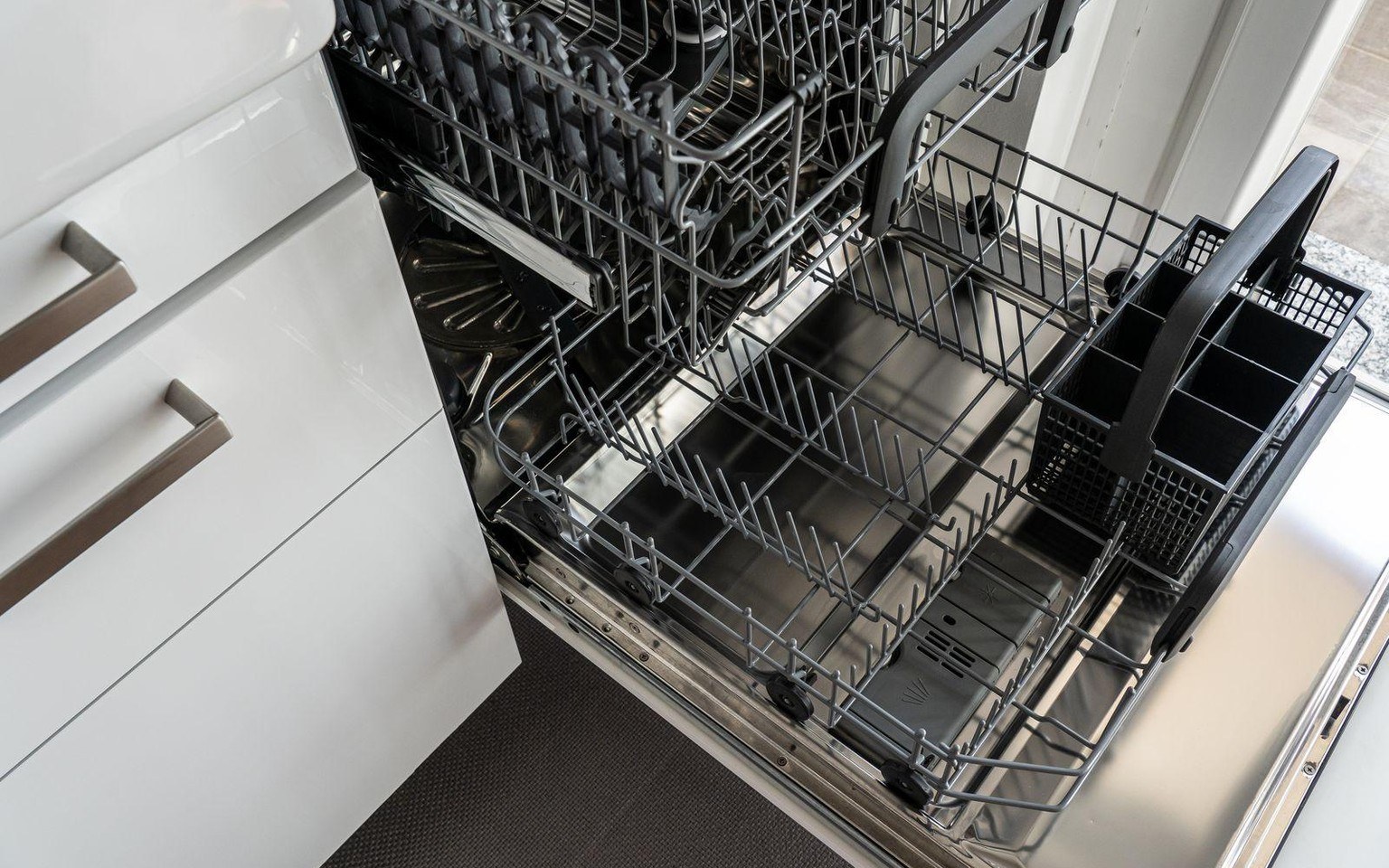
Opening your dishwasher and smelling a musty or sewage-like odour is unpleasant, especially when it is supposed to contain freshly washed dishes. Sometimes cleaning the filter is enough; other times, the smell returns because of standing water, clogged spray arms or a dirty seal. The key is to find the source of the odour rather than mistaking the scent of a cleaning product for a solved problem.
A dishwasher most often smells because food residue and grease remain in its filter, on the bottom or in the folds of the seal. The odour can worsen if dirty dishes sit for a long time, if you mainly use low-temperature programmes, or if water is not draining properly. Start with the filter and accessible areas inside, then run a maintenance programme according to the instructions. If water remains in the dishwasher or the smell returns, check the drain.
The most common cause: a clogged filter at the bottom
The filter catches food particles and protects the pump from debris. If it is not cleaned for a long time, residue decomposes and may obstruct the free flow of water. This can result in an unpleasant odour, poorly washed dishes and sometimes visible dirt on the bottom. It is not true that every dishwasher cleans its own filter automatically; this depends on its design.
Before cleaning, end the programme and allow the interior to cool down. Remove the lower rack, release the filter according to the instructions, and take apart only the parts intended for routine maintenance. Rinse them under running water and use a soft brush to remove deposits. Wear protective gloves if there are shards of glass. Put the filter back and secure it properly; do not run the dishwasher with the filter left loose.
Where dirt hides even when the filter is clean
Check the area around the filter, the lower edge of the door and the folds of the rubber seal. Grease, crumbs or detergent buildup can collect in these places. An ordinary soft cloth with water and a product approved by the manufacturer often does more than strong, heavily fragranced chemicals.
Also inspect the spray arms. Blocked holes can impair water distribution, leaving parts of the dishes dirty. Remove the arms only as described in the manual for your specific model; some are released with a simple twist, while others have a different fastening system. Rinse and carefully clear blocked holes without damaging the plastic.
Do you leave dirty dishes in a closed dishwasher for days?
If you gradually load dishes into the dishwasher and do not run it until several days later, food residue remains on the plates. In a closed, humid space, an odour can then develop before washing even begins. Remove large food scraps from dishes, but you do not need to thoroughly pre-rinse every item by hand unless the manufacturer of that model requires it.
If you need to wait a long time, a rinse programme may help if your dishwasher has one. After the wash is complete, unload the dishes as soon as possible, or follow the manufacturer's instructions for safely ventilating and drying the interior. Do not leave the door open where children could bump into it or where steam could damage furniture.
Using only a short, cool programme is not enough
Economy and low-temperature programmes are useful for everyday use, but deposits can build up over time even in an otherwise properly functioning appliance. Manufacturers therefore recommend regular maintenance or a cleaning cycle at a higher temperature with a product intended for the specific model. There is no universal maintenance interval: it depends on how the dishwasher is used, the hardness of the water and the appliance instructions.
Empty the dishwasher before maintenance and follow the dosage and programme stated on the cleaning product. Do not combine chlorine-based products with acids, vinegar or other cleaners. Do not experiment with large amounts of washing-up liquid, which can create excessive foam. A chemical “bomb” is no substitute for cleaning the filter and may damage some materials.
What water at the bottom after a programme means
A small amount of water in certain parts of the filter sump may be normal in some designs. It is different when a larger puddle remains above the filter, the programme ends with an error, or water returns with an unpleasant odour. In that case, the drain hose, trap, pump and possible blockages should also be considered.
First, check only the user-accessible parts described in the instructions. Before working on any electrical or inaccessible parts, safely disconnect the appliance and call a service technician. If the odour resembles sewage even when the interior is clean and dry, the problem may not be in the dishwasher itself but in the waste connection. This cannot be confirmed without inspecting the specific installation.
A simple procedure worth following in this order
- Remove all dishes, inspect the bottom and remove larger debris.
- Remove and clean the filter, then secure it correctly in place.
- Wipe the accessible seals and the lower edge of the door.
- Check and rinse the spray arms according to the instructions.
- Run an appropriate maintenance programme with a dishwasher-approved cleaning product.
- After the programme, check whether the water has drained and whether the odour returns after several uses.
If your dishwasher still smells after this procedure, do not keep buying more and more fragranced products. A recurring problem with standing water or ineffective washing is a reason to check the drainage or arrange servicing. With a new appliance, also consult the instructions and warranty conditions before taking anything apart yourself.
Sources
- Bosch – My dishwasher smells bad: filter, maintenance wash and temperature – https://www.bosch-home.com/qa/en/service/get-support/26_support_selfhelp_dishwashers_repair_problems_dishwasher_smells_bad
- Bosch – How to Clean a Smelly Dishwasher: filter and spray arms – https://www.bosch-home.com/us/owner-support/get-support/support-selfhelp-dishwasher-smells
- Bosch – Cleaning your dishwasher: seals and spray arms – https://www.bosch-home.com/mt/service/get-support/cleaning-your-dishwasher

Gabriel Čatár
I'm interested in everyday things we encounter but don't always understand. From technology and personal finance to practical guides and fascinating facts about the world. At Offpitch, I focus on topics worth exploring in greater depth, checking the facts and explaining them in a clear, accessible way. My goal is to make sure readers take away something useful from every article.


