
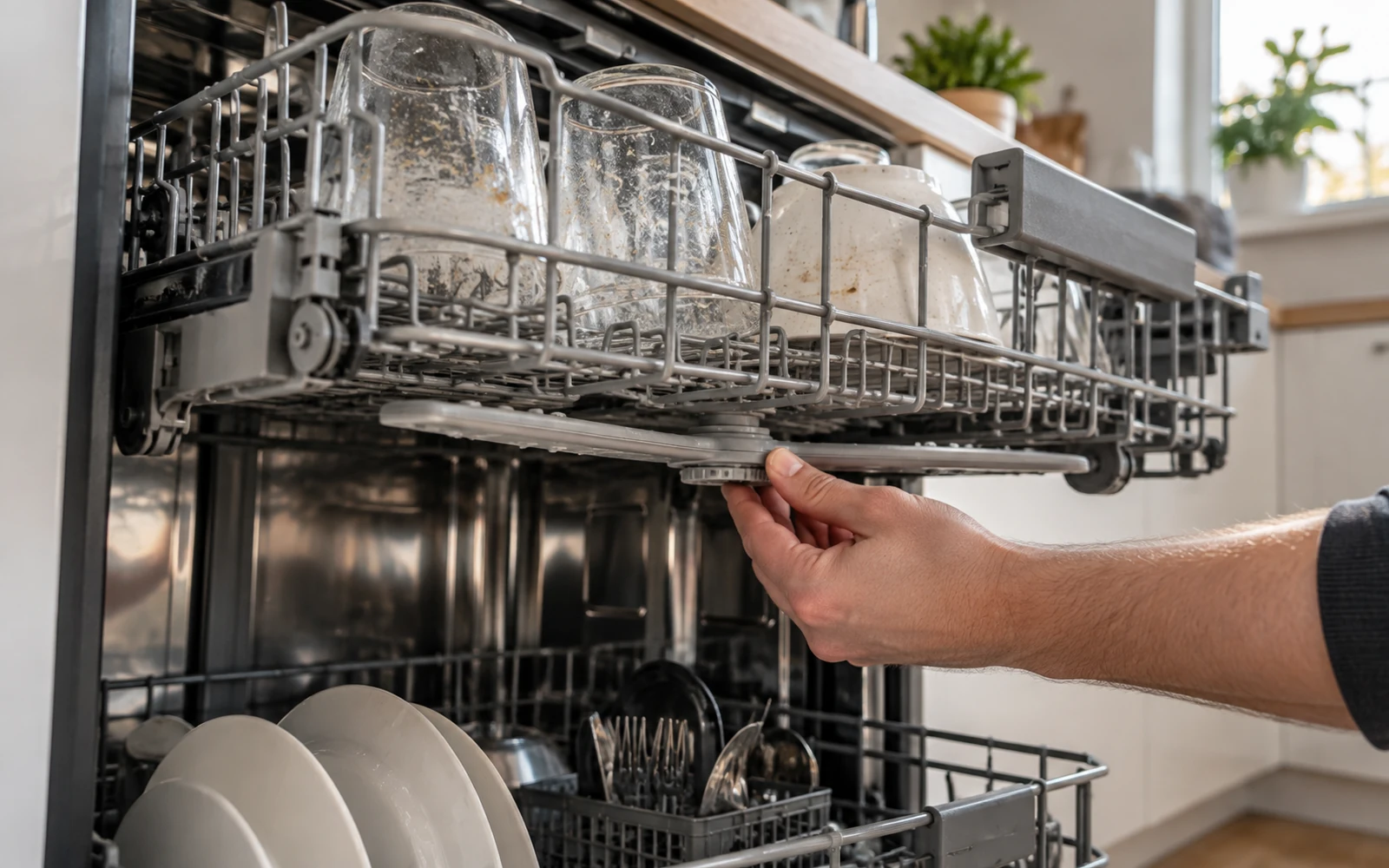
The plates on the bottom rack are clean after a cycle, but the glasses and bowls in the top rack still have dried-on food particles. It may be tempting to switch tablets or even replace the entire dishwasher, even though the cause may be much simpler. The top rack needs unobstructed access to water and a properly functioning spray arm; a single tall plate or clogged nozzle can lead to uneven cleaning results.
If your dishwasher is not cleaning the top rack, first check whether the upper or middle spray arm can rotate freely, whether food debris has clogged its openings, and whether dishes are blocking the water flow. A clean filter, correctly inserted rack, suitable programme and proper detergent dosage are also important. If the problem persists after cleaning, there may be a fault in the water supply to the spray arm or in the appliance itself.
How water reaches the glasses on the top rack
A dishwasher is not a large container in which dishes simply soak. A pump forces water into the spray arms, and jets from their openings hit the surfaces of the dishes. The arrangement differs by model: some have a separate arm beneath the top rack, while others supply water to the rack through a rear connection or telescopic mechanism.
This is why the lower section can be perfectly clean even when there is a problem at the top. The cause is not automatically weak detergent. If the arm cannot rotate or too little water flows through clogged openings, even a more expensive tablet will not help. When cleaning performance deteriorates, Bosch first recommends checking the spray arms, filter and dish loading.
Five things worth checking before calling for service
1. Tall items are stopping the spray arm
A large baking tray, chopping board or pan handle may extend into the arm’s rotation path. Before starting a cycle, gently spin the arm by hand and make sure it does not catch anywhere. If it hits something, move the obstruction. Just because the top rack can be pushed in does not mean the spray arm automatically has a clear path.
Place glasses and bowls so that their open sides can fill with the water jet and the water can then drain away. An overloaded rack with items pressed tightly together creates areas that water cannot reach. On the other hand, delicate items must not be placed so loosely that they tip over during the cycle.
2. Food particles are trapped in the small nozzles
Even small particles can get past the filter and become trapped in the spray-arm openings. Instead of flowing evenly, little or no water then comes out of some nozzles. If the manufacturer allows the arm to be removed, take it off according to the instructions, rinse it and remove visible dirt in the way recommended for that model.
Do not try to forcefully widen the openings with a metal object or unscrew unfamiliar parts based on appearance alone. Some arms have a simple catch, while others are attached differently. Incorrect reassembly can make the problem worse.
3. A clogged filter restricts circulation
The filter at the bottom catches food debris so that it does not re-enter the circulation system. When it becomes clogged, water flow can worsen and dirt may settle on the dishes again. Remove and clean the filter according to the manual for your specific appliance, as the mechanisms and recommended intervals vary.
Switch off the appliance before opening service parts, and follow the manufacturer’s warnings about hot water and sharp objects. After cleaning, reassemble and secure the filter correctly. Running the dishwasher without a filter is not an appropriate way to find out whether it was the cause.
4. The rack is not connecting properly to the rear water supply
In many dishwashers, water reaches the upper system through a connection that must seat properly when the rack is pushed in. If the rack is pulled out, crooked or incorrectly adjusted in height, the connection may not seal. Check that both side rails are in the same position and that the rack clicks into its operating position.
This mechanism is not the same on every model. Check the specific procedure in the user manual; if you see a damaged seal or broken plastic component, professional repair is more appropriate than improvising by propping up the rack.
5. An unsuitable programme or detergent
A quick or eco programme may not handle heavily dried-on dirt as well as an intensive cycle. If the problem occurs only with one programme, check what it is designed for and the recommended dosage method. Also check whether the dispenser opened and the tablet dissolved; a large item may be blocking its door.
Rinse aid can improve drying and the appearance of glass, but it will not remove a mechanical obstruction in the water flow. Likewise, there is no point in arbitrarily mixing cleaning products. Bosch recommends first removing obvious obstructions and cleaning the filter and arms, then changing settings or calling for service if necessary.
A practical demonstration of cleaning spray arms
In a video, Bosch demonstrates how to remove the arms, clean clogged openings and refit the arms correctly. Your appliance may have a different layout, so follow its own manual when handling it.
A simple test after cleaning
Load a smaller, typical batch of dishes, check that the arms move freely and the rack is correctly inserted, then run a programme recommended for the level of soiling. Compare the results for glasses in several positions on the top rack. If all of them improve, the problem was probably related to a blockage or maintenance, although it is impossible to determine one definite cause without a service diagnosis.
If the same area always remains dirty, the arm still does not move, or an error code appears, note the appliance model and the exact symptom. A technician can then check the pump, water distribution, switching between spray circuits or mechanical damage. Do not dismantle electrical or pressurised components while they are energised or without technical knowledge.
How to prevent the problem from recurring
Remove larger pieces of food from plates, clean the filter regularly and check that the spray arms rotate without obstruction. Before starting a cycle, it is worth spending a few seconds arranging large trays, bowls and tall glasses. Food debris in the nozzles and an incorrectly loaded rack often have a more noticeable effect than the choice of tablet itself.
If the top rack is regularly dirty despite proper maintenance, there is no need to blindly buy more packs of expensive products. It makes more sense to specifically check the water supply and identify the particular fault. This distinction can help avoid unnecessary expenses and reduce the number of cycles in which you have to wash the dishes a second time.
Sources
- Bosch – My dishwasher is not cleaning properly: five troubleshooting checks – https://www.bosch-home.com/qa/en/service/get-support/26_support_selfhelp_dishwashers_repair_problems_not_cleaning_properly
- Whirlpool – Spray Arm Not Working: dishwasher troubleshooting – https://producthelp.whirlpool.com/Dishwashers/Dishwasher/Operation/Spray_Arms_Not_Working/Spray_Arm_Not_Working_-_Dishwasher
- Bosch – Dishwasher Not Cleaning Dishes: troubleshooting and maintenance – https://www.bosch-home.com/us/owner-support/get-support/support-selfhelp-dishwasher-not-cleaning-dishes

Gabriel Čatár
I'm interested in everyday things we encounter but don't always understand. From technology and personal finance to practical guides and fascinating facts about the world. At Offpitch, I focus on topics worth exploring in greater depth, checking the facts and explaining them in a clear, accessible way. My goal is to make sure readers take away something useful from every article.


