
You turn the key in the morning, the engine cranks only sluggishly, and you are already wondering whether you will make it to work on time. Sometimes you hear only a click; other times, the starter spins quite briskly but the engine does not fire up. Freezing temperatures can expose weak points that showed no signs during warmer days. The difference between these symptoms can point you towards the cause.
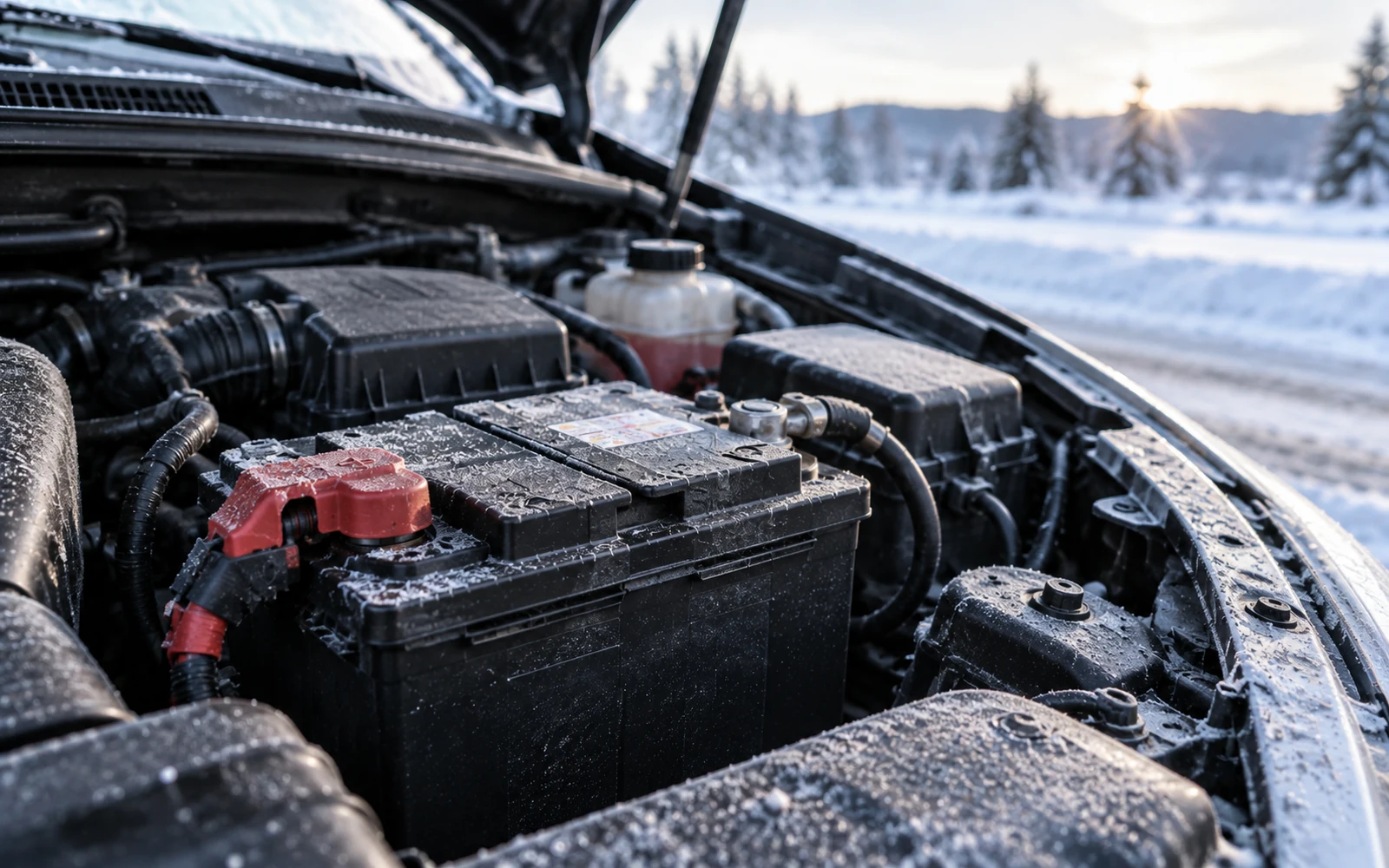
If your car is difficult to start in winter, the first suspect is often a weak or insufficiently charged 12-volt battery. Low temperatures reduce its ability to deliver the high starting current required, while a cold engine needs more energy to turn over. However, the cause may also be the starter motor, unsuitable oil, the charging system, glow plugs in a diesel, or a fuel-related problem. The key is to observe what happens when you turn the key.
What actually happens to a car in freezing weather
In a conventional combustion-engine car, the starter motor needs a large electrical current for a short time. A lead-acid battery produces it through a chemical reaction that takes place more slowly in the cold. If the battery was already nearing the end of its life before winter or has been drained by short journeys, a cold morning may be the final straw. Engine oil is also thicker when cold than after it has warmed up, creating greater resistance when the engine is turned over.
The AA roadside assistance service lists 12-volt batteries among the major causes of winter breakdowns and advises drivers to watch for slow engine cranking or clicking. However, even a brand-new battery will not solve a faulty alternator that is not recharging it while driving. Winter starting is therefore not just a matter of one component.
The most common causes based on what you hear when starting
The starter cranks slowly, the lights dim or you hear clicking
This is a typical sign of insufficient electrical power, not conclusive proof of a failed battery. It may be discharged, old, have corroded terminals, or have a poor cable connection. It is often a combination of factors: the car makes only five-minute trips during the workweek, runs the window and seat heaters, yet the battery does not have enough time to recharge between starts.
If you suspect the battery, a load test is more informative than simply measuring its voltage after the vehicle has been parked. A workshop can also check the starting and charging systems. Replacing the battery blindly may mean that the problem returns within just a few days.
The starter cranks normally, but the engine does not start
When the engine turns over at its usual speed during starting, there is no reason to automatically blame the battery. In a petrol car, the issue may involve the ignition or fuel supply; in a diesel, it may also involve the glow plugs and the condition of the fuel system. Diesel fuel must be suitable for seasonal conditions. If the car reports an engine fault, diagnostics—not repeated long attempts to start it—will identify the cause more precisely.
Almost nothing happens when you turn the key
If the dashboard lights up but the starter does not respond at all, the issue may be the starter motor, its switching circuit, an electrical connection or a starting safety interlock. An automatic transmission may require the selector to be in P or N, while a manual gearbox requires the clutch pedal to be depressed. First, check the normal operating procedure in the vehicle manual. If the situation repeats, the electrical circuit should be tested.
What you can safely check yourself
Check whether the lights or another electrical device have been left on, look for dashboard messages, and note whether illuminated lights dim significantly when you try to start the car. Without removing the battery, you can check whether the terminals are visibly loose or heavily corroded. Do not attempt to handle a damaged, cracked or leaking battery yourself.
Before starting, switch off unnecessary electrical loads. In a diesel, wait for the relevant glow plug indicator light to go out if the vehicle requires it. Do not strain the starter with a continuous attempt lasting several minutes; follow the maximum cranking time and breaks specified in your car's manual. If the engine repeatedly fails to start, address the cause or seek assistance rather than making dozens more attempts.
Will jump leads or a jump starter help?
If the problem really is insufficient battery power, a correctly used jump starter or jump start can get the car running. However, the procedure varies by vehicle and battery type. For modern cars, hybrids and electric vehicles, use only the connection points and procedure specified by the manufacturer. Connecting the terminals incorrectly can damage electronics and cause injury.
Starting the car successfully is not a repair. If the battery is losing capacity or the alternator is not charging, the car may leave you stranded after the next time you switch it off. After an emergency start, it therefore makes sense to test the battery and charging system rather than assume that a longer drive has solved everything.
Why short trips make the problem worse
A cold start draws energy from the battery, and winter features such as window heating or the blower increase the electrical load. If the vehicle then travels only a few streets, the battery may not regain the energy needed for the next start. The risk also rises after the car has been parked for several days, especially if the battery is no longer in good condition.
AAA points out that battery life is affected by weather, driving habits and age. If you use your car only for short journeys or leave it parked for long periods, a maintenance charger designed for the specific battery type may be suitable. When using one, follow the instructions and safety guidance provided by both the vehicle and charger manufacturers.
When to call a mechanic or roadside assistance
Do not delay seeking help if you notice an unusual smell, smoke, a deformed battery, overheating cables, or starting accompanied by pronounced mechanical noises. Do not try to push-start or tow-start the car unless the manual expressly permits it; for many modern vehicles, this is unsuitable or prohibited. If you are stopped in a dangerous location, the safety of everyone in the vehicle comes first.
If the problem occurs repeatedly in the morning, make a note of the temperature, what happens during starting and any warning lights. This will help a technician distinguish a weak battery from a fault in the starter, charging system or fuel system. Proper diagnostics before parts are replaced can save unnecessary purchases and unpleasant surprises during the next cold spell.
Sources
- The AA – Car won’t start in the cold: likely causes and how to prevent breakdowns – https://www.theaa.com/breakdown-cover/advice/winter-breakdown-causes
- RAC – Car won't start in the cold? Possible causes and preventative tips – https://www.rac.co.uk/drive/advice/how-to/getting-started-in-the-cold/
- AAA Club Alliance – Don’t Let a Dead Battery Leave You Stranded – https://cluballiance.aaa.com/the-extra-mile/series/member-news/fall-winter-26/dont-let-a-dead-battery-leave-you-stranded

Gabriel Čatár
I'm interested in everyday things we encounter but don't always understand. From technology and personal finance to practical guides and fascinating facts about the world. At Offpitch, I focus on topics worth exploring in greater depth, checking the facts and explaining them in a clear, accessible way. My goal is to make sure readers take away something useful from every article.


