
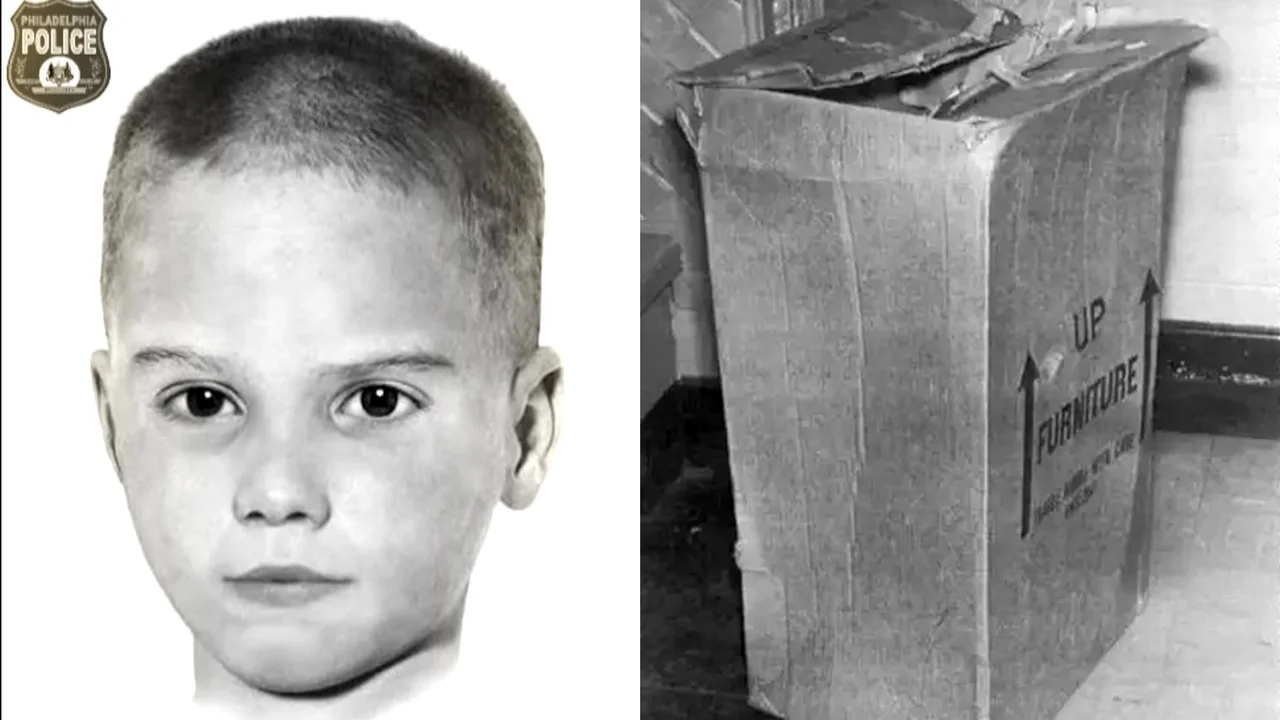
The patch of woods along the edge of Susquehanna Road in Philadelphia looks bleak at the end of February. But in 1957, a cardboard box marked “fragile” lay among the bushes there—one that would forever change American criminal history. Inside was the body of a four-year-old boy—clean, freshly shorn, but covered in bruises and scars. Investigators later dubbed him “America’s Unknown Child.” He would not be identified until 65 years later, when modern genetic genealogy revealed him to be Joseph Augustus Zarelli. (theguardian.com)
A chance discovery that stunned Philadelphia
On Saturday, February 25, 1957, a college student was reportedly chasing a rabbit when he came upon a large JCPenney box for a baby crib. Inside lay a naked, undernourished child, wrapped in a thin blanket. Even decades later, records state that he had old cuts on his body, hair clipped as if someone had done it shortly before placing him in the box, and a stomach containing only a small amount of beans. Police also recovered a blue flat cap and a white handkerchief, but none of these leads moved the case forward. (6abc.com)
Sleepless detectives, posters across the city
Philadelphia police distributed hundreds of thousands of flyers to daycare centers, doctors’ offices, and homes, and later exhumed the boy’s body to collect DNA. They even managed to trace twelve customers who might have purchased the same crib—yet not one provided a breakthrough. The investigation remained officially open, but the years passed without answers. (en.wikipedia.org)
A breakthrough in 2022
Thanks to mitochondrial DNA analysis and genealogy databases, investigators were able to trace genetic relatives in December 2022. Forensic genealogists built a family tree that led investigators to Joseph’s parents—both of whom had already died—but living half-siblings confirmed the child’s identity. Commissioner Danielle Outlaw also stressed that learning his name was only the beginning of a new phase in the search for his killer. (people.com)
A new headstone and quiet remembrance
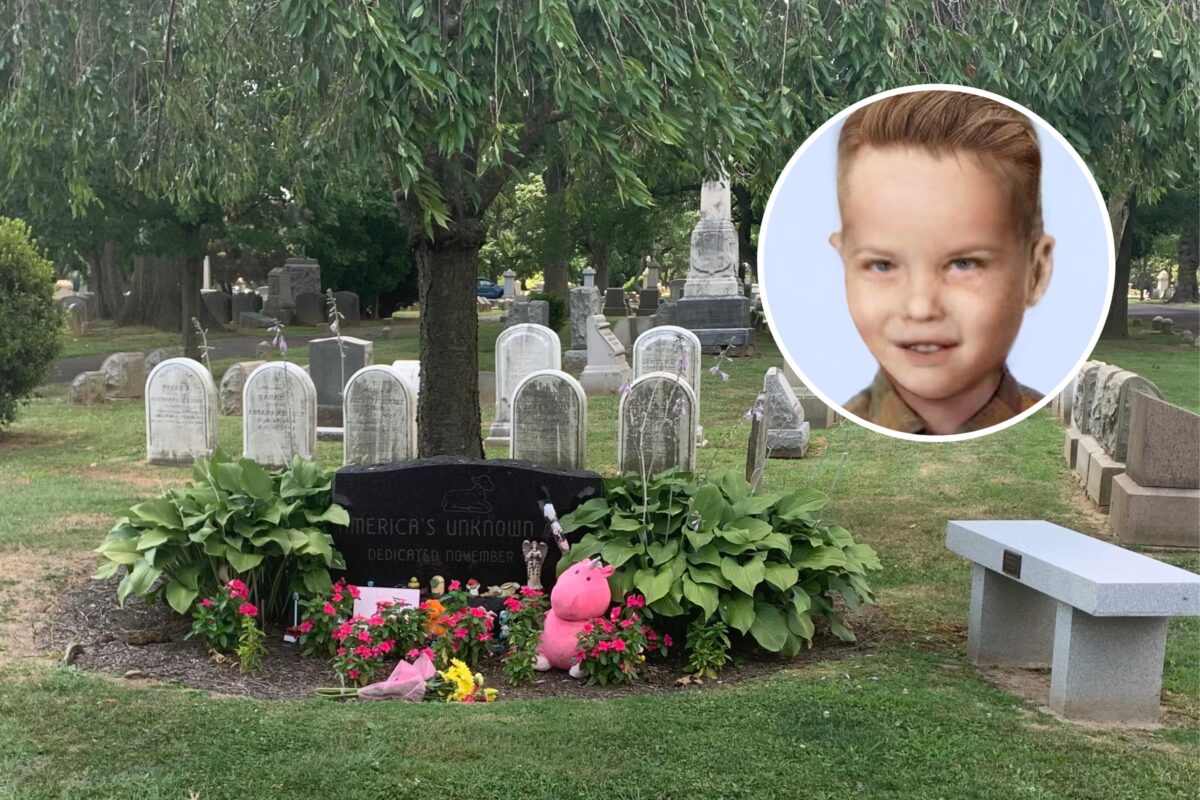
On January 13, 2023—when Joseph would have celebrated his 70th birthday—a new granite marker bearing his name was unveiled at Ivy Hill Cemetery. Longtime and new volunteers alike, including members of the Vidocq Society, fulfilled a long-standing promise to give the unknown child a dignified resting place. (cbsnews.com)
Genetic sleuthing as a 21st-century tool
Joseph’s identification was not an isolated case—the same approach also led to the arrest of “Golden State Killer” Joseph James DeAngelo in California in 2018. It was one of the first times the public took notice of the fact that distant DNA matches can lead investigators to perpetrators of older crimes that once seemed unsolvable. (forbes.com)
Another now-classic example of genetic genealogy is the 1987 double murder of Tanya Van Cuylenborg and Jay Cook in Washington State: a family tree assembled by expert CeCe Moore helped identify William Talbott II in less than a week. The case showed that publicly accessible databases can deliver breakthroughs not only in identifying victims but also in identifying perpetrators. (newyorker.com)
An open door for witnesses
Philadelphia police have repeatedly urged anyone who remembers a boy from their neighborhood in the 1950s to come forward. Joseph lived for at least four years; pediatricians, neighbors, or relatives must have seen him. At a moment when modern science has finally given a name to a nameless child, it may be human memory that can supply the story’s final chapter.
Watch the press conference recording
Sources
- The Guardian: Philadelphia police identify body of ‘boy in the box’ after 66 years (8 Dec 2022). https://www.theguardian.com/us-news/2022/dec/08/philadelphia-police-boy-in-the-box-cold-case
- Associated Press: Philly’s newly ID’d ‘Boy in the Box’ gets grave marker at 70 (13 Jan 2023). https://apnews.com/article/f95f42e9d0ecae075d7eaa6f976135e6
- ABC6 Philadelphia: Joseph Augustus Zarelli identified as ‘Boy in the Box’ (8 Dec 2022). https://6abc.com/boy-in-the-box-identified-philadelphia-cold-case-watch-news-conference-live-name/12544392/
- Forbes: How Genetic Genealogy Helped Catch The Golden State Killer (30 Jun 2020). https://www.forbes.com/sites/jvchamary/2020/06/30/genetic-genealogy-golden-state-killer/
- The New Yorker: How Your Family Tree Could Catch a Killer (22 Nov 2021). https://www.newyorker.com/magazine/2021/11/22/how-your-family-tree-could-catch-a-killer

Robert
I’m interested in technology and history, especially true crime stories. For three years I ran a fact-based portal about modern history, and for a year I co-built a blogging platform where I published dozens of analytical articles. I founded offpitch so that quality content wouldn’t be hidden behind a paywall.


