
If zombies from the 1930s met those from today’s action horror films, they might not even understand each other. One would wait for its master’s command, while the other would pose a danger to an entire city. They are united by the loss of part of their human identity, but the reasons they gave it up or lost it vary greatly from film to film. It is interesting to see how these differences also reshape the story itself.
The movie zombie evolved from a figure controlled by another’s will into a threat that spreads independently. George A. Romero fundamentally transformed it in 1968, while later filmmakers added fast-moving infected, comedy, and self-aware undead characters. The genre’s transformations reflect different social anxieties, as well as experiments with narrative pace and cinematic settings.
When Enslavement Was the Greatest Danger
The word zombie did not originate in a Hollywood screenplay. It is connected to Caribbean ideas about death and controlling people, especially within Haitian culture. Much changed, however, when these ideas were brought to the screen. American horror used unfamiliar religious traditions as a source of exoticism and fear. It is therefore important to distinguish cinematic depictions from actual Haitian Vodou, which cannot be reduced to black magic.
In the 1932 film White Zombie, the key figure is a powerful manipulator played by Bela Lugosi. The undead do not rebel against humanity in the story. Instead, they serve whoever controls them. The threat lies in the possibility that a person may become an instrument of someone else’s power. This motif works even in a story that does not feature any large-scale catastrophe.
Jacques Tourneur used a similar setting differently in I Walked with a Zombie (1943). The uncertainty surrounding a sick woman’s condition is tied to the atmosphere of a plantation. The film evokes the history of slavery and shows that a director does not always need to clearly explain whether an event is supernatural in order to create fear. In this kind of story, what matters is who has power over whom, not how many infected people are on the street.
The Breakdown of Rules in a Familiar-Looking World
Imagine an ordinary country house, everyday clothes, and familiar-looking neighbors. When an incomprehensible danger appears in precisely such a setting, horror no longer feels as though it belongs somewhere far away. This shift is central to Night of the Living Dead from 1968. Romero did not need to invent a new mythological land or an elaborate backstory for his monsters.
The Museum of Modern Art in New York notes that the film was made independently, with limited resources, in the Pittsburgh area. Its stark black-and-white imagery and restless camera create the impression that viewers are not watching a safely distant fairy tale. The small budget thus became part of its aesthetic effect.
The change also concerned the behavior of the undead. They do not wait for orders from one specific villain. As a result, the film does not have to end with the defeat of a single source of misfortune. The characters find themselves in a situation whose rules they are only beginning to understand. And because they are not given an explanation in the form of a reliable scientific guide, there is room for uncertainty.
Although we now automatically describe this film as zombie horror, Romero did not originally use the term as the main label for his creatures. In interviews, he explained that people around him began calling them that. This is another reminder that genre labels are often established only later, once subsequent films develop their defining elements.
The Shopping Mall as a Mirror of Everyday Life
Ten years later, Dawn of the Dead introduced the setting of a shopping mall. At first glance, it is a practical place for a story about people trying to survive. It contains plenty of goods and enclosed spaces. At the same time, it is a place viewers associate with everyday choices, leisure time, and social expectations.
That is why the film is often read as a satire of consumerism. The undead return to a place that mattered in their previous lives. Their behavior raises the question of whether certain human habits persist even after their original purpose disappears. There is no need to see every scene as an unambiguous political statement. The strength of such a setting lies precisely in the fact that it offers several meanings at once.
The difference between the first and second films is also clearly visible in the organization of space. In the house, the lack of room is part of the tension. The shopping mall, by contrast, gives the characters space and a temporary sense of abundance. Yet even a large quantity of things cannot, by itself, restore relationships and trust between people. The genre can therefore explore the consequences of a catastrophe without filling its entire running time with attacks by the undead.
The Undead Do Not Have to Move Slowly
One major difference between periods is how much time film characters have to make decisions. With a slow-moving threat, tension can be built through waiting, observation, and seemingly safe pauses. Viewers may notice the danger before the character does. The consequences of a bad decision do not necessarily become apparent immediately.
Fast-moving figures change a film’s rhythm. Any open space can become the site of a sudden shift in circumstances. Editing, camera movement, and sound take on a different function. This is not automatically a better or more modern version of horror, however. It depends on whether the filmmaker needs room for psychological tension or wants to create a sense of relentless urgency.
The British Film Institute points out that fast-moving infected appeared on screen even before the new millennium. Umberto Lenzi used them, for example, in the 1980 film Nightmare City. The claim that the fast zombie did not emerge until 2002 therefore does not reflect the genre’s actual history. Danny Boyle helped bring this type of character to the attention of a new audience, but he did not create it entirely from scratch.
A Virus Instead of Rising from the Grave
In the 2002 film 28 Days Later, the characters encounter people who have changed as a result of infection. They are not, in the literal sense, reanimated bodies. From a cinematic perspective, however, they serve a similar role to zombies. They no longer function within ordinary human relationships, and their unpredictability profoundly affects everyone else.
What matters is that an infection-based explanation shifts attention from the cemetery to living society. It creates an opportunity to tell stories about isolation, information, and trust in institutions. This is fiction, not a realistic model of an actual epidemic. Film rules must not be confused with medical knowledge or the spread of infections in the real world.
Whereas a supernatural intervention from outside was once most important, fear can now also concern ordinary contact with other people. Viewers do not need to know the exact biological mechanism to understand the dramatic problem. On screen, what matters above all is how the behavior of characters changes when they find themselves in uncertainty.
What Happens When Humor Enters Horror?
Not every film featuring the undead aims to frighten viewers continuously. Comedy makes it possible to work with the fact that audiences already know the usual rules and can predict what should happen in traditional horror. A filmmaker can reverse those expectations or place an unlikely threat within completely mundane everyday life.
The Return of the Living Dead (1985) is an example of a film that deliberately plays with the earlier model of the undead. It is strongly associated with the pop-culture idea that they crave brains. This motif therefore cannot automatically be applied to every earlier zombie film.
Romantic and family stories offer another avenue for transformation. Rather than asking how a person can get rid of a threat, they can ask what would happen if an undead character were able to form a relationship. Can they remember the past? Can they show affection? Such questions turn a former monster into a protagonist and draw attention to the boundary between humanity and behavior.
A Train Where Different Social Classes Meet
South Korea’s Train to Busan (2016) combines suspense with a family story. Its central character is a father traveling with his daughter. The train, as the main setting, limits the characters’ movement while bringing together a group of people who might not otherwise know one another.
The film can therefore also be seen as a question of solidarity. The passengers have different social standings, personal interests, and ideas about whom it is appropriate to help. As the BFI notes, social differences become another obstacle alongside the infection itself. The threat is therefore not exhausted by what happens to an infected person’s body. What matters is how people who have not yet changed behave.
Setting the story on a train offers a different dramatic model from a country house or a shopping mall. Characters cannot simply leave via the sidewalk when they dislike their fellow passengers’ behavior. The shared journey becomes a test of their relationships. The film also shows how effectively a globally familiar genre can adapt to local culture and social themes.
Why Can the Genre Keep Changing?
As a film character, the zombie has one unusual advantage: it does not need a fixed identity or a detailed biography. Each time, authors can redefine whether it remembers its past, what caused its condition, or whether it can recover at all. These choices determine what kind of film emerges. A story about one enslaved person will differ from a story about an entire society.
Perspective also matters. When we follow events through the eyes of a healthy person, the infected may seem like an unknown threat. If we follow a transformed character from within, the same events may evoke sympathy or sadness. The genre can change our expectations without abandoning its fundamental motif.
The history of movie zombies is therefore not a simple progression from slow creatures to fast ones. Old and new forms exist side by side, and filmmakers can combine them. When watching the next film, try focusing on what is truly feared. Sometimes it is the loss of control over one’s own life; at other times, loneliness, distrust, or the failure of cooperation. That is the adaptability of a genre that, at first glance, may seem to repeat the same story over and over.
This text is for informational purposes only and does not constitute financial advice.
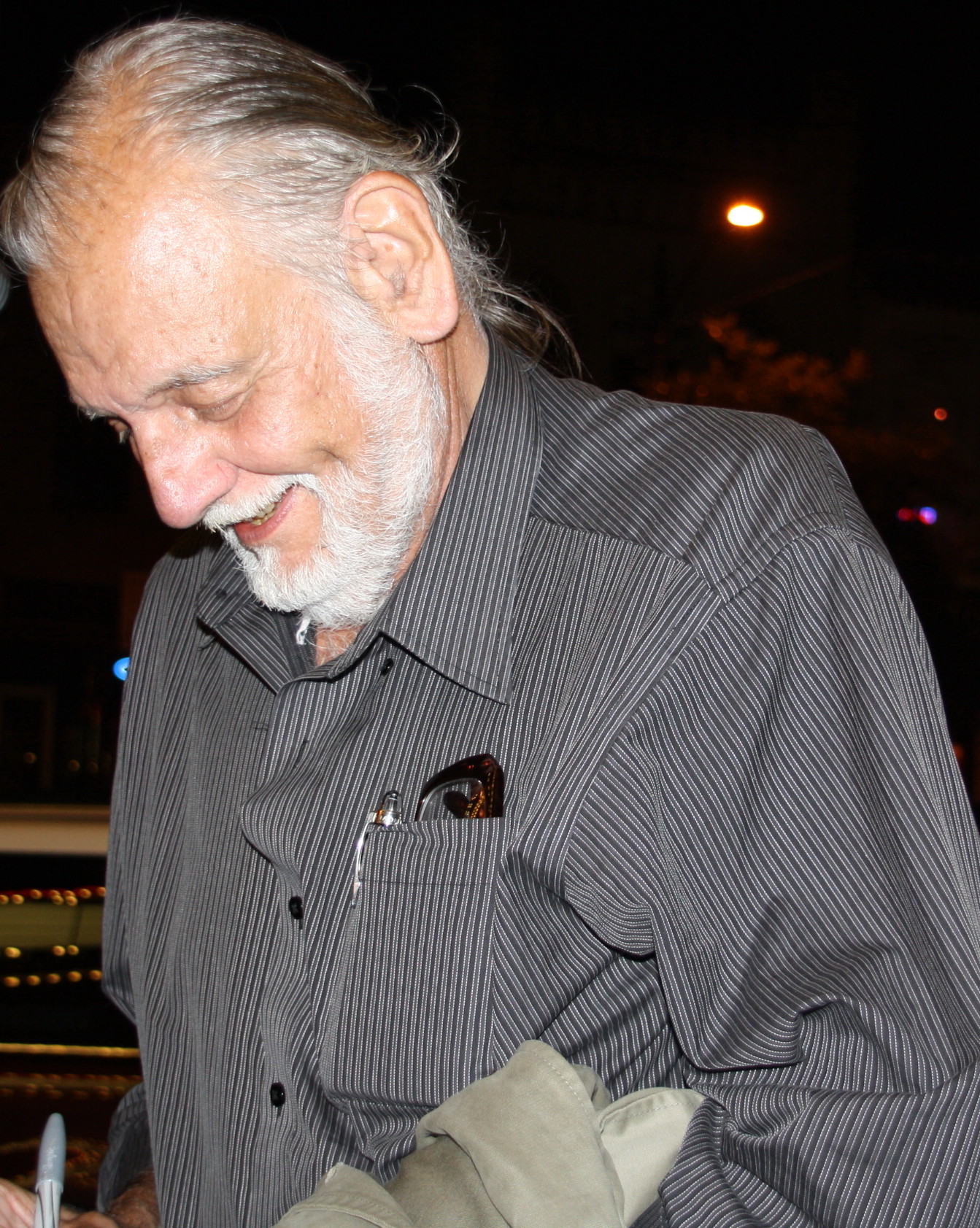
*Preview: Slackerwood, Wikimedia Commons, CC BY 2.0; George A. Romero at Fantastic Fest 2009, possible crop of the preview image.*
Sources
Gabriel Čatár
I'm interested in everyday things we encounter but don't always understand. From technology and personal finance to practical guides and fascinating facts about the world. At Offpitch, I focus on topics worth exploring in greater depth, checking the facts and explaining them in a clear, accessible way. My goal is to make sure readers take away something useful from every article.


