

Aktualizované 16.09.2026
When reports of an “institute where dogs answer questions” spread through German newspapers in May 1930, most readers saw them as a charming curiosity. Fifteen years later, amid wartime paranoia, the same school appeared in SS personnel files as a potential source of a new kind of scout, able to communicate with their handlers through coded words or paw taps. The project entered history under the name Hundesprechschule Asra (literally, “Asra Talking Dog School”)—named after a Great Dane that allegedly mastered the most demanding exercises.
From Variety Show to Secret Wartime Mission
- Founder Margarethe Schmidt had operated the school near Leutenberg in Thuringia since the early 1930s, and its first presentations resembled a circus more than anything else: a German shepherd recited vowels, while a terrier named Rolf “counted” by striking a board with his paw exactly as many times as the correct number required.
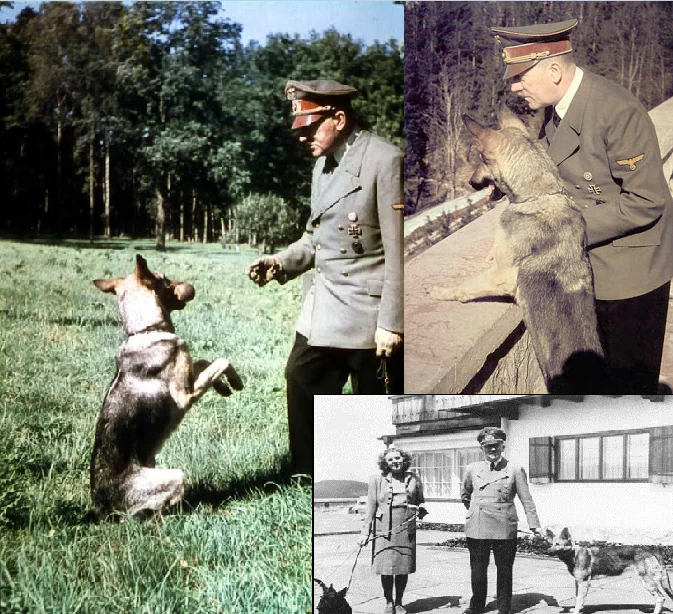
- After Hitler came to power, the authorities began taking an interest in Asra. The Führer was fond of dogs—he kept the German shepherds Blondi and Bella at the Berghof—and the romantic notion of “super-intelligent” animals fitted Nazi mythology about the bond between humans and nature.
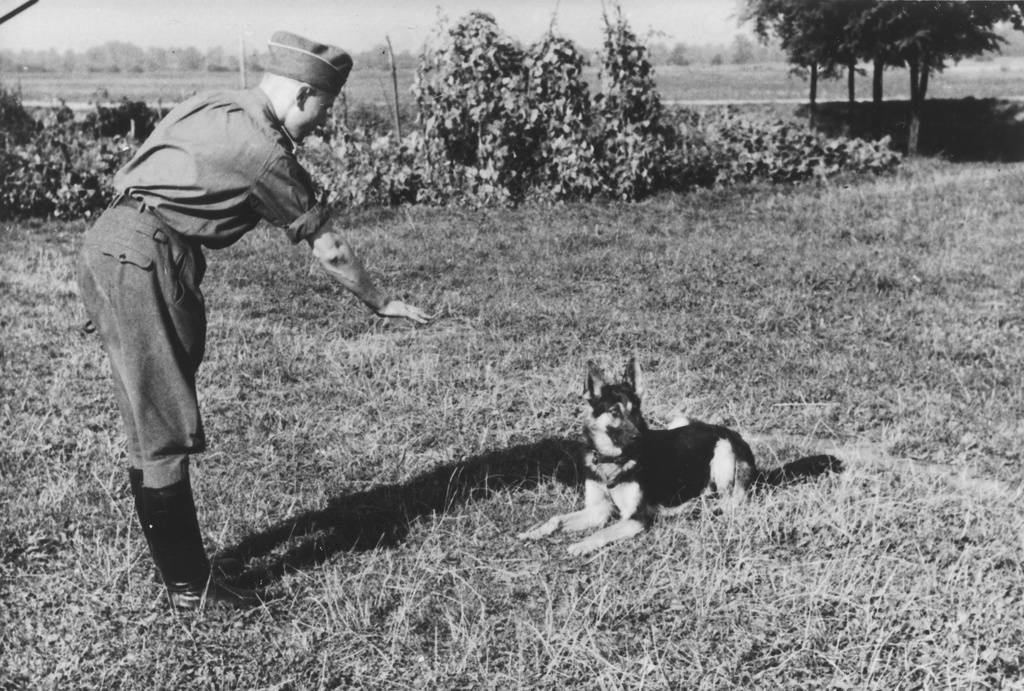
According to subsequently archived documents, officers from an army veterinary unit visited the farm near Leutenberg, looking for ways to make guard patrols more efficient. However, the results never went beyond the level of an attraction: the dogs’ sounds resembled hoarse grunts, while their “calculations” proved confusingly inaccurate in follow-up tests.
You might also like
When Propaganda Outruns Reality
Nevertheless, money continued to flow into Asra throughout the war, as the school was presented in the weekly magazines Signal and Die Wehrmacht as proof of “German scientific ingenuity.” Historians now agree that the support was more moral than practical—much like interwar experiments with “divisions” of untrained electric-ray batteries or the breeding of blond statues in Lebensborn.
The postwar press contributed greatly to the myths surrounding Asra. In the 1950s, rumours circulated about “telepathic wolfhounds” supposedly able to guard ammunition depots without making a sound. The greatest wave of interest, however, was sparked only by the monograph Amazing Dogs: A Cabinet of Canine Curiosities by British veterinarian Jan Bondeson (2011). Although the author stressed that most of the achievements fell into the category of the “Clever Hans effect,” headline writers were already drawn to the idea of “Hitler’s army of talking dogs,” and the story went viral.
Why Did Dogs Seem to “Talk” at All?
Since the beginning of the 20th century, the German equestrian world had embraced a movement surrounding Clever Hans the horse—an animal said to be able to solve equations, until psychologist Oskar Pfungst proved that the horse was reacting to the audience’s involuntary facial expressions. The same phenomenon—where the observer unconsciously signals the correct answer—also explains Asra’s successes. Wartime euphoria and paramilitary discipline merely reduced people’s willingness to think critically.
Serious research into canine cognitive abilities continues to this day. The border collie Chaser was able to identify more than a thousand toys by name, and in 2021 a team at the University of Budapest published a study finding that dogs can passively listen to and distinguish human words much like one-year-old children. Yet no experiment has demonstrated an ability to produce articulated speech: the vocal cords and the structure of the muzzle make this anatomically impossible.
Rolf, an International Celebrity
The school’s most famous “student” was the wire-haired fox terrier Rolf von Asra. Reports about him claimed that he tapped out letters of the alphabet with his paw and wrote letters to wounded soldiers at the front. However, after 1942, a consulting team from a clinic in Munich concluded that Rolf responded solely to his trainer’s hand movements. Moreover, the resulting “texts” were always transcribed by the same assistant, making it easier to correct errors discreetly.
What Happened After 1945?
When the front approached Thuringia, Margarethe Schmidt reportedly gave all the dogs away to local families and burned the training records. Yet the names Asra and Rolf continued to surface in the recollections of refugees, who claimed that the performances resembled more of a cabaret for curious officers than a real laboratory. In the 1960s, East German intelligence checked whether Western media were inflating the legend for propaganda purposes, but even its file ends with the note: “no effect.”
Influence on Modern Canine Units
Despite Asra’s failure, the German army created specialised search-and-rescue dog units after the war. Training, however, focused on smell and hearing rather than speech. A similar shift occurred in the United States, where the navy experimented with “dog torpedoes” in 1942, before ultimately turning to conventional scent-based searches for explosives.
VIDEO: “Germany’s Talking Animal Spies” (Horrible Histories, BBC)
Four minutes of playful reconstruction showing how the Nazis imagined their “secret division of animal agents.”
Sources
- Hundesprechschule Asra – Wikipedia. https://en.wikipedia.org/wiki/Hundesprechschule_Asra
- S. Coren: “The School to Teach Nazi War Dogs to Speak,” Psychology Today, 26 May 2011. https://www.psychologytoday.com/us/blog/canine-corner/201105/the-school-teach-nazi-war-dogs-speak
- R. Alleyne: “Nazis tried to train dogs to talk, read and spell to win WW2,” The Telegraph, 24 May 2011. https://www.telegraph.co.uk/news/newstopics/howaboutthat/8532573/Nazis-tried-to-train-dogs-to-talk-read-and-spell-to-win-WW2.html
- J. Bondeson, quoted in E. Grossman: “How Nazi Scientists Tried to Create an Army of Talking Dogs,” TIME Newsfeed, 25 May 2011. https://newsfeed.time.com/2011/05/25/how-nazi-scientsts-tried-to-create-an-army-of-talking-dogs/

Robert
I’m interested in technology and history, especially true crime stories. For three years I ran a fact-based portal about modern history, and for a year I co-built a blogging platform where I published dozens of analytical articles. I founded offpitch so that quality content wouldn’t be hidden behind a paywall.


