
Aktualizované 16.09.2026
The first successful heart and lung transplants, as well as coronary bypass procedures, were born not in elegant Western clinics but at a modest Moscow institute of experimental surgery. Their author, Vladimir Petrovich Demikhov (1916–1998), built an improvised artificial heart-support device during the Second World War and, in 1946, demonstrated that a transplanted heart could beat in another dog's chest for weeks.
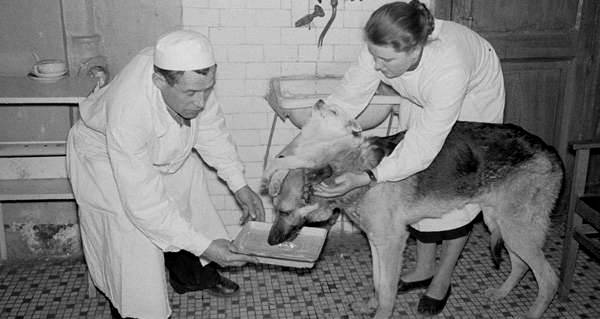
His remarkable results also led him to a bold experiment—one that is now widely condemned: connecting two living animals to a single circulatory system.
You might also like
Operation No. 24: Brodyaga and Shavka
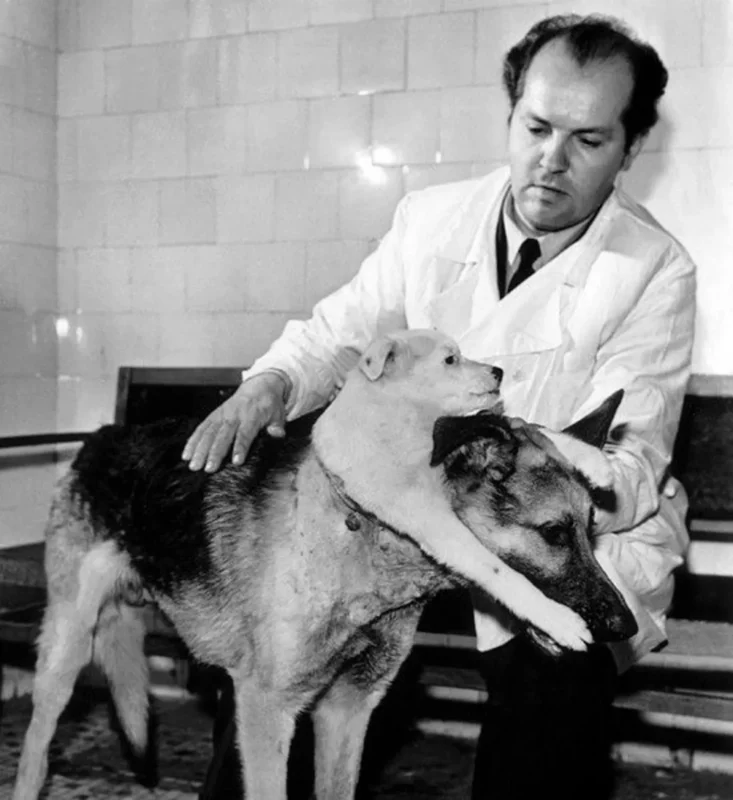
In the summer of 1959, Demikhov selected a large stray sheepdog, which he named Brodyaga, and a small mixed-breed dog, Shavka. From the smaller dog, he retained the head, neck, front paws and thoracic organs; the rest was amputated. After three and a half hours of microsurgery, he connected the graft's neck vessels and trachea to the host's bloodstream. Both heads awoke from anaesthesia, reacted to sounds and licked their muzzles; Shavka even drank water, although it had nowhere to drain and flowed back out. The life of this pair ended after four days when a vein ruptured; another prototype, No. 6, survived for 29 days.
Demikhov repeated the procedure 24 times in total, but never came close to achieving long-term function. Although the result astonished editors at LIFE, it brought medicine more of an ethical debate than a practical procedure.
A legacy in transplant medicine
Despite the controversial dog experiments, Demikhov's studies laid the foundations for modern vascular suturing techniques, which enabled Christian Barnard to perform the first successful human heart transplants ten years later. Soviet authorities, however, kept his popularity in check, and he died in near anonymity in the 1990s.
When a primate underwent the neck experiment
American neurosurgeon Robert J. White followed up on Demikhov's work a decade later: in 1970, he grafted the head of a rhesus macaque onto the body of another individual. The brain remained conscious, tracked objects with its eyes and drank juice through a tube, but the spinal cord was not connected. The animal therefore remained paralysed and died after nine days from immune rejection.
The Chinese challenge and the Italian “Dr Frankenstein”
Italian neurosurgeon Sergio Canavero together with orthopaedic surgeon Renom Xiaopingom (Harbin Medical University), claim that a combination of deep brain hypothermia, nano-knives and polyethylene glycol glue can cut and realign the spinal cord in a single instant. After hundreds of thousands of experiments on mice and initial tests on human cadavers, they announced their intention to attempt a live operation, although its date remains uncertain amid opposition from ethics committees and technical limitations.
Neither Demikhov nor White was able to overcome two key problems: permanently reconnecting the spinal cord so that the patient would not be paralysed, and immune rejection. Today's immunomodulatory protocols and genetically edited pig organs are changing the rules of the game, but reconnecting tens of billions of nerve fibres with a single scalpel stroke remains a futuristic challenge.
Meanwhile, transplant medicine is moving in a different direction: in 2022, the first successful pig-to-human heart xenotransplants took place, and the development of laboratory-grown 3D-bioprinted organs is advancing. If spinal-cord “glue” technology is ever proven, it will offer greater hope to people with spinal injuries than a complete body replacement.
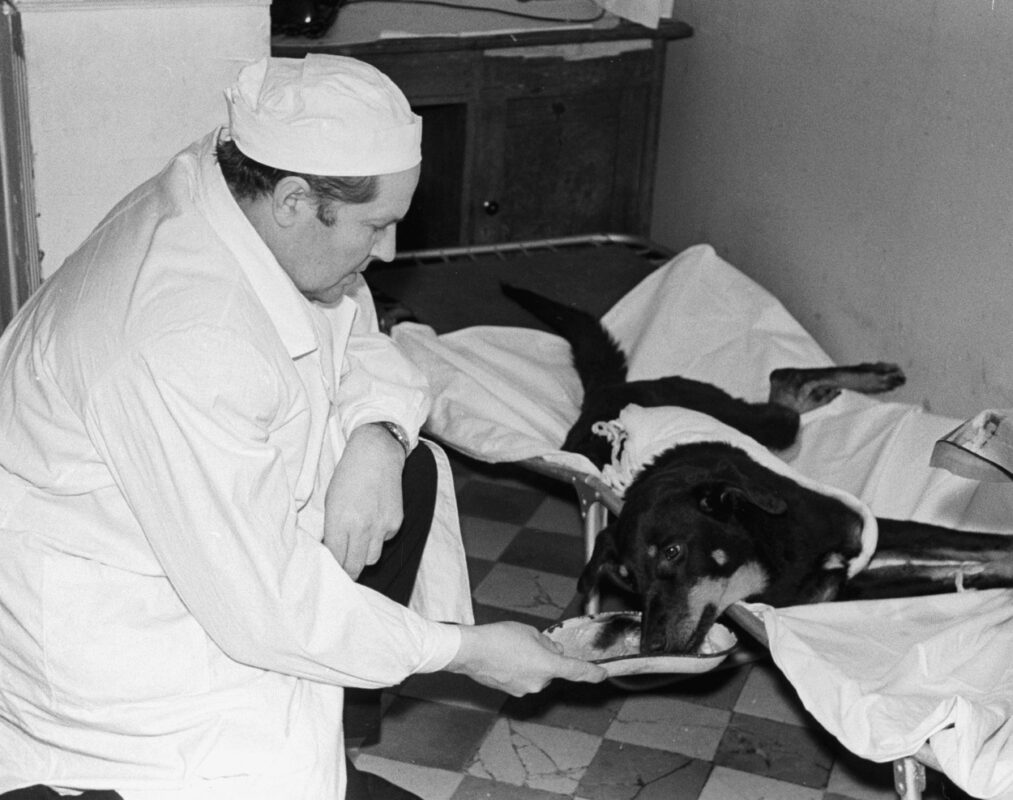
Archival footage of the two-headed dog
Sources
- European Heart Journal: Vladimir Petrovich Demikhov (1916–1998) – pioneer of transplantation – https://academic.oup.com/eurheartj/article/38/46/3406/4706202 Oxford Academic
- All That Is Interesting: “How Vladimir Demikhov Made a Two-Headed Dog” – https://allthatsinteresting.com/vladimir-demikhov-two-headed-dog All That's Interesting
- Wikipedia: “Robert J. White” – https://en.wikipedia.org/wiki/Robert_J._White Wikipedia
- Medical News Today: “The First Human Head Transplant: Plans and Pitfalls” – https://www.medicalnewstoday.com/articles/301073 Medical News Today

Robert
I’m interested in technology and history, especially true crime stories. For three years I ran a fact-based portal about modern history, and for a year I co-built a blogging platform where I published dozens of analytical articles. I founded offpitch so that quality content wouldn’t be hidden behind a paywall.


