
Aktualizované 06.09.2026
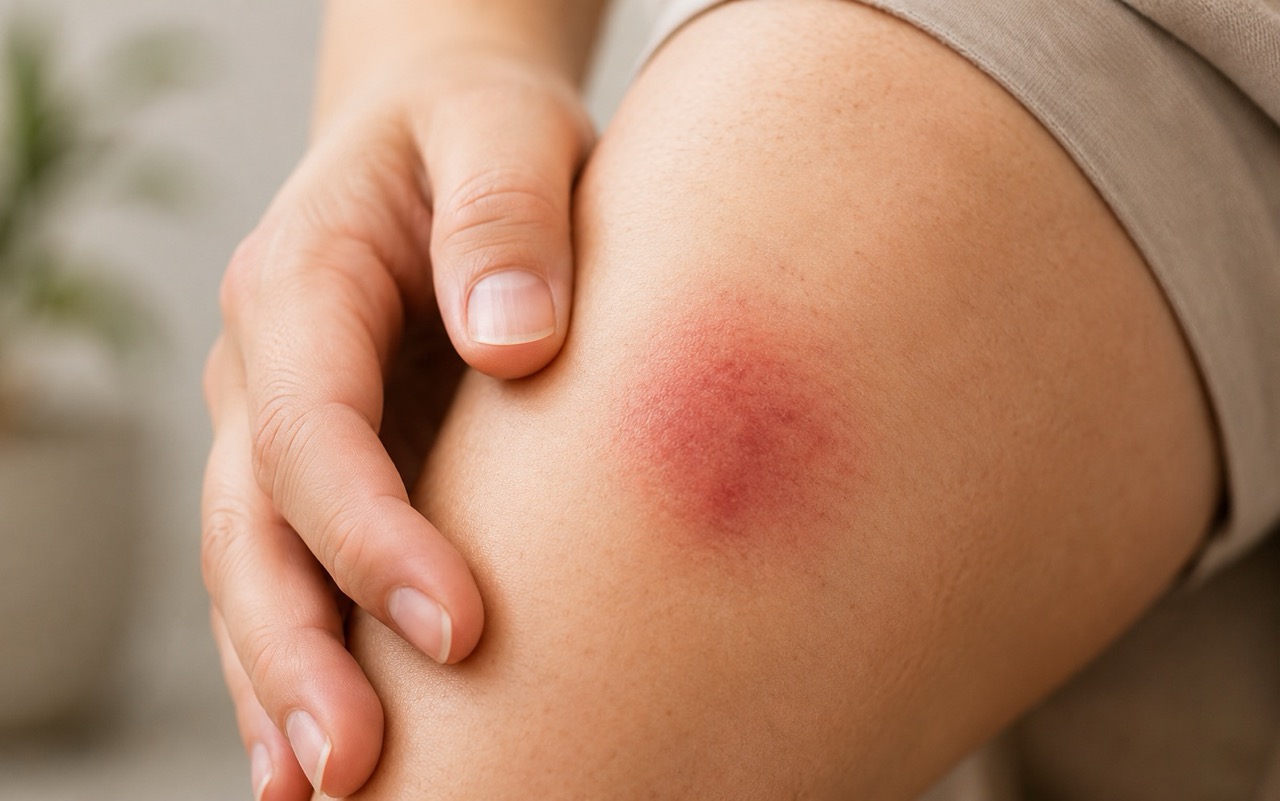
A red bruise usually indicates a recent contusion in which an impact damaged tiny blood vessels beneath the skin, causing blood to collect around the injured area. A red hue is most common shortly after an injury, while the blood is still relatively fresh and contains hemoglobin.
Why is a bruise red?
A bruise is most commonly red because it is in an early stage of development. A blow, fall, compression or other blunt injury can damage small blood vessels beneath the skin. The skin itself may remain intact, so the blood does not flow out but becomes trapped in the tissue beneath the skin's surface.
You might also like
This fresh blood causes the red to pinkish-red discoloration. Blood contains hemoglobin, a protein in red blood cells that carries oxygen. When blood escapes from a blood vessel and remains beneath the skin, it may be visible through the skin as a red patch, redness or a developing bruise.
A red bruise therefore usually does not indicate anything unusual. Rather, it suggests that the contusion is recent. Over the next several hours or days, it may change color as the blood pigments gradually break down and the body heals the injured area.
When does a red bruise appear?
Red discoloration may appear shortly after an injury, sometimes almost immediately and sometimes within several hours. This depends on the force of the impact, the location of the injury, the depth of the bleeding and the person's skin tone.
With a more superficial injury, the red color may be more noticeable because the blood is closer to the skin. With a deeper contusion, the red stage may be less obvious, and the bruise may not become noticeable until it begins to darken. Therefore, not everyone first sees a bruise as bright red.
A red bruise is often more visible on lighter skin. On darker skin, it may appear as a darker, reddish-brown or burgundy patch, or simply as a tender, swollen area. Bruise color therefore may not look exactly the same on everyone, even though the process beneath the skin can be very similar.
Is a red bruise recent?
In most cases, yes. A red bruise is typical of the beginning of the process, when blood escapes from tiny vessels after an injury. At this stage, the area may also be tender, warmer than the surrounding skin, slightly swollen or painful to the touch.
However, it is important to distinguish between a typical red bruise and simple skin redness. After a blow, the skin may initially be merely irritated and red, but if blood has collected beneath it, a true bruise may gradually develop. It may later change color, darken or spread depending on how the blood moves through the tissue.
The red color alone does not reveal exactly how serious the injury was. A small red bruise may result from lightly bumping into a table, while a larger red area following a forceful impact may indicate more extensive damage to small blood vessels. The main things to monitor are pain, swelling, limb mobility and whether the condition is improving or worsening.
A red bruise after an impact: what happens beneath the skin?
An impact damages delicate capillaries, the body's smallest blood vessels, at the site of the injury. Blood leaks from them into the surrounding tissue, where it becomes trapped. Because the skin's surface remains intact, the injury looks like a colored patch beneath the skin rather than an open wound.
The body responds to this damage immediately. It activates the blood-clotting process to stop the bleeding while also beginning to clear the injured area. Immune cells later help break down and remove the remaining blood from the tissue.
The red color is therefore a visible sign that healing has begun. It is not merely a “patch,” but a small biological process in which the body attempts to seal the damaged vessels and gradually absorb the blood that has escaped from them.
Why can a red bruise be painful?
A red bruise hurts mainly because an impact damages not only blood vessels but also the surrounding soft tissue. Pressure, mild swelling and irritation of nerve endings may develop at the injury site. The bruise may therefore hurt when touched, during movement or when clothing presses against it.
A fresh red bruise is often more tender than an older one. This is because the tissue is irritated shortly after the injury and the body is only beginning to respond to the damage. If the injury was caused by a minor bump, the pain should gradually subside.
However, if the pain is severe, worsens or prevents normal movement, the injury may be more than a simple superficial bruise. In such cases, it may be appropriate to consider a strain, a more serious contusion, a muscle injury or, in some instances, a fracture.
How long does a bruise remain red?
The red hue of an ordinary bruise is usually most pronounced at the beginning. It may last for several hours or roughly the first day, although this is not a strict rule. For some people, the red stage disappears quickly, while for others it transitions more gradually into dark red or purple.
How long it lasts depends on the bruise's size and location, skin thickness, age, medication use, blood clotting and the overall condition of the blood vessels. Discoloration may look different in areas where the skin is thinner or that are easily bumped than it does on the thigh or upper arm, for example.
An ordinary bruise may take approximately two weeks to heal. However, the red color is generally only the first part of this process. As the hemoglobin in the blood begins to break down, the bruise gradually changes in appearance and red may no longer be its dominant color.
A red bruise without an injury
If a red bruise appears without an obvious injury, it does not automatically indicate a serious problem. Many people bump themselves during the day without remembering it, especially when it involves a minor collision with furniture, sports, gardening or carrying heavier objects.
However, red bruises deserve attention if they appear repeatedly, without a clear cause, in unusual places or alongside other symptoms. Certain medications can also increase the risk of bruising, particularly those that affect blood clotting, as well as some anti-inflammatory drugs, corticosteroids and medical conditions involving platelets, blood vessels or the liver.
When bruises are unexplained, it is important not to assess their color alone. Consider how many there are, where they appear, how quickly they develop and whether the person also has nosebleeds, bleeding gums, blood in the urine or stool, severe fatigue, fever or unexplained weight loss. In such cases, it is best to consult a doctor.
Is it a red bruise or a rash?
Not every red patch on the skin is a bruise. A bruise results from blood leaking beneath the skin and is often associated with an injury or pressure. A rash, skin irritation, allergic reaction or infection may also look red, but has a different cause.
A red bruise is often tender after an impact and gradually changes in appearance. A rash may cause itching, burning, spots, scaling or blisters, or it may spread over a larger area. If the red area does not change color like a bruise, does not fade or is accompanied by fever, pronounced warmth of the skin, pus or red streaks, it may be something other than an ordinary bruise.
Tiny, pinpoint red or purple spots that look like small pricks beneath the skin require particular attention. They may be petechiae, which are tiny areas of bleeding into the skin. These can have a range of causes, from harmless to more serious, especially if they spread quickly or are accompanied by fever and a generally poor state of health.
What should you do about a fresh red bruise?
Simple home care can help with an ordinary fresh bruise caused by an impact. Most importantly, avoid putting unnecessary strain on the area or bumping it again, and use cold therapy during the first few hours. Cold may help limit swelling and slow further blood leakage into the tissue.
Do not apply ice or a cold compress directly to the skin. Instead, wrap it in a towel or cloth and apply it for short periods. If the bruise is on an arm or leg, elevating the limb may also help reduce swelling and pressure at the injury site.
Massaging a fresh red bruise is not a good idea. During the initial stage, unnecessary pressure or kneading may irritate the area and worsen the pain. Heat is generally more suitable later, once acute bleeding into the tissue has stopped and the area is gradually healing.
When can a red bruise be a warning sign?
It is advisable to contact a doctor if a red bruise is very large, grows rapidly, developed after a serious injury or is associated with severe pain. Do not delay seeking medical attention if an injury causes significant swelling, limb deformity, an inability to walk normally or move an arm, or if you suspect a fracture.
A medical examination is also advisable if bruises appear frequently and without explanation, especially if the person also has nosebleeds or bleeding gums, unusually heavy menstrual bleeding, blood in the urine or stool, severe fatigue or other general symptoms. In such cases, the problem may not be in the skin itself but could involve blood clotting, blood vessels, medication or another medical condition.
Take particular care with red or purple spots that do not look like ordinary bruises and do not fade when pressed. If they spread rapidly or appear with a fever or a generally poor state of health, they should not be treated as ordinary bruises.
Frequently asked questions about red bruises
Does a red bruise mean it is recent?
Yes, a red bruise most often indicates a recent contusion. It develops when blood from tiny damaged vessels leaks into the tissue beneath the skin following an impact. The red color is mainly caused by fresh blood and hemoglobin.
Is a red bruise dangerous?
The red color itself usually does not indicate danger. Following an ordinary impact, it is often a normal early stage of bruising. It may be a cause for concern if the bruise is very large, grows rapidly, is severely painful, develops without a known cause or appears alongside other signs of bleeding.
Can a bruise be red even if I did not injure myself?
Yes. Sometimes a person is completely unaware of a minor impact. However, if red bruises appear repeatedly, in unusual places or for no apparent reason, it may be wise to consult a doctor, especially if you also experience nosebleeds or bleeding gums, or take blood-thinning medication.
Why does a red bruise later become darker?
When blood remains beneath the skin, the body gradually begins to break it down and absorb it. Hemoglobin and other blood components are converted into different substances, which also changes the bruise's appearance. The red color therefore often represents the beginning rather than the final stage of a bruise.
Should I apply a cold compress to a red bruise?
Cooling may help a fresh bruise after an impact, particularly during the first few hours. Apply a cold compress through a cloth rather than directly to the skin. If the area is extremely painful or swollen, or the condition worsens, home care may not be enough.
Summary
A bruise's red color most commonly indicates a recent injury to tiny blood vessels beneath the skin. After an impact, blood leaks into the surrounding tissue and may appear through the skin as a red or pinkish-red hue. This is a normal early stage of bruise healing and not automatically a reason to panic.
It is important to monitor how the bruise develops overall. An ordinary red bruise following a minor injury should gradually change, and the pain should subside. However, if the bruise grows rapidly, appears without a known cause, is very painful or is accompanied by other signs of bleeding or poor health, it is best to seek medical attention.
Sources
- MedlinePlus – Bruise healing – series—Healing, part 1
https://medlineplus.gov/ency/presentations/100207_2.htm - MedlinePlus – Bruise healing – series—Healing, part 2
https://medlineplus.gov/ency/presentations/100207_3.htm - MedlinePlus – Bruises
https://medlineplus.gov/bruises.html - DermNet – Bleeding and bruising
https://dermnetnz.org/topics/bleeding-and-bruising - Mayo Clinic – Easy bruising: Why does it happen?
https://www.mayoclinic.org/healthy-lifestyle/healthy-aging/in-depth/easy-bruising/art-20045762 - Cleveland Clinic – Petechiae
https://my.clevelandclinic.org/health/symptoms/21636-petechiae - Scientific American – Instant Egghead: Why Do Bruises Change Color?
https://www.scientificamerican.com/video/instant-egghead-why-do-bruises-ch2012-09-18/

Jana
I like turning curiosity into words, and writing articles is my way of capturing ideas before they slip away — and sharing them with anyone who feels like reading.


