
Aktualizované 06.09.2026
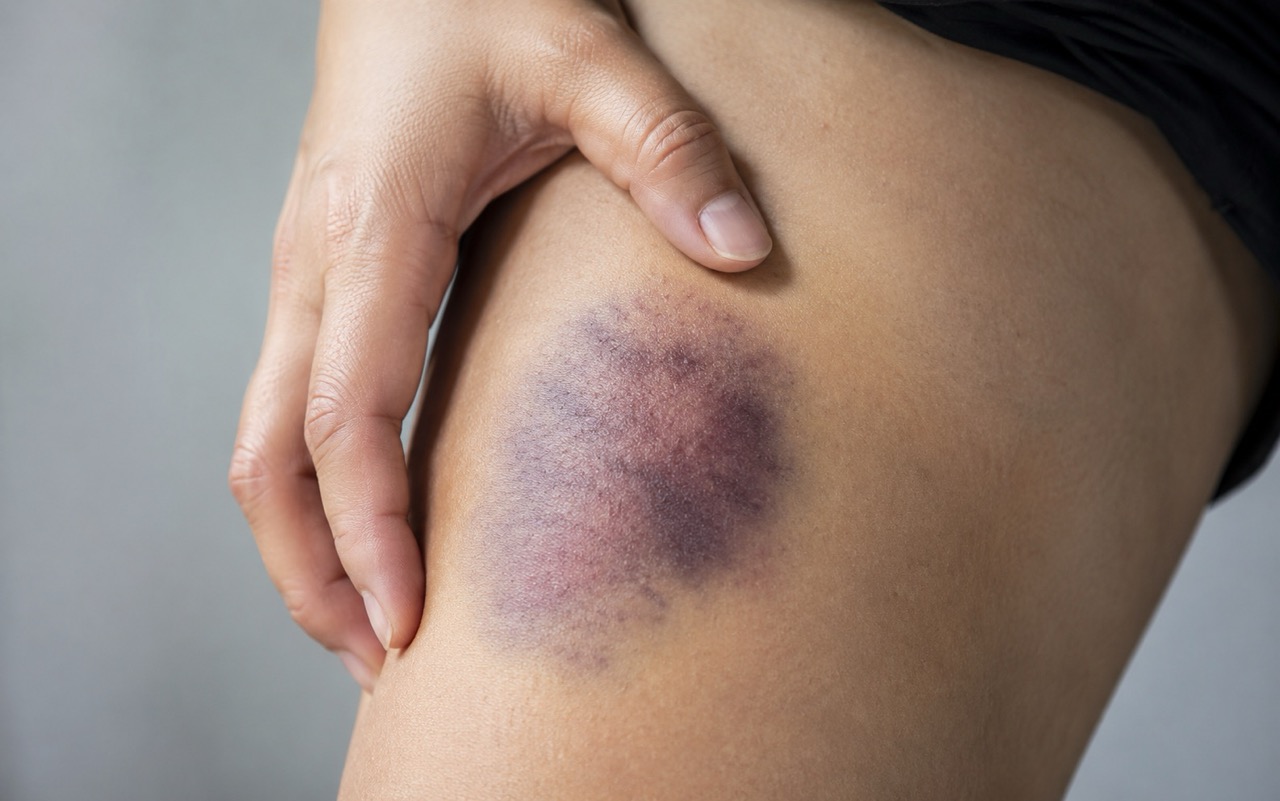
A black bruise may look alarming at first, but it is very often a normal stage in the healing process after a blow, fall, or other pressure on the skin and underlying tissue. A bruise forms when tiny blood vessels are damaged and blood leaks into the surrounding tissue. This pooled blood and its gradual breakdown cause the dark discoloration, which may appear black, dark purple, or blue-black.
A black bruise usually means that more blood has collected under the skin or that the blood lies deeper in the tissue. It commonly develops after a harder impact and may be more painful than a lighter bruise. However, if it is not getting larger, the pain is subsiding, and its appearance is gradually changing, it is often healing normally.
You might also like
Why can a bruise be black?
The black color of a bruise is mainly caused by blood that has leaked from damaged tiny blood vessels beneath the skin. When blood remains trapped in the tissue, it may show through the skin as a very dark patch. It is not always truly black, but rather a combination of dark blue, dark purple, burgundy, or blue-black.
A dark bruise tends to be more pronounced when the impact was stronger, more blood vessels were damaged, or a larger amount of blood collected. Black discoloration often appears in areas where the skin is thinner or blood can spread more easily into surrounding tissue, such as around the eye, on the shin, thigh, or upper arm, or after a fall onto a hard surface.
Is a black bruise dangerous?
In most cases, the black color alone does not indicate anything dangerous. It may simply be a more pronounced bruise caused by an ordinary injury. What matters is how it changes over the following days. If it gradually becomes smaller, the pain eases, and the surrounding area does not feel unusually tight, it is generally healing naturally.
However, a bruise needs attention if it grows rapidly, is very painful, hard, or hot to the touch, or appears without a clear cause. It may then be more than an ordinary superficial bruise—for example, it could be a larger collection of blood in the tissue, known as a hematoma, or it may be related to a blood-clotting problem or medication that affects bleeding.
A black bruise after a blow
A black bruise after a blow most commonly develops when the impact damages tiny blood vessels in the skin, underlying tissue, or muscle. Blood escapes from the vessels, but the skin remains intact. As a result, there is no open wound, only a colored patch beneath the skin.
After a harder blow, a bruise may be not only dark but also swollen and tender. If the area is soft and the pain gradually improves, home care and time are usually sufficient. However, it is sensible to see a doctor if the area is very hard or tight, movement is restricted, or the pain is disproportionately severe.
Why do some bruises look almost black?
Not every bruise has the same color, because its appearance is influenced by the depth of the injury, the amount of blood, its location on the body, and skin tone. Blood located deeper in the tissue may look darker through the skin than blood just beneath the surface. A bruise may therefore appear almost black, although biologically the color mainly comes from dark blood and its breakdown products.
Very dark bruises also commonly appear where gravity causes blood to move downward. For example, after a blow to the forehead, some of the blood may later appear as dark discoloration beneath the eye. This does not always mean that the eye has sustained a new injury, but extra caution is needed after an injury to the head or face.
A black bruise around the eye
A black bruise around the eye, commonly called a black eye, is bruising of the soft tissues surrounding the eye. This area has thin skin and many tiny blood vessels, so blood beneath the skin is especially noticeable. Even a minor blow to the face can therefore cause strikingly dark discoloration.
With a black eye, it is important to distinguish an ordinary bruise from a possible injury to the eye or head. Seek medical attention particularly if you experience impaired or double vision, severe eye pain, bleeding from the eye, dizziness, vomiting, loss of consciousness, or a head injury. If both eyes turn black without a clear direct blow to the eye area, the condition should be assessed as soon as possible.
How long does a black bruise last?
A black or very dark bruise may be most noticeable during the first few days after an injury. It should gradually fade and change as the body breaks down and absorbs the blood in the tissue. Smaller bruises often improve within one to two weeks, while larger and deeper bruises may remain visible for longer.
It is not unusual for a dark bruise to remain painful for several days. It is more concerning if the pain worsens, the swelling increases, or the bruise shows no sign of settling after several days. This may indicate a deeper injury, a muscle tear, a larger hematoma, or, in some cases, a fracture.
What should you do about a black bruise?
For a recent black bruise caused by an impact, the most helpful measures are rest, cooling the area, elevating the injured body part, and avoiding strain so that bleeding into the tissue does not worsen. Wrap a cold compress in a towel or cloth rather than applying ice directly to the skin. The aim is not to freeze the skin, but to reduce swelling and pain.
During the first few hours after an injury, avoid vigorously massaging or heating the bruise. Massage may irritate damaged tissue, while heat can initially increase blood flow, which may not be ideal when there is fresh bleeding beneath the skin. Gentle warmth is more appropriate later, once the swelling is subsiding and the bruise is healing.
Do bruise ointments help?
Ointments and gels may provide some people with subjective relief, especially if they have a cooling or anti-inflammatory effect. However, a black bruise should not be expected to disappear overnight. The body itself does most of the work by gradually breaking down and removing the blood from beneath the skin.
When choosing a product, consider any broken skin, allergies, and interactions with medication. If the bruise is associated with an open wound, severe swelling, or a suspected deeper injury, ointment should not replace a medical examination.
When should you see a doctor about a black bruise?
Contact a doctor if a black bruise develops without an injury, appears repeatedly, or if many bruises occur across the body without an obvious cause. You should also be alert if you take blood-thinning medication or have liver disease, a blood-clotting disorder, very heavy menstrual bleeding, nosebleeds, or bleeding gums.
A medical examination is also important if the bruise grows rapidly, is very painful, restricts movement of a limb, follows a serious fall or car accident, or is located on the head, around the eye, or on the abdomen or chest. After a head injury, seek emergency care for symptoms such as vomiting, confusion, drowsiness, a severe headache, vision problems, or loss of consciousness.
A black bruise with no apparent cause
A black bruise with no obvious cause does not necessarily indicate a serious problem, as people often do not remember minor bumps. This is particularly common with bruises on the legs, where someone may have knocked their shin against furniture, a step, or the edge of a table. However, if dark bruises appear repeatedly, are large, or develop even after very light contact, it is worth discussing them with a doctor.
Easy bruising may be caused by certain medications, older age, more fragile blood vessels, nutritional deficiencies, blood disorders, or clotting problems. In such cases, the color of the bruise itself is less important than the fact that it develops unusually easily or without explanation.
Can the age of a bruise be determined from its black color?
The age of a bruise can be estimated from its color only very roughly. Black or blue-black discoloration often occurs during the earlier stages after an injury, but this is not a precise rule. A bruise’s appearance depends on its location, the depth of the bleeding, the amount of blood, skin tone, and how quickly that person’s tissue heals.
It is therefore unreliable to claim that every black bruise is a specific number of hours or days old. How it changes over time is more important. If a dark bruise gradually becomes smaller and lighter and the pain subsides, it is behaving like a normally healing injury.
Video: Why do bruises change color?
This short explanation shows why a bruise does not look the same throughout the healing process and why it may become very dark at one stage.
Frequently asked questions about black bruises
Does a black bruise mean internal bleeding?
A black bruise is essentially bleeding beneath the skin or into soft tissue, but it is generally not dangerous internal bleeding involving the organs. After an ordinary blow, a small amount of blood escapes from the vessels and is gradually absorbed by the body. The risk is greater after a major injury, with severe pain or rapid swelling, or when the bruise is in a high-risk area such as the head, abdomen, or chest.
Is a black bruise worse than a blue one?
Not necessarily. Black and blue coloring often overlap in bruises and may represent a similar stage. However, a black bruise may look more pronounced because there is more blood in the tissue, the blood lies deeper, or the skin in that area is thinner. Severity therefore depends not only on color, but also on pain, swelling, size, the cause, and the person’s overall condition.
Why is a black bruise hard?
A hard black bruise may mean that a larger collection of blood, known as a hematoma, has formed beneath the skin. A small hematoma may be absorbed on its own, but a larger one can be painful and tight and may take longer to heal. A medical examination is advisable if the hardness does not subside, the area grows, or the pain is significant.
Can a black bruise develop without pain?
Yes. A small bruise may develop without significant pain, especially if the person did not notice the bump. This occurs more often on the legs or arms. However, if large black bruises appear without pain or a clear cause, particularly if this happens repeatedly, it is advisable to consult a doctor.
Summary
A black bruise most commonly means that blood has collected beneath the skin after an impact and is showing through as a dark patch. The color alone is not necessarily dangerous, especially if the bruise followed a clear injury, is gradually shrinking, and the pain is subsiding. Caution is needed if bruises appear without a cause, grow rapidly, become very painful or hard, follow a head injury, cause vision problems, or occur while taking blood-thinning medication.
Sources
- Cleveland Clinic – Bruises (Ecchymosis): Symptoms, Causes, Treatment & Prevention
https://my.clevelandclinic.org/health/diseases/15235-bruises - MedlinePlus Medical Encyclopedia – Bruise Healing
https://medlineplus.gov/ency/presentations/100207_2.htm - NHS – Black Eye
https://www.nhs.uk/conditions/black-eye/ - MSD Manual Consumer Version – Bruising and Bleeding
https://www.msdmanuals.com/home/blood-disorders/blood-clotting-process/bruising-and-bleeding

Jana
I like turning curiosity into words, and writing articles is my way of capturing ideas before they slip away — and sharing them with anyone who feels like reading.


