
Aktualizované 13.09.2026
A bruise is a common occurrence that most people associate with a blue, purple, or dark mark on the skin. However, many are surprised when it turns yellow after a few days. This change in color is actually one of the most typical signs that the body is gradually dealing with the injury and the damaged area is healing.
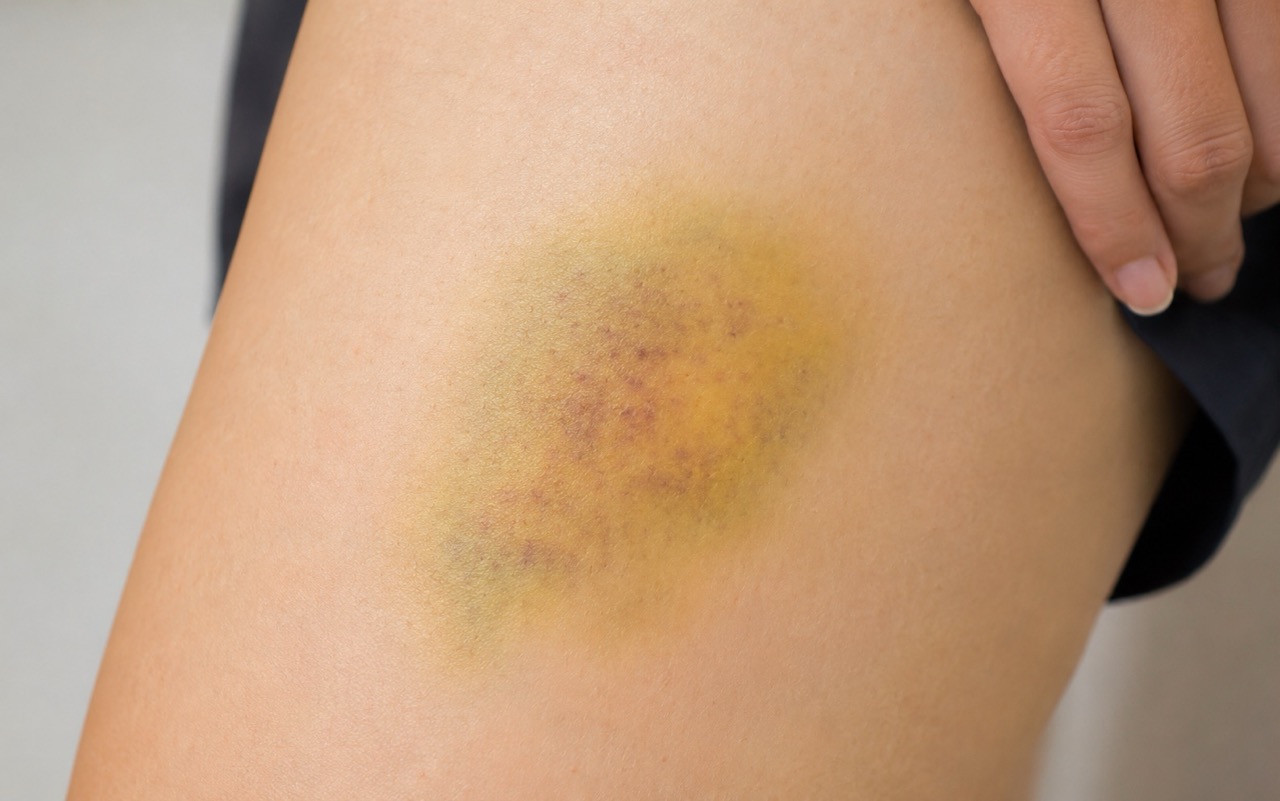
A yellow bruise usually means that the injury is no longer fresh and has entered a later stage of healing. Its color is mainly caused by bilirubin, a yellowish pigment produced when hemoglobin from red blood cells breaks down. In other words, a yellow tint is usually a sign that the body is gradually clearing away the blood beneath the skin and the bruise is fading.
You might also like
Why does a bruise turn yellow?
When someone bumps themselves, compresses tissue, or falls, tiny blood vessels beneath the skin can become damaged. The blood does not flow out of the body but remains trapped in the soft tissue. This creates a bruise, medically known as a contusion.
Over the following days, the body works to clear away this blood. It breaks down both the red blood cells and hemoglobin, the pigment that carries oxygen. This process produces substances of various colors. One of them is bilirubin, which has a yellow to yellow-orange hue. That is why a bruise may appear yellowish during the later stages of healing.
What is bilirubin, and why does it make a bruise yellow?
Bilirubin is neither unusual nor abnormal. It is a natural product of the breakdown of old or damaged red blood cells. The body routinely produces it even when no bruising is present, for example during the everyday removal of blood cells from the body.
In a bruise, however, bilirubin is produced locally where blood has accumulated beneath the skin following an injury. As hemoglobin breaks down, it passes through several stages, one of which produces a yellowish color. This is why an older bruise often looks less dramatic and appears more like a faint yellow or yellowish-brown mark.
Does a yellow bruise mean it is healing?
In most cases, yes. A yellow tint is one of the most common signs that a bruise has reached a later stage of healing. The area is generally less painful than it was initially, the swelling has subsided, and the color gradually fades.
However, not every yellow bruise looks the same. Some are pale yellow, while others are yellow-green or yellowish-brown. This depends on the amount of blood in the tissue, the depth and location of the injury, and how quickly the body absorbs and removes the breakdown products.
How many days does it take for a bruise to turn yellow?
The exact timing varies from person to person. In general, however, yellow discoloration tends to appear in older bruises, often several days to approximately a week after the injury. It may develop sooner or later, especially if the bruise is larger or deeper.
It is important to understand that the color of a bruise is not an exact calendar. One bruise may turn yellow after only a few days, while another may take longer. Age, medication, blood flow to the affected area, skin condition, and overall health can all influence the process. Yellow coloring therefore suggests that a bruise is older, but it cannot reveal the exact day on which it occurred.
Why does yellow coloring appear mainly around the edges?
Many people notice that an entire bruise does not turn yellow at once. It often has a darker center and yellowish edges. This is quite common because the blood and its breakdown products do not decompose evenly beneath the skin.
A bruise is often shallower around the edges, allowing the body to break down the blood there more quickly. As a result, the yellow tint frequently appears there first. The center may remain darker for a while until the breakdown and absorption process is also complete in the deeper layers of tissue.
Is a yellow bruise a cause for concern?
In most cases, no. If a bruise appeared after a known impact, is gradually fading, and is becoming less painful, the yellow color is more reassuring than alarming. It usually means that the body is dealing with the blood beneath the skin without the need for special treatment.
Caution is warranted, however, if bruises appear for no apparent reason, are very large, are unusually painful, or occur repeatedly. You should also take notice if bruising is accompanied by frequent nosebleeds, bleeding gums, or wounds that heal unusually slowly. In such cases, the cause could be a blood-clotting disorder, a medication side effect, or another health condition.
How long does a yellow bruise last?
Yellow discoloration usually does not last long. Once the body has gradually removed the bilirubin and other breakdown products, the bruise begins to fade and disappear. Smaller bruises may vanish within one to two weeks, while larger or deeper ones can take longer to be absorbed.
A yellow bruise may look faint, but that does not mean it will disappear overnight. It can sometimes remain as a subtle shadow on the skin for several more days. If it is an ordinary bruise caused by an injury and its appearance is gradually improving, this is generally a normal part of the healing process.
Can a bruise turn yellow without first being noticeably blue?
Yes. Not every bruise visibly passes through all the colors that are commonly mentioned. Sometimes a person does not notice an injury until the bruise is no longer dark but instead appears greenish or yellow. This is particularly common with smaller bruises or those in places where they are not immediately noticed.
Because the yellow stage tends to be less noticeable and less painful, many people feel as though the bruise appeared “out of nowhere.” In reality, it may have developed earlier but simply went unnoticed during its initial stage.
Can the age of a bruise be determined precisely from its yellow color?
This is a widespread assumption, but in practice it is not so simple. The color of a bruise can provide a rough indication, but it is not a completely reliable way to determine its exact age. Scientific studies also point out that a bruise's appearance depends on several factors and that the different stages may overlap.
This means that although a yellow bruise often indicates more advanced healing, it is impossible to say with certainty that it occurred exactly six or eight days ago, for example. The yellow tint develops more quickly in some people and more slowly in others.
How should you care for a bruise once it has turned yellow?
Once a bruise has turned yellow, it is usually no longer in the acute stage. By this point, the body is generally absorbing the remaining blood. There is therefore usually no need to do anything special; simply avoid unnecessarily irritating or reinjuring the area.
If the injured area is still tender, rest and avoiding excessive strain on the affected body part may help. Cooling and elevation are commonly recommended for fresh bruises, but once a bruise has turned yellow, patience is generally more important than active first aid. If the pain returns, the swelling increases, or the condition does not improve, it is best to consult a doctor.
When should you see a doctor?
Although a yellow bruise by itself is usually not a sign of anything serious, there are situations in which a medical examination is appropriate. It is advisable to contact a doctor if bruises appear for no clear reason, occur very frequently, or are accompanied by unusual bleeding.
An examination is also appropriate if a bruise is extremely large, very hard, severely painful, or does not shrink even after a long time. Bruises following a head injury, bruises associated with restricted movement, and bruising in people who take blood-thinning medication require particular attention. In such cases, do not rely on color alone; monitor the entire course of the injury and any accompanying symptoms.
Why do some people bruise more easily?
Susceptibility to bruising varies from person to person. Older people tend to have thinner skin and more fragile blood vessels, so bruises may develop more easily even after a minor bump. Medication can also have an effect, including drugs that reduce blood clotting and certain anti-inflammatory products.
Overall health also plays a role. If someone notices that they have suddenly begun bruising more often than in the past, they should not automatically attribute it to age or chance. It is sensible to have your health checked, particularly if you repeatedly develop unexplained bruises.
Video
An interesting and concise explanation of why bruises change color as they heal and why they may eventually turn yellow.
Conclusion
In most cases, a yellow bruise is a normal part of the healing process. It appears because the body is breaking down blood trapped beneath the skin, producing bilirubin, which is yellow. Therefore, when a bruise turns yellow, it often does not mean that it is getting worse but rather that it is approaching the end of its natural progression.
Nevertheless, it is worth considering the overall picture rather than the color alone. If a bruise developed after an impact and is gradually fading, this is usually normal. However, if it appears for no reason, is very pronounced, or is accompanied by other problems, it is sensible to undergo a medical examination.
Sources
- MedlinePlus Medical Encyclopedia: Bruise
https://medlineplus.gov/ency/article/007213.htm - MedlinePlus: Bilirubin Blood Test
https://medlineplus.gov/lab-tests/bilirubin-blood-test/ - NCBI Bookshelf: Biochemistry, Biliverdin
https://www.ncbi.nlm.nih.gov/books/NBK549781/ - Journal of Clinical Pathology: The practical application of reflectance spectrophotometry for the demonstration of haemoglobin and its degradation in bruises
https://pmc.ncbi.nlm.nih.gov/articles/PMC1770270/

Jana
I like turning curiosity into words, and writing articles is my way of capturing ideas before they slip away — and sharing them with anyone who feels like reading.


